
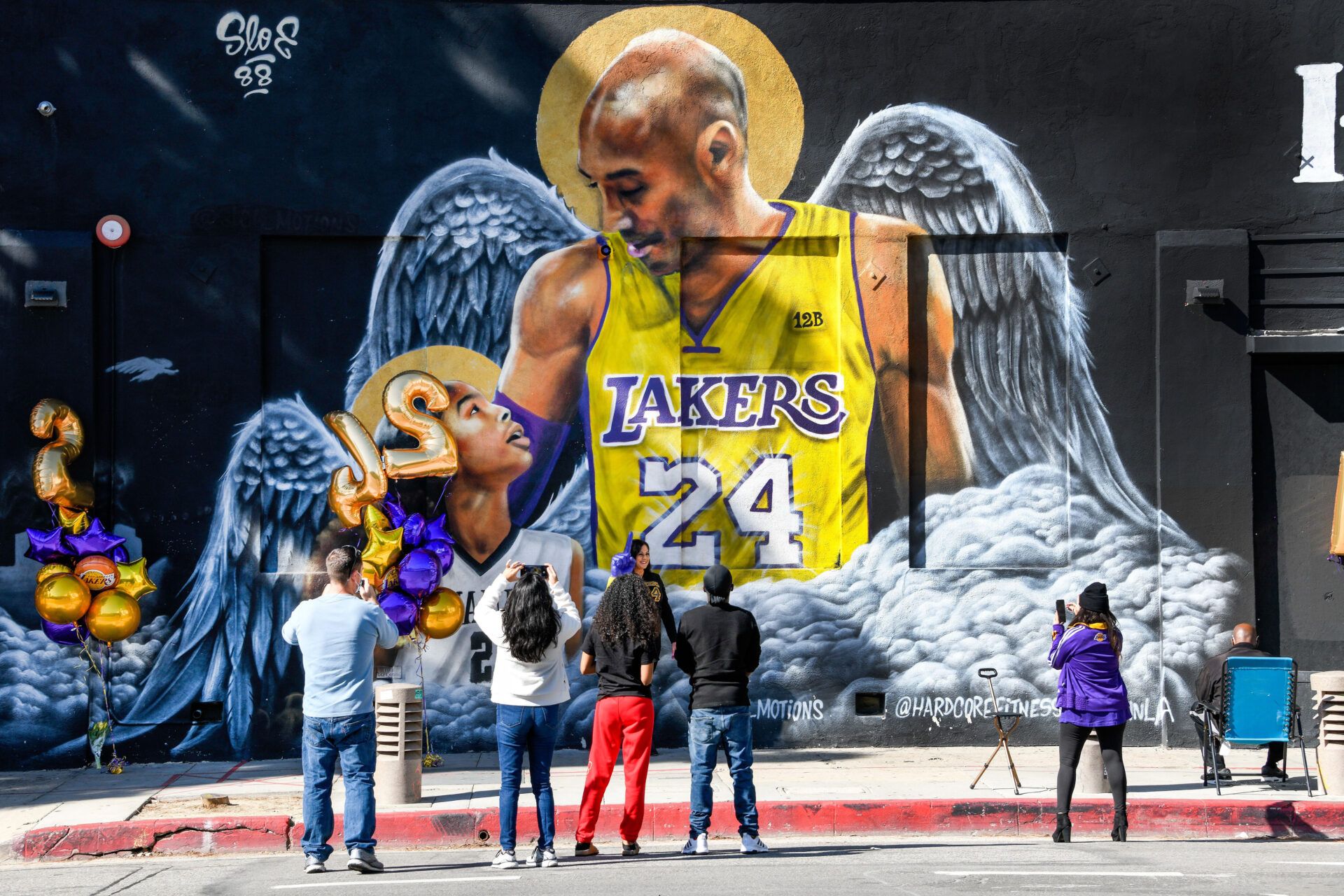
Kobe Bryant played a pivotal role in redefining the Los Angeles Lakers’ dominance in the NBA. A five-time NBA champion with the Lakers, Bryant became a two-time Finals MVP. His first year with the Lakers saw him get into the groove slowly, registering 7.6 points per game from 71 games. The numbers only improved for the Black Mamba in the years that followed.
However, Bryant’s inclusion to the Lakers came on the back of a hard twist. Initially, he was drafted 13th overall by the Charlotte Hornets in the 1996 draft before the Lakers’ GM, Jerry West, came looking for him.
Eventually, the Lakers managed to get hold of him in a pre-arranged deal for center Vlade Divac, who was traded to the Charlotte Hornets. The trade wasn’t officially completed until July 11, 1996, nearly two weeks after draft night.
Kobe Bryant Would Have Gone to the Boston Celtics if Not for a Late Miss
M.L. Carr, who served as head coach and director of basketball operations for the Boston Celtics during the 1995-96 and 1996-97 seasons, met with Red Auerbach, the team’s president, about drafting a young Bryant. The Celtics were coming off a disappointing 33-49 season and desperately needed talent to rebuild.
Auerbach was already in awe of Kobe Bryant’s growing reputation while the mounting pile of praises from the Celtics’ scouting director, Rick Weitzman, almost made it certain that Bryant was possibly heading to the Celtics. Weitzman, a former Celtic who won a championship ring in 1968, had become the team’s head scout and was impressed by what he saw.
However, just because one is a highly talented basketball prodigy, that doesn’t guarantee long-term dividends. Kobe Bryant was one of the rare ballers who made a prep-to-pro jump. He was coming to the league straight from Lower Merion High School in Pennsylvania, where he averaged 30.8 points, 12 rebounds, 6.5 assists, 4 steals, and 3.8 blocks as a senior.
Moses Malone and Darryl Dawkins pulled off this stunt in the 1970s, but then this trend took a backseat. Between Dawkins in 1975 and Kevin Garnett in 1995, no player had successfully made the leap directly from high school to the NBA.
When Auerbach gave the nod to Carr, he arranged an interview with Bryant. The interview between Bryant and Carr happened in the Celtics’ office. The 17-year-old prospect dished out an absolute masterclass in the interview, impressing Carr with his maturity, basketball IQ, and determination.
The then-Celtics general manager, Jan Volk, who had succeeded Auerbach in that role in 1984 while Red remained as president, said that if one closed his or her eyes, then Michael Jordan would come as the first thought of reflection after seeing Kobe Bryant. This was high praise from an executive who had witnessed firsthand the careers of Larry Bird and other Celtic greats.
The Celtics held the sixth pick of the 1996 draft, having moved up from their original position through savvy maneuvering. Carr revealed that he had his eyes on Antoine Walker because he had just come off a championship year at the University of Kentucky under Rick Pitino. Walker averaged 15.2 points and 8.4 rebounds during that title run. That made all the difference in the draft. The lack of experience for Bryant in the college league is what made the Celtics shift their minds.
The 1996 draft class is now considered one of the deepest in NBA history. Allen Iverson went first overall to Philadelphia, followed by Marcus Camby, Shareef Abdur-Rahim, Stephon Marbury, and Ray Allen. When the Celtics’ pick came at sixth, they selected Walker, leaving Bryant available for seven more teams to pass on.
Weitzman said, “We didn’t care which one of the six fell to us. We knew we would take one of them because we needed help right away. All six of those guys were prepared to help right away, whereas Kobe, we knew we’d have to wait.”
He continued: “And you know how the NBA works — you don’t have a long leash. The thing you have to realize is how difficult it was to evaluate those guys.” This was especially true for high school players, who didn’t have college game tape to analyze.
In his eight seasons for the Celtics, Walker averaged 20.6 points per game, 8.7 rebounds and 4.1 assists. He became a three-time All-Star and formed a dynamic duo with Paul Pierce after the Celtics drafted Pierce 10th overall in 1998.
Walker played an instrumental role in propelling the Celtics to the playoffs three times. Most notably, he and Pierce led Boston to the 2002 Eastern Conference finals, where they pulled off the largest fourth-quarter comeback in NBA playoff history against the New Jersey Nets before ultimately falling in six games.
However, if compared to Larry Bird or Kobe Bryant, Walker would be no match in terms of their legendary stature. Bryant went on to become an 18-time All-Star, 15-time All-NBA selection, and one of the greatest players in basketball history.
M.L. Carr Heaped Praises on Jerry West for His Far-Sightedness
Leading up to the decisive day of the draft, Carr revealed that he had already had many conversations with Jerry West. The Lakers’ legendary executive had been quietly orchestrating his master plan.
However, not even in a single conversation did West reveal that he had interest in Bryant. The secrecy with which West operated is what, according to Carr, made him a great manager. West had already worked out a deal with the Hornets before the draft, contingent on Bryant still being available at 13.
Kobe Bryant vs. Tracy McGrady (2002)
Kobe: 38 pts, 10 reb, 4 ast, 2 blk, 1 stl
T-Mac: 38 pts, 9 ast, 6 reb, 2 stl, 1 blk pic.twitter.com/PNk9Oi1KTt— ThrowbackHoops (@ThrowbackHoops) June 25, 2025
Carr said, “That’s why he’s such a great general manager. He wasn’t going to give that away. I think this is as much of a thumbs-up for Jerry West as it is for the fact that Kobe went on to do what he did.”
He added, “Jerry had some uncanny knowledge of how this all works.” West’s ability to identify talent was legendary. He had also been instrumental in bringing Magic Johnson to the Lakers and would later help build the Shaquille O’Neal-Kobe Bryant dynasty.
Jan Volk also joined in on the praises about Kobe Bryant and the Los Angeles Lakers. He said that the risk-taking factor of the Lakers changed it all. While the Celtics played it safe with a proven college player, the Lakers bet on potential.
That bet changed how the NBA would be played, with Bryant’s success opening the door for future prep-to-pro stars like LeBron James, Dwight Howard, and others before the NBA instituted an age limit in 2005.
Weitzman confessed that it was hard to predict back then that Bryant would rewrite NBA history. “We saw the talent,” he said years later. “But nobody could have imagined he’d become what he became. Twenty years, five championships, 81 points in a game — that’s beyond what anyone could project.”
The what-ifs remain tantalizing for Celtics fans. Would Bryant have thrived in Boston’s storied franchise? Would he have formed a championship duo with Paul Pierce? These questions became moot when Jerry West’s calculated gamble paid off, creating one of the NBA’s all-time greatest Lakers.
