
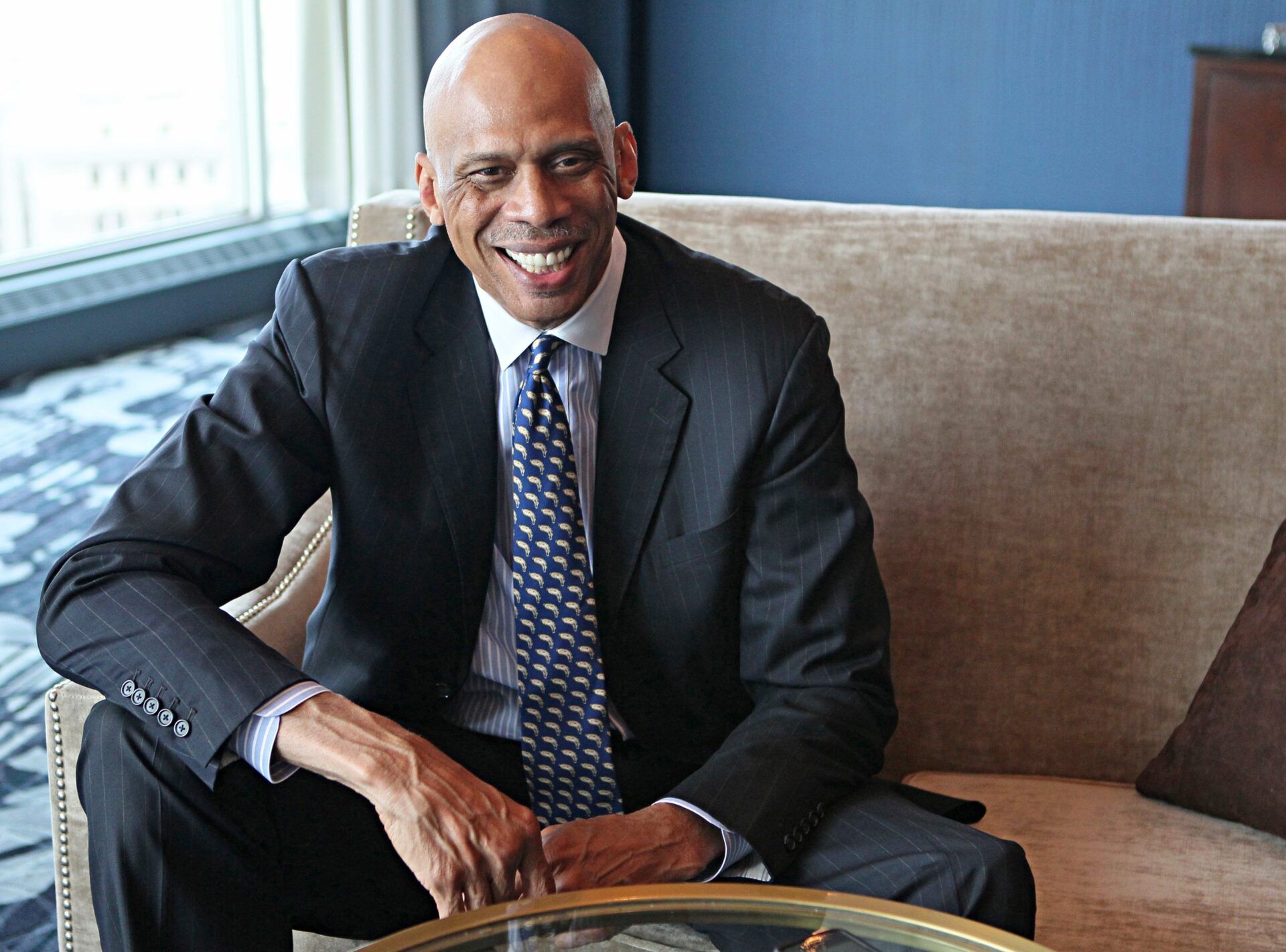
Two legends. One magical moment. A friendship that would shape both their lives forever.
For Kareem Abdul-Jabbar, that moment didn’t come in the bright lights of an NBA arena or during a championship celebration. It happened during his freshman year at UCLA, at a spontaneous musical gathering where he first met Muhammad Ali. What started as two young athletes making noise with instruments became the foundation of one of sports’ most meaningful friendships.
How Did a Guitar and Drums Bring Two Icons Together?
Abdul-Jabbar and Ali had a rather unplanned jam session, marking the beginning of their bond that extended far beyond sports. What began as the two jamming on a guitar and drums matured into a powerful friendship that would influence both men throughout their careers.
Speaking to Jennifer Hudson on her show, Abdul-Jabbar recalled, “He was fooling around with a guitar. So I slipped in behind him, got behind the drum set and tried to back him up. We didn’t make anything but noise, but it looks good in the picture, though.”
That musical moment became the spark for something much deeper. As their friendship blossomed, Ali took on a mentoring role that would shape Abdul-Jabbar’s approach to life both on and off the court.
The basketball legend shared how Ali invited him to the famed 1967 Cleveland Summit, a historic gathering of athletes and civil rights leaders discussing Ali’s stand against the Vietnam draft. Abdul-Jabbar narrated the story in a recollection for Time Magazine.
“After that evening, Muhammad took on a big brother role in my life. He invited me to attend a meeting in Cleveland to discuss his protesting the draft.”
From that point forward, Ali wasn’t just an idol to him, but a guiding presence who showed up when it mattered most. In a separate interview, Abdul-Jabbar recalled, “He was like that, when you needed him, he was there. He was amazing. That’s all it takes.”
How Did Muhammad Ali Shape Kareem Abdul-Jabbar’s Life Beyond Basketball?
Though their paths diverged into different sports, Ali in boxing and Abdul-Jabbar in basketball, their bond remained anchored in mutual admiration and shared ideals. Ali’s unwavering commitment to his principles inspired Kareem’s lifelong activism and writing career. Both athletes continued to focus on racial and social issues throughout their lives, using their platforms to create change.
Abdul-Jabbar worshipped the path Ali walked. Like his mentor, he established himself as more than just a dominant athlete. He became a voice for justice and equality, following Ali’s blueprint for athlete activism.
Despite occasional disagreements on matters of ideology, Abdul-Jabbar described Ali as a “big brother to all African-Americans” and, of course, to himself. The influence ran so deep that Abdul-Jabbar even followed Ali’s example in changing his name and converting to Islam early in his career.
Abdul-Jabbar always praised Ali’s unshakable principles. According to him, Ali’s courage extended far beyond the boxing ring, inspiring millions across the globe. He respected the fact that Ali never backed down from speaking his truth, regardless of the consequences. Even when Parkinson’s disease took over his body, Abdul-Jabbar said Ali’s spirit remained “indomitable.”
The friendship came full circle during Abdul-Jabbar’s Lakers years. Ali was often spotted courtside with his children, watching many of the legendary center’s games. Under his watchful “big brotherly” eyes, Abdul-Jabbar continued to dominate the NBA, winning six championships and six MVP awards. The young man who once tried to back up Ali’s guitar playing had become basketball’s all-time scoring king, guided by the principles his mentor had taught him decades earlier.
