
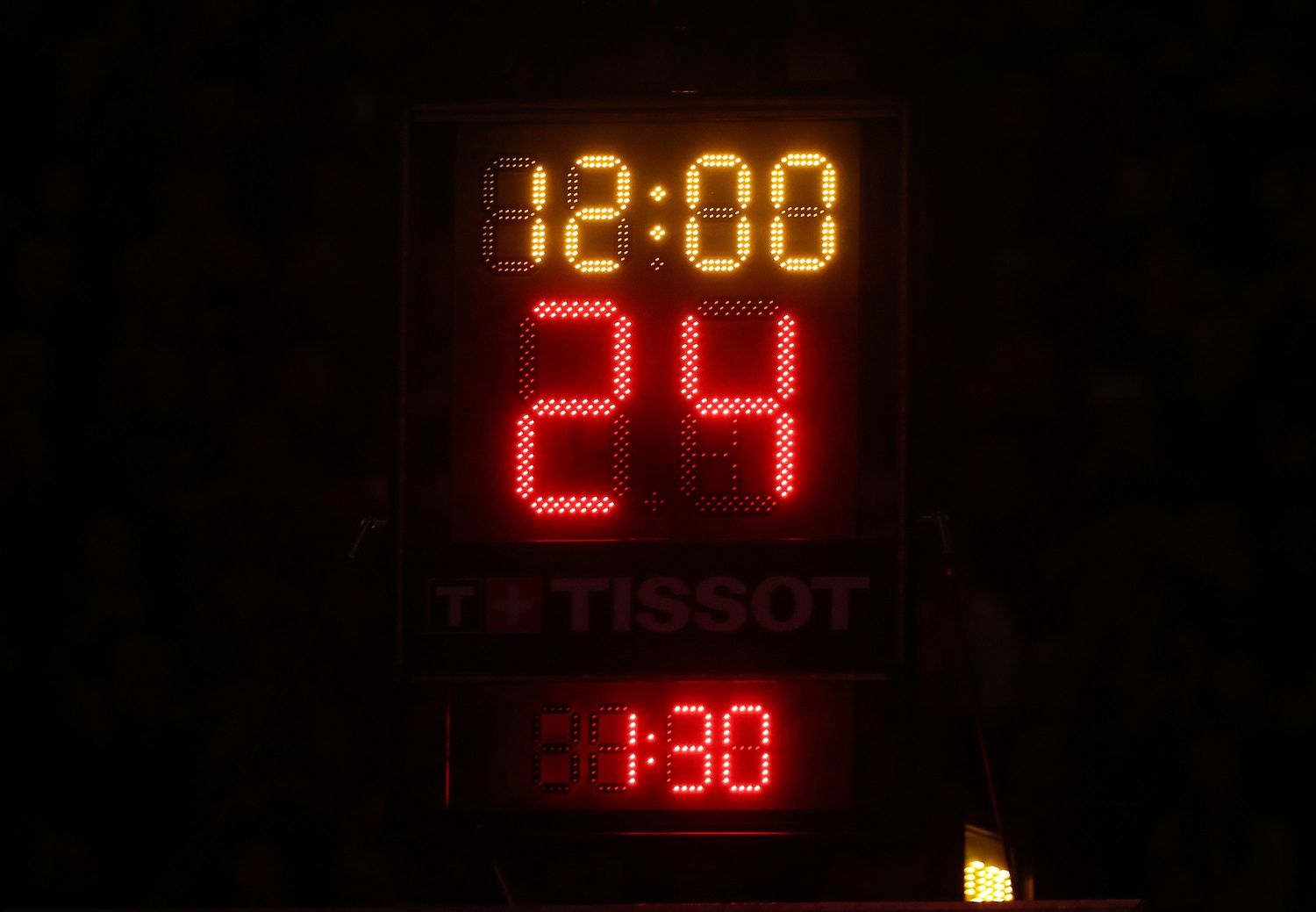
While the official playtime in an NBA game is just 48 minutes, you have probably noticed that the actual experience of watching one lasts much longer.
Between timeouts, free throws, commercials, reviews, and even injuries, games can stretch close to three hours, especially if a game is close in the fourth quarter or there’s overtime.
So, what is the average length of an NBA game? Why does the last minute of an NBA game sometimes feel like the longest minute in sports? And how much does halftime, commercial breaks, or a single replay add to the clock? Let’s walk through everything you need to know about the real length of an NBA game, from opening tip to final buzzer.
Breaking Down How Long NBA Games Take
How Long is an NBA Game?
An NBA game is divided into four quarters, each lasting 12 minutes. So, in theory, there is 48 minutes of live action.
However, the clock stops for various reasons, including timeouts, fouls, reviews, and more. Add in a 15-minute halftime and commercial breaks, and you’re looking at about 2.5 hours from start to finish. If the game goes into overtime, each additional period adds five more minutes of play, plus all the stoppages that come with it.
Some sources estimate that the average NBA game broadcast lasts two hours and 14 minutes. A playoff game or NBA Finals game may take even longer.
For comparison, college basketball games have two 20-minute halves, but just like in the NBA, they end up taking about two hours to finish due to stoppages and breaks.
How Long is Halftime of an NBA Game in the Regular Season, the Playoffs, and the Finals?
NBA halftime typically lasts about 15 minutes. It’s a crucial break for players to rest, regroup, and hear from their coaches. For fans at home, it’s the perfect time to grab snacks or check social media. The halftime length can stretch a bit longer during nationally televised games or special events like the All-Star Game and NBA Finals.
How Long is Overtime in an NBA Game?
The game heads into overtime if the score is tied after four quarters. Each overtime period is five minutes long, and the game continues until there’s a winner. Some of the most thrilling games in NBA history have gone into multiple overtimes.
One example is the 1951 game between the Indianapolis Olympians and Rochester Royals, which lasted six overtimes — the longest NBA game on record.
More recently, fans may remember the four-overtime thriller between the Portland Trail Blazers and Denver Nuggets in the 2019 playoffs.
How Many Commercials Are There During NBA Games?
Commercial breaks are a major reason NBA games run longer than the 48-minute play clock. Each quarter has built-in TV timeouts. For locally televised games, the first two TV timeouts in each quarter are two minutes and 45 seconds long.
For nationally televised games, they stretch to three minutes and 15 seconds. Additional breaks during play are usually around one minute and 15 seconds. These, plus halftime ads, can add up to nearly 45 minutes of commercials in total.
During the 2025 NBA All-Star Game, fans were frustrated by the fact that the broadcast featured 80 minutes of ads compared to just 42 minutes of actual basketball.
What are the Timeout Rules in the NBA?
Each team gets seven timeouts per game. One of them is mandatory in both the first and third quarters. While there are short timeouts labeled as 20-second timeouts, they often run longer than expected.
Timeouts are used to stop the clock, draw up plays, give players a breather, and shift momentum. Each timeout in the NBA lasts up to 75 seconds — just enough time for coaches to huddle up and deliver key instructions before play resumes.
Instant Replays and Reviews Add Time Too
When officials need to take another look at a play, especially in close games, the clock pauses while they review footage. These reviews usually take two to five minutes, but can feel even longer when tensions are high.
In regular-season games, replays aren’t used as frequently. But during the playoffs and Finals, officials are more likely to review calls to make sure they get them right. It’s all part of making the game as fair as possible, even if it adds extra time.
Free Throws Slow Down the Game
Free throws might not seem like a big time factor, but they can really drag a game out, especially in the final minutes. Every player has their own routine before taking a shot, and some are slower than others. During close games, teams often foul intentionally to stop the clock and force free throws.
This strategy, while common, slows the pace significantly. It’s one of the reasons why the fourth quarter often feels like it takes longer than the rest of the game combined.
Injuries Also Affect Game Time
Injuries are unpredictable and can add more delays. When a player gets hurt, officials stop the game until the situation is handled. In serious cases, medical staff come onto the court, and this can take several minutes.
Even though injuries aren’t frequent, when they do happen, they naturally add time to the total game duration.
A Look at All the Factors That Extend Game Length
Here’s a quick rundown of everything that makes an NBA games last two-to-2.5 hours:
- 48 minutes of actual play
- 15 minutes of halftime
- Time-outs: seven per team
- Free throws and fouls
- Replays and video reviews
- Overtime (if needed)
- Injuries and substitutions
So while the NBA rulebook might say “48 minutes,” fans know the game’s real length is much longer. Between strategy, commercials, reviews, and so on, it’s no surprise that a typical game stretches beyond two hours.
