
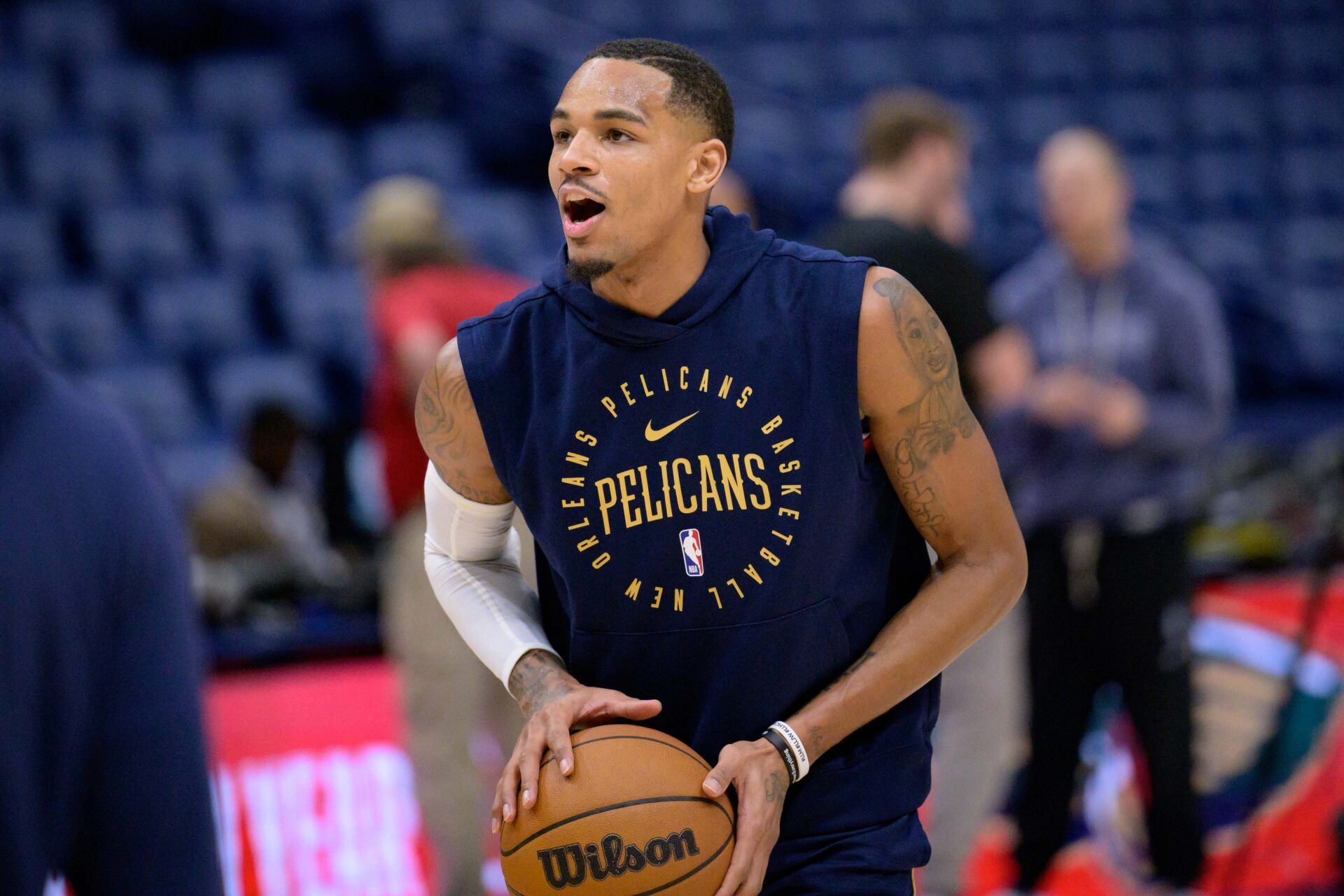
The New Orleans Pelicans’ season has unraveled into another year of disappointment, buried near the bottom of the Western Conference standings. Yet inside the organization, a different storyline is quietly unfolding. A veteran guard who has every reason to wait is choosing instead to return, determined to send a message.
Dejounte Murray’s Return Signals Pride and Purpose in New Orleans
At 16–42 and 14th in the West, the Pelicans are not playing for postseason positioning. They also lack incentive to tank, having already sent their unprotected first-round pick to the Atlanta Hawks in the trade that brought standout rookie Derik Queen to the Pelicans.
In a season with little left to salvage, Dejounte Murray’s decision to return from a torn right Achilles stands out.
Murray has not played in 13 months. The injury occurred in his first season with the Pelicans after arriving via trade from Atlanta. With only 24 games remaining and the team far from contention, rest would have been understandable. Instead, Murray made his motivation clear.
“There’s a reason I’m coming back,” Murray said ahead of Tuesday’s expected return against the Golden State Warriors. “I’m not one of those guys that’s like, ‘oh man, I’m paid and I can get an extra six-seven months, my team’s 14th in the West.’ There’s a lot of excuses for a chump to be like, ‘nah, I’m not playing,’ and I’m the opposite of that.”
“I’m not one of those guys like I’m paid, I could get an extra 6-7 months, or our team is 14th in the West. There are a lot of excuses for a chump to say ‘I’m not playing’. I am the opposite of that… I want to represent of New Orleans”
— Dejounte Murray on New Orleans pic.twitter.com/NOB1LzV3IC
— Pelicans Film Room (@PelsFilmRoom) February 23, 2026
His comments, first reported ahead of the Warriors matchup, underline that pride and competitive identity are driving his return. Murray emphasized his connection to the city, adding, “I see the fans and this city’s passionate. They’re loving, caring and they’ll get behind you if you show that you’re the same.”
The backdrop to his comeback has been turbulent. Injuries derailed expectations, including Zion Williamson’s limited availability. The Pelicans fired former executive David Griffin and replaced him with Joe Dumars, who then drafted Jeremiah Fears seventh overall, signaling a long-term outlook.
Interim coach James Borrego acknowledged that not every player would rush back from such a serious injury, praising Murray’s willingness to compete.
Murray’s own journey reinforces that mindset. He previously missed an entire season in San Antonio with a knee injury before developing into an All-Star. After productive years in Atlanta, his Pelicans’ tenure has been interrupted by a broken hand and then the Achilles tear. This latest setback could have justified caution.
Instead, Murray framed his return as a matter of personal conviction rather than a financial obligation. He stressed that he loves the game and wants to represent the organization and the city properly, regardless of standings or front-office changes.
For a franchise lacking immediate playoff stakes, Murray’s return offers something less tangible but still significant: accountability. In a season defined by losses and uncertainty, his decision injects professionalism and competitive edge into a rebuilding environment.
Whether it alters the Pelicans’ trajectory this year is doubtful. But it may shape how the locker room and fan base view the road ahead.
