
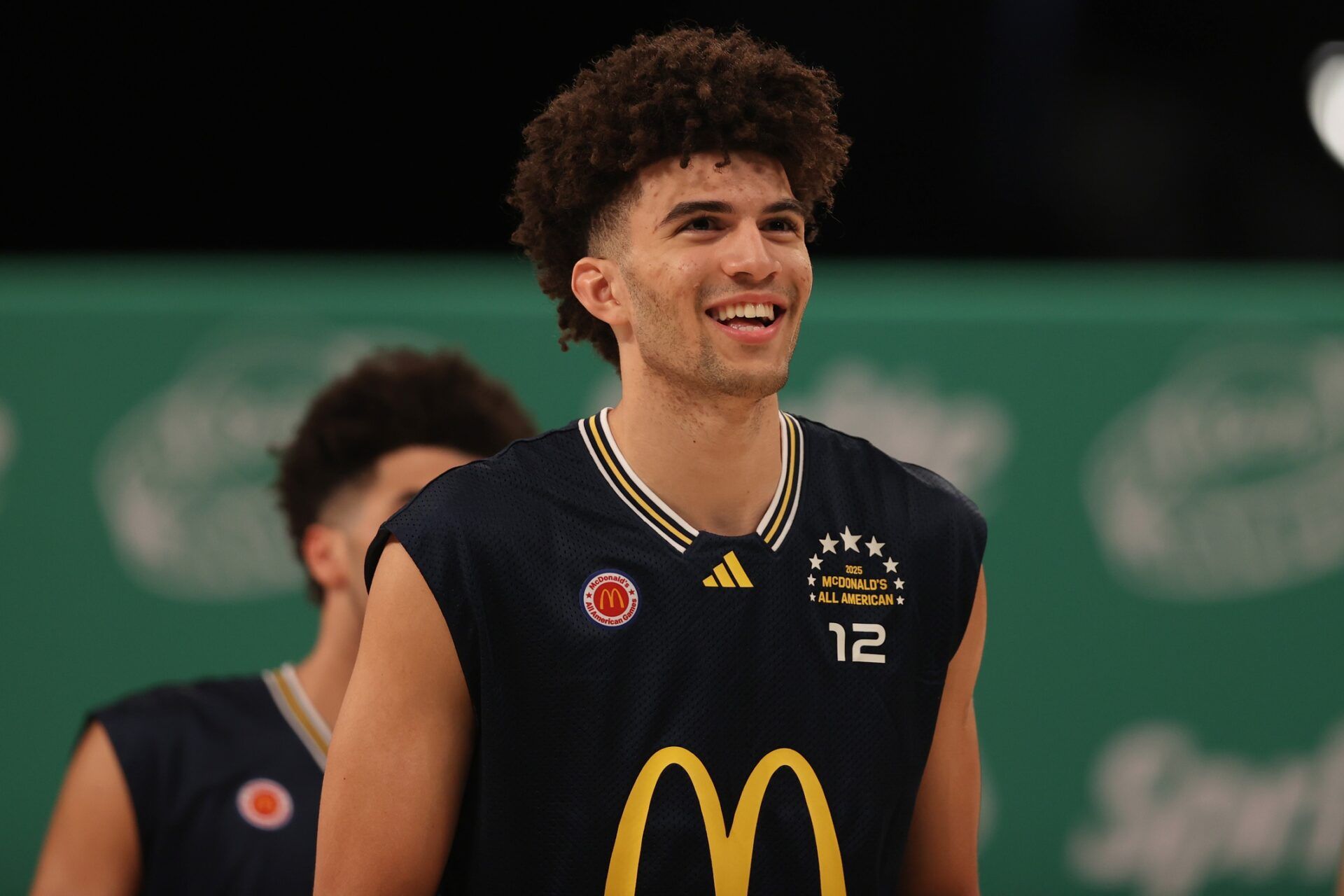
Cameron Boozer’s meteoric rise in NBA draft projections has reached a fever pitch, with the Duke Blue Devils forward climbing nearly a full spot in average draft position within just one week. The son of former NBA All-Star Carlos Boozer has captured the attention of mock draft enthusiasts and NBA scouts alike, positioning himself as a legitimate contender for the top overall pick in the 2026 NBA Draft before even setting foot on campus.

Cameron Boozer’s Mock Draft Momentum Building Steam Over AJ Dybantsa
The numbers tell a compelling story about Boozer’s rapid ascent up draft boards. His average draft position rose from over 4.00 to 3.45 in PFSN’s NBA Mock Draft Simulator, representing one of the most dramatic week-over-week improvements for any prospect in the Class of 2026. This surge places him in direct competition with BYU’s AJ Dybantsa for the coveted No. 1 overall selection, a spot that seemed unlikely just weeks ago.
What makes this climb particularly impressive is the velocity of change. Draft positions fluctuate gradually as evaluators process game film, combine measurements, and workout performances. However, Boozer’s case represents something entirely different. The sustained momentum suggests that the draft community perceives him as elite-level talent that may have been initially undervalued or overlooked in earlier assessments.
The significance extends beyond mere numerical rankings. When mock draft users consistently elevate a prospect’s selection position across multiple teams and scenarios, it indicates a fundamental shift in how that player’s ceiling and floor are perceived. Boozer’s movement from the mid-first round conversation to top-three consideration represents this paradigm shift.
Team Interest Patterns Reveal Strategic Thinking
The Philadelphia 76ers lead the charge in Boozer selections within the simulator, followed by the Washington Wizards, Utah Jazz, Charlotte Hornets, Brooklyn Nets, Phoenix Suns, Toronto Raptors, and New Orleans Pelicans. This distribution reveals fascinating insights about organizational philosophies and roster construction strategies across different franchises.
The 76ers’ preference makes sense given their potential need for frontcourt depth and versatility. Philadelphia’s user selections suggest they view Boozer as a player who could complement their core while providing the athletic upside necessary to compete at the highest level. Similarly, Washington’s interest aligns with their rebuilding timeline and emphasis on acquiring young talent with high ceilings.
READ MORE: 2026 Way-Too-Early NBA Mock Draft
Utah’s inclusion in the top landing spots reflects their continued commitment to player development and their track record of maximizing prospects with strong fundamentals. The Jazz have historically excelled at identifying players who possess both immediate impact potential and long-term growth trajectories, making Boozer an ideal fit for their organizational culture. (It’s also worth noting that Cameron’s father spent the bulk of his prime with Utah from 2004-2010).
Charlotte, Brooklyn, Phoenix, Toronto, and New Orleans round out the list of teams most frequently selecting Boozer in user simulations. Each franchise represents different stages of competitive cycles, yet all share a common thread of recognizing the value in securing a prospect whose stock continues to rise.
Popularity Metrics Signal Broader Appeal
Beyond draft position, Boozer ranks as the second-most drafted player in the Class of 2026, trailing only Darryn Peterson in overall selection frequency. This popularity metric provides crucial context about his perceived value across the draft landscape, not just among top-tier selections.
The frequency of selection often correlates with consensus building among evaluators. When a prospect consistently appears in mock drafts across multiple teams and scenarios, it suggests widespread agreement about their professional potential. Peterson’s lead in this category establishes him as the current consensus top prospect, while Boozer’s second-place finish indicates growing unanimity about his elite status.
This popularity surge becomes even more remarkable considering Boozer hasn’t played a single game at Duke. A prospect’s college performance typically serves as the primary catalyst for draft stock movement. Yet, Boozer’s rise seems driven by high school dominance, physical tools, and projected fit at the next level.
When Cam Boozer went up against Cooper Flagg 🔥
Cameron Boozer dropped 22 PTS, 12 REB, 2 BLK, 1 STL
Cooper Flagg went for 21 PTS, 10 REB, 7 AST, 2 STL, 2 BLK.
Credit: Slam Highlights pic.twitter.com/riynMWvdzH
— Duke Central (@duke_central) April 21, 2025
The timing of this momentum proves particularly advantageous for Boozer’s long-term plan. Entering Duke with elevated expectations and draft positioning creates additional motivation while providing a platform to showcase his abilities against elite competition. The Blue Devils’ national spotlight and head coach Jon Scheyer’s player development track record should only amplify the attention surrounding Boozer’s freshman campaign.
As the 2025-26 college basketball season approaches, Boozer’s trajectory represents one of the most intriguing storylines to monitor. His rapid ascent in mock draft circles suggests the foundation for sustained success, while his popularity among simulator users indicates broad-based confidence in his professional potential.