
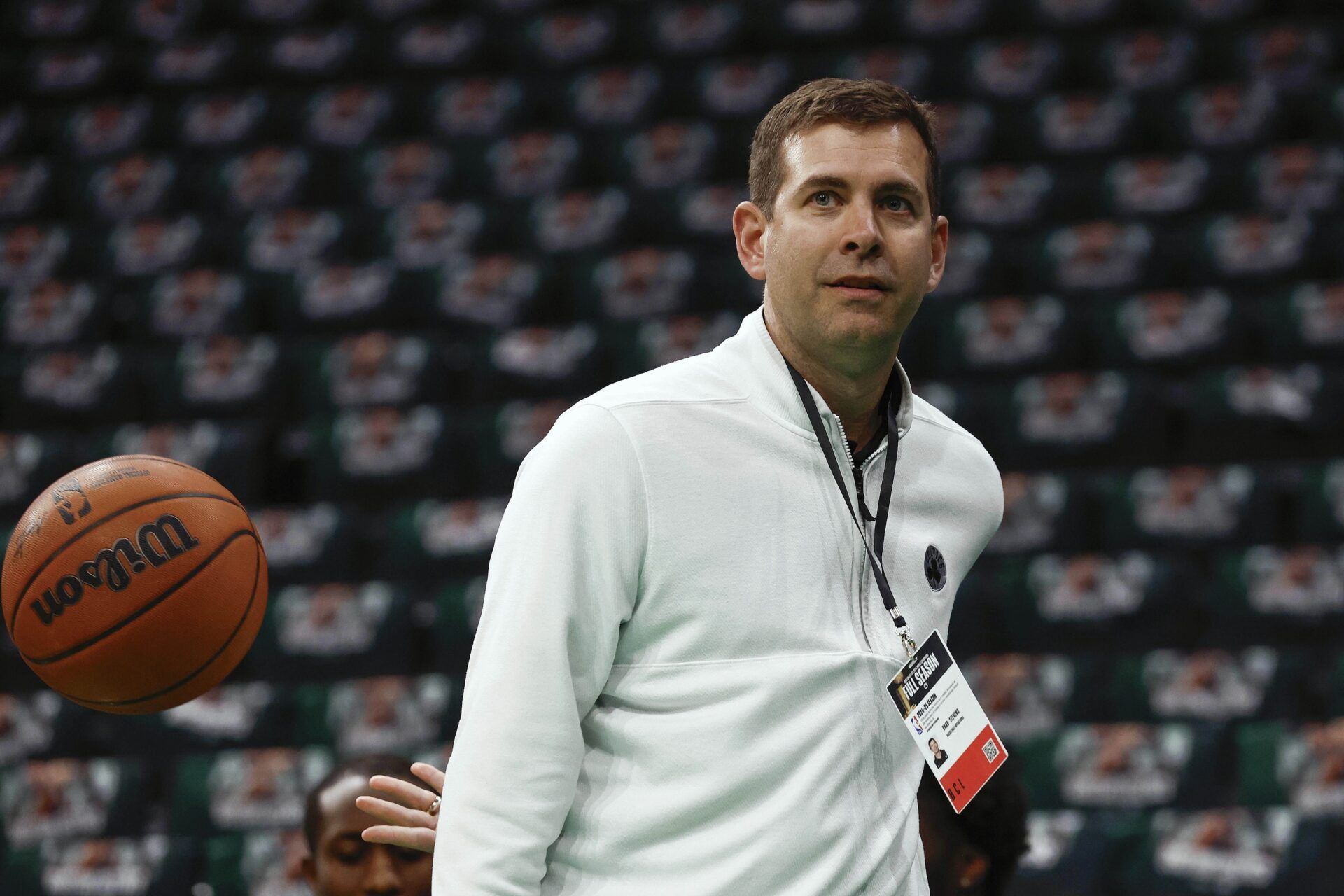
Brad Stevens knew this day would come. The Boston Celtics president had to sit down with two championship heroes and explain why their time in green was over. Jrue Holiday and Kristaps Porziņģis helped deliver the franchise’s 18th banner, but the harsh reality of the NBA’s new financial rules meant their Boston story had to end.
Stevens recently opened up about the emotional weight of these decisions and why the Celtics had no choice but to break up pieces of their title-winning roster.
Why Did the Celtics Trade Away Their Championship Core?
The answer comes down to one thing: the second apron. This new NBA rule acts as a soft payroll cap that hammers teams with serious penalties for crossing the threshold. The system was designed to create balance across the league by preventing billionaire owners from simply buying championships through massive payrolls.
With Jayson Tatum and Jaylen Brown already locked into maximum contracts, the Celtics found themselves in an impossible position. Stevens revealed that the organization simply had no choice but to move Holiday and Porziņģis to avoid the crushing penalties that come with the second apron.
“Trades happened. I think that those are pretty obvious. And the basketball penalties associated with those are real. We’ve all talked about that. But we’re fortunate because we’d like the guys we got back. You know, and I think that that’s one of the things that, you know, we are excited about…”
Brad Stevens didn’t shy away from why the Celtics traded Jrue Holiday and Kristaps Porzingis:
“The second apron is why.” pic.twitter.com/LXe7RdFD4X
— Daniel Donabedian (@danield1214) July 8, 2025
Stevens made it clear that both players knew this possibility existed. Holiday and Porziņģis understood the Celtics were deep into luxury tax territory and realized they could be moved. Still, that knowledge didn’t make the actual trades any less difficult to execute.
“Those are not easy trades to make. Those are not easy phone call. Obviously, those guys have been around the league a long time. They knew the CBA. They knew that that was a high likelihood that they could be part of a move and they were communicated that before. But its still hard. We will miss them and we are thankful for them.”
What Penalties Would the Celtics Have Faced?
The consequences of staying in the second apron would have crippled Boston’s flexibility for years to come. Teams that cross this threshold face a series of restrictions that make roster building nearly impossible.
First, they lose the ability to combine player salaries in trades, making it much harder to acquire talent. The mid-level exception in free agency disappears entirely, eliminating a key tool for adding role players. Teams also can’t include cash in trade negotiations, removing another avenue for making deals work.
Perhaps most damaging of all, any team that stays in the second apron for three of five seasons sees their first-round draft pick moved to the very end of the round, regardless of how they perform that season. These penalty essentially punishes teams for years after they’ve already paid the financial price.
For the Celtics, who had already achieved their goal of winning a championship with Holiday and Porziņģis, enduring these long-term penalties simply wasn’t worth it. The organization chose to cash in their chips and retool rather than face years of roster-building restrictions.
Now, fans are left wondering whether Boston can stay competitive without two key pieces of their championship puzzle while they wait for Tatum to return from his injury. The trades may have been necessary from a financial standpoint, but they’ve undoubtedly made the path to another title more challenging.
