
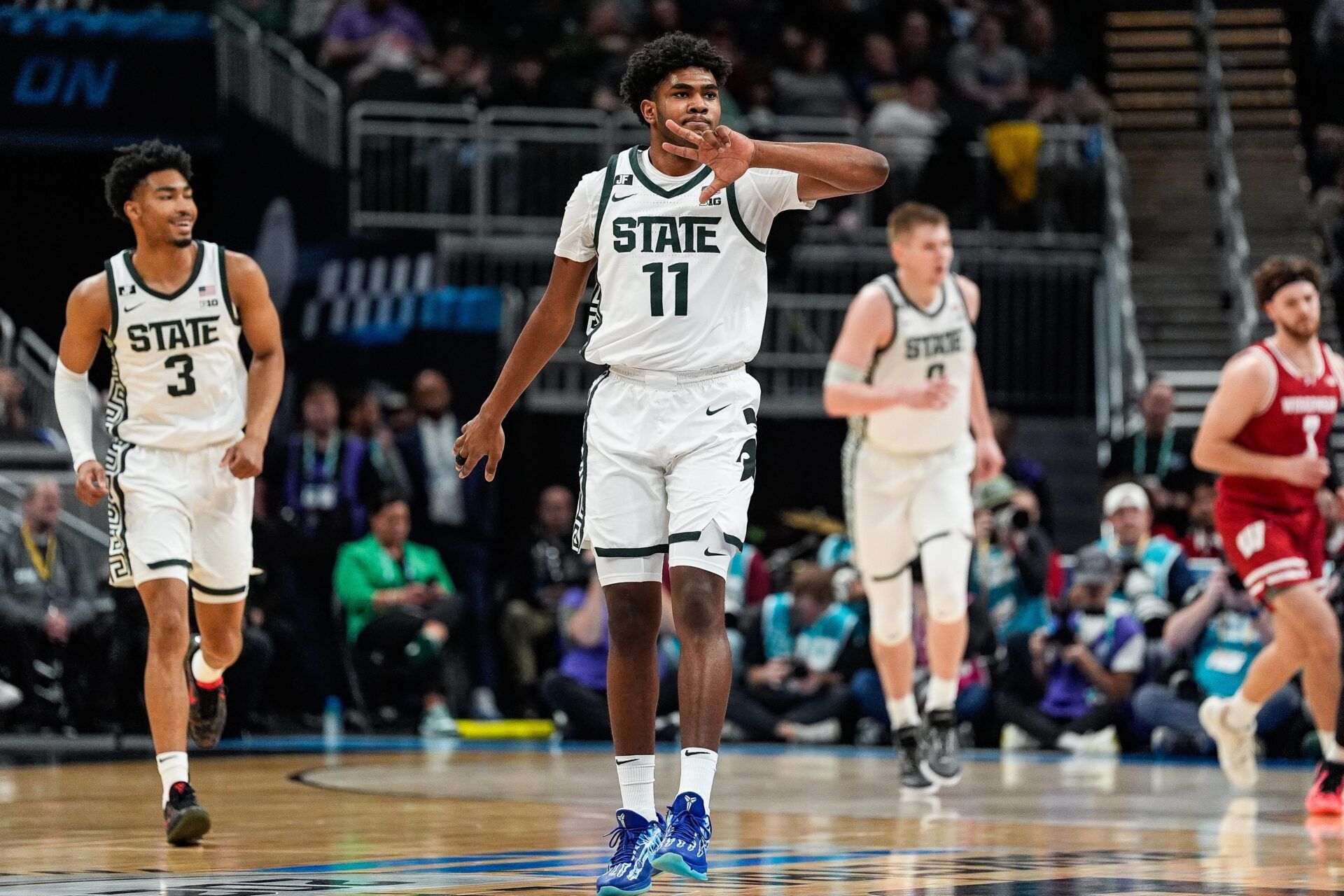
Which teams had the best 2025 NBA Draft hauls? And which teams’ draft classes could have used some tinkering? We outline each team below with an overall grade based on our single-pick grades that were updated live and in real time.
Use our helpful table of contents to find your favorite team below. And head to the free PFSN NBA Mock Draft Simulator to get a glimpse of the 2026 NBA Draft class earlier than anywhere else.
Atlanta Hawks
Overall Draft Grade: B+
- Round 1, Pick 23
Așa Newell, F, Georgia
Grade: B+
The Hawks brought in a rim-running big in Asa Newell to complement what it is that the newly acquired Kristaps Porzingis wants to do on the offensive end. Newell had 58 dunks this past season and is more than content to help with the battle of the restricted area.
Entering the draft, a 6’9” energy player with limited upside on the perimeter didn’t project as a great fit for most teams in this era of spacing, but with a stretch big like Porzingis and a starting unit that is very finesse-oriented, this is a landing spot that makes plenty of sense.
The Hawks have won 40-43 games in four of the past five seasons, but they are filling out their roster in a reasonable way and given the state of the Eastern Conference, this looks like a team that could take a reasonable step forward in 2025-26.
Boston Celtics
Overall Draft Grade: C+
- Round 1, Pick 28
Hugo González, F, Spain
Grade: B+ - Round 2, Pick 46
Amari Williams, C, Kentucky
Grade: C - Round 2, Pick 57
Max Shulga, G, VCU
Grade: C
The Boston Celtics didn’t swing for headlines in this year’s draft, they swung for time. With a roster still built to compete once Jayson Tatum returns, Boston leaned into long-term upside, selecting three developmental prospects who reflect more on the future than the present.
First up: Hugo Gonzalez, the 6’6” Spanish wing from Real Madrid.
This is a stash play with a high ceiling and a long runway. Gonzalez is a fluid athlete who defends multiple positions and competes with a relentless motor. Offensively, he’s still raw, but flashes of slashing, playmaking in transition, and connective passing are there.
He didn’t have a big role in Europe, which makes this more projection than production. But the Celtics, with their core intact, can afford to wait. If he improves as a shooter and fills out his frame, Boston might have found a gem.
At 46, they added Amari Williams, a throwback big who won’t stretch the floor but does just about everything else. Williams is a physical, pass-first center who plays with vision, poise, and power.
He’s a high-IQ screener, a sturdy low-post defender, and a connector from the elbow who can anchor bench units on both ends. With Kristaps Porziņģis out and Al Horford aging, this is a sensible flier on frontcourt depth.
Williams isn’t flashy, but he’s sturdy, smart, and plays to his strengths. He’s also more mature than most second-rounders after five college seasons, which could earn him rotation looks sooner than expected, especially in a developmental year.
Finally, Max Shulga, taken at No. 57, brings feel and function as a combo guard. The former VCU standout averaged 15-6-4 last season while shooting nearly 39% from three.
He’s not overly explosive, but he gets to his spots, makes smart reads out of the pick-and-roll, and rarely forces the issue. At 6’5”, he has the size to play off-ball and the intelligence to run a second unit. Defensively, he’s average but not a liability, and his 1.8 steals per game speak to solid instincts.
Each pick speaks to Boston’s draft philosophy this year: no immediate pressure, just long-term bets. Gonzalez is a stash. Williams is a rotational hopeful. Shulga is a savvy depth play. No one here moves the needle now, but that’s the point, the Celtics are playing the long game.
Nothing flashy, but a few smart swings that could age well if developed properly.
Brooklyn Nets
Overall Draft Grade: C
- Round 1, Pick 8
Egor Demin, G, BYU
Grade: B - Round 1, Pick 19
Nolan Traore, G, France
Grade: A- - Round 1, Pick 22
Drake Powell, F, North Carolina
Grade: B - Round 1, Pick 26
Ben Saraf, G, Israel
Grade: C+ - Round 1, Pick 28
Danny Wolf, F, Michigan
Grade: B-
The Brooklyn Nets entered the 2025 NBA Draft with a blank canvas. With just one player (Nic Claxton) under contract beyond 2026 and $45 million in cap space, they’re clearly in teardown mode. That gave them room to swing on upside, and they took that route, stacking five first-round picks.
Their top pick, Egor Demin, fits the mold of a rebuilding franchise. At 6’8”, he’s a long, intelligent playmaker with good vision and instincts. The shot needs work, but his size allows him to get it off over defenders. In a system without pressure to win now, Demin should have time to grow alongside scorers like Cam Thomas.
Brooklyn doubled down at guard with Nolan Traore, an 18-year-old French point guard with serious juice. He’s a confident creator with excellent speed, passing touch, and the kind of tools that often pop by year three. His game needs polishing, the shot selection and strength aren’t there yet, but the Nets can afford to be patient.
They shifted to the wing with Drake Powell, a high-motor defender from North Carolina. Powell’s game wasn’t fully unlocked in Chapel Hill, but he brings toughness, defensive versatility, and a strong feel for off-ball movement. If he develops as a shooter, he could be a reliable 3 and D piece.
As part of the Mikal Bridges trade, the Nets added Ben Saraf. A lefty from Israel with a pro background, Saraf brings some craft and instincts, but he’ll need to bulk up and tighten the jumper. His role likely begins small, but he fits the theme, young, moldable backcourt talent.
Their final swing was on Danny Wolf, one of the most divisive players in this class. The 7-footer out of Michigan functioned as a point-center, showing real passing chops and stretch potential. He averaged 13.2 points, 9.7 rebounds, and nearly 4 assists, often running the offense. But concerns about his athleticism, defense, and turnovers kept him on the board until pick 27. He’s not a rim protector and isn’t dynamic laterally, but his unique offensive profile could make him an outlier win if things click.
Altogether, Brooklyn added five prospects with high ceilings and uncertain floors. They get points for targeting premium positions and players with developmental upside, but the roster is now full of long-term bets with no clear anchors.
The rebuild is on, and this class adds ingredients, but not certainty.
Charlotte Hornets
Overall Draft Grade: C+
- Round 1, Pick 4
Kon Kneuppel, F, Duke
Grade: B+ - Round 1, Pick 29
Liam McNeeley, F, UConn
Grade: D+ - Round 2, Pick 33
Sion James, F, Duke
Grade: C+ - Round 2, Pick 34
Ryan Kalkbrenner, C, Creighton
Grade: A-
The Charlotte Hornets came into the 2025 NBA Draft with one of the league’s weakest rosters and a desperate need to add both talent and identity. They didn’t swing for the fences, but they may have added a trio of contributors who can plug holes and help stabilize the franchise. Still, it’s hard to call this class a game-changer.
Knueppel wasn’t the most explosive talent on the board, but Charlotte bet on shooting, feel, and fit. The 6’6” wing is one of the most polished scorers in the draft, boasting elite shooting splits (47.9/40.6/91.4), a high basketball IQ, and physical strength.
He won’t blow past defenders or sky above the rim, but he finds space, plays through contact, and understands how to function in a halfcourt offense.
On a team desperate for shooting structure around LaMelo Ball and Brandon Miller, Knueppel’s presence should help space the floor immediately. The ceiling is modest, but the floor is high. He’s a plug-and-play wing with tools to produce right away, though he won’t fix Charlotte’s defensive woes or lack of top-tier athleticism.
The Hornets’ second first-rounder, acquired by sending Mark Williams to Phoenix, raises some questions. McNeeley fits their shooting profile and gives them another floor spacer, but the redundancy is hard to ignore.
With Ball and Miller commanding high usage, McNeeley projects more as a spark-plug second-unit option than a foundational piece.
He took nearly as many threes as twos last season at UConn, rarely got to the line, and averaged under three made two-pointers per game. If used correctly, he can be a microwave scorer in spurts.
If overextended, his weaknesses may become more apparent, especially given Charlotte’s thin frontcourt.
James isn’t flashy, but he checks real boxes defensively. The 6’5”, 217-pound guard out of Duke uses his sturdy frame and lateral movement to defend both guard spots, and he plays with a physical edge that will endear him to coaches. His offensive game is limited, but for a team starving for defensive identity, James could carve out a real role.
With pick No. 34, Charlotte landed one of the draft’s most reliable interior defenders. Kalkbrenner, a three-time Big East Defensive Player of the Year, brings legit rim protection, strong instincts, and improving shooting touch.
He won’t thrive in space or on switches, but as a drop-coverage anchor, he’s one of the better bets in this class.
His mid-range shot and occasional pick-and-pop looks give him some modern appeal, but his value will live in the paint. If developed right, he could be a rotation big who helps more than he hurts.
The Hornets didn’t get flashy, but they addressed immediate needs: shooting, structure, and size. The ceiling of this class is debatable, especially with frontcourt questions following the Mark Williams trade.
But if Knueppel and Kalkbrenner contribute early and James holds up defensively, Charlotte may have added useful rotation pieces for a team still finding its footing.
Chicago Bulls
Overall Draft Grade: C-
- Round 1, Pick 12
Noah Essengue, F, France
Grade: C+ - Round 2, Pick 55
Lachlan Olbrich, F, Australia
Grade: D+
The Bulls made a bold bet at No. 12, drafting Noa Essengue, a long-term project with clear upside. At just 18, Essengue is one of the youngest players in the class, and while he’s raw, the tools are impossible to ignore. He’s a modern forward with elite length and mobility, a 5’s frame with a wing’s movement skills. That combination alone offers intrigue.
Essengue has held his own in Germany’s top league, flashing defensive versatility and physical traits that make him a worthwhile swing. He can cover ground, disrupt passing lanes, and provide weak-side rim protection. The bones of an NBA defender are there.
Offensively, the swing skill is the shot. Essengue will need to space the floor consistently to stay on the court. If that develops, his physical profile and developing instincts could turn him into a valuable modern big. But that’s a big “if”, and the Bulls are betting on years of growth with this pick.
At 55, Chicago grabbed Lachlan Olbrich, a skilled, throwback big who operates comfortably with his back to the basket. He’s polished, especially as a passer, and his feel is ahead of most prospects his age. His touch around the rim and short-roll playmaking offer value.
His résumé includes championships in the NBL1 and NZNBL and reps with the Australian Boomers, he’s a seasoned young pro.
But Olbrich faces steep hurdles.
He lacks vertical pop, is undersized for a true 5, and struggles to defend in space. He’s not an above-the-rim athlete and doesn’t offer much as a rim protector or switch defender. His free-throw struggles don’t inspire confidence in future shooting development, and his screen timing and spacing still need work.
There’s enough feel to merit a two-way contract, and the Bulls may see him as a culture piece with long-term bench potential. But the odds of him carving out a rotation role are slim without a leap in athleticism or shooting.
In total, the Bulls swung on a raw, high-ceiling prospect in Essengue and a high-IQ, low-ceiling big in Olbrich. Neither pick feels like immediate value, and both come with real uncertainty. For a team stuck in the middle, this draft felt more like a shrug than a solution.
Cleveland Cavaliers
Overall Draft Grade: C+
- Round 2, Pick 49
Tyrese Proctor, G, Duke
Grade: C+ - Round 2, Pick 58
Saliou Niang, G, Senegal
Grade: C+
With two late second-round picks, the Cleveland Cavaliers took measured swings on tools, upside, and long-term development.
At 49, they selected Tyrese Proctor, the former five-star recruit out of Duke. Proctor arrived in Durham from Australia with lofty expectations, but across three seasons, he never quite hit the mark. He showed flashes of being a dynamic combo guard, but inconsistency and confidence issues limited his growth.
At 6’6”, Proctor has intriguing size for a guard. He gets downhill, applies rim pressure, and defends well at the point of attack. His length is an asset on defense, and his junior-year 40.5% shooting from three gives him a foundation to build on. Still, the mechanics and shot confidence come and go, and he struggles to finish inside despite his athleticism.
Proctor’s projection is clear: a possible 3-and-D rotational guard. But he’s not ready yet. At 21, he’ll likely spend his first season developing with the Charge, working on polishing his game. The Cavaliers are gambling on pedigree and potential here, hoping they can unlock the version of Proctor scouts once raved about.
With the final pick of their draft, Cleveland grabbed Saliou Niang at 58. A standout at the Adidas Eurocamp in Italy, Niang caught eyes with his elite frame, wingspan, and defensive versatility. He’s a switchable forward who can cover multiple positions and compete physically at the next level.
The questions begin on offense. Niang isn’t polished as a scorer. His jumper is unreliable, and he’s still figuring things out as a finisher. That said, he plays with speed and fluidity, and he’s comfortable getting downhill. There’s a raw explosiveness that gives him a shot to stick if the offensive side catches up.
At 21, Niang is older for a raw prospect, which likely kept him out of the first round. But his physical tools offer a foundation for growth. He’ll be a developmental player in the G League with the kind of athletic profile that helps bridge the gap to the NBA.
In total, the Cavaliers didn’t make a splash. They didn’t address immediate needs or add proven contributors. But they did take two calculated bets on players with high-end traits and room to grow. It’s not a home-run draft, but it’s not a waste either.
For a team looking to deepen its pipeline and invest in long-term upside, it’s a reasonable haul. Now, it’s up to their development program to do the rest.
Dallas Mavericks
Overall Draft Grade: A+
- Round 1, Pick 1
Cooper Flagg, SF, Duke
Grade: A+
The Mavs had a single pick and they spent it on the most capable player in the 2025 NBA Draft.
Cooper Flagg is undeniably a generational talent. At just 18 years old, he showcased remarkable two-way versatility at Duke, averaging 19.2 points, 7.5 rebounds, 4.2 assists, 1.4 steals, and 1.4 blocks per game. His advanced metrics reflect one of the most dominant freshman seasons in college basketball history.
Flagg’s playmaking ability could transform the Dallas Mavericks’ offensive identity. The team hasn’t ranked better than 20th in assist rate during the Jason Kidd era, which is surprising given Kidd’s pedigree as a Hall of Fame point guard.
COOPER FLAGG FADEAWAY JUMPER 🔥
📺 ESPN | Auburn-Duke pic.twitter.com/RD1xKjK9rs
— ESPN (@espn) December 5, 2024
Flagg’s basketball IQ sets him apart from other prospects. He plays with the poise of a veteran, never dominating possessions unnecessarily while demonstrating an exceptional feel for spacing, timing, and decision-making. This should allow him to mesh seamlessly with Kyrie Irving and Anthony Davis, enhancing rather than competing with their skill sets.
For Mavericks general manager Nico Harrison, who faced criticism after trading Luka Doncic, landing Flagg provides a new franchise cornerstone that brings immediate excitement back to the organization while offering elite upside for years to come.
Detroit Pistons
Overall Draft Grade: B
- Round 2, Pick 37
Chaz Lanier, SG, Tennessee
Grade: B
The Detroit Pistons used the 37th pick (their only pick) in the 2025 NBA Draft to snag one of college basketball’s most prolific shot-makers: Chaz Lanier.
The former Tennessee standout torched nets last season, drilling 39.5% of his threes and showcasing his knack for hitting tough shots off the dribble. He wasn’t just a catch-and-shoot threat either — Lanier proved he could create his own offense and score against high-level defenders in the SEC after four solid years at North Florida.
That said, Lanier isn’t without limitations.
At 6’4”, he’s slightly undersized for an NBA two-guard and doesn’t bring ideal strength to the position. His ball-handling can be shaky, especially when asked to facilitate, which hurts his ability to create for others.
Defensively, his frame and strength will be tested at the next level. Still, his shot-making gives him a legitimate chance to carve out a role.
If Lanier can hold his own on defense and smooth out the rough edges in his game, the Pistons may have landed a serious value pick who can provide floor spacing and instant offense off the bench.
Golden State Warriors
Overall Draft Grade: C+
- Round 2, Pick 52
Alex Toohey, F, Australia
Grade: B - Round 2, Pick 56
Will Richard, G, Florida
Grade: C-
The Warriors played it safe in this year’s draft, walking away with two prospects who fit their system on paper, but come with enough question marks to limit the excitement.
At 21, Golden State snagged Alex Toohey, an Australian wing who passed on Gonzaga to play for the Sydney Kings in the NBL. Toohey is a floor-spacing forward with a smooth release and flashes of defensive upside.
He’s got NBA size at 6’8” with a 6’11” wingspan and competes hard on both ends, especially in transition, where he makes quick decisions and rarely forces shots.
That said, his athleticism doesn’t pop at the NBA level. He’s not a creator off the bounce or someone who’ll finish through much contact. Most of his value hinges on catch-and-shoot consistency and effort on defense. Add that he’s a little older than many of his first-round peers, and the ceiling feels a bit capped.
Still, at 52, that kind of floor-spacing size is worth a look, especially in a Warriors offense that prizes quick decision-makers and unselfish play.
Golden State doubled down on its identity with Will Richard at 55, the athletic combo guard from Florida who helped the Gators win the 2025 national title. Richard brings juice as a 3-and-D candidate. At 6’4”, he’s a little undersized for a traditional wing, but makes up for it with a tenacious defensive approach and plus rebounding for his position.
He shoots it well from deep and has no fear finishing in traffic, showing flashes of scoring versatility during Florida’s postseason run. But his offensive polish is still a work in progress.
Richard lacks a consistent first step, doesn’t create much in isolation, and tends to defer when he should be more aggressive. His shot selection can also get erratic, especially outside the flow of the offense.
Still, his competitive edge and willingness to do the dirty work make him a seamless culture fit. If he can simplify his offensive role and lean into catch-and-shoot opportunities, he can earn rotation minutes.
Bottom line: this wasn’t a flashy draft for the Warriors, and it didn’t need to be. Both Toohey and Richard are low-risk bets with defined roles, but neither projects as a needle-mover.
Given where they picked, that’s not a disaster, but it doesn’t inspire much more than a C+ either.
Indiana Pacers
Overall Draft Grade: C-
- Round 2, Pick 38
Kam Jones, PG, Marquette
Grade: B - Round 2, Pick 54
Taelon Peter, G, Liberty
Grade: D-
The Pacers walked out of the 2025 NBA Draft with two guards who couldn’t have taken more different paths to the league. One, a seasoned high-major standout. The other, a late bloomer with something to prove.
Together, they form a draft class that feels solid on paper but not overly inspiring.
With the 38th pick, Indiana scooped up Kam Jones out of Marquette. A polished combo guard with a smooth, well-rounded game, Jones thrives as a shot creator and secondary playmaker.
His floater is deadly. His mid-range pull-up is money. Off the ball, he moves with purpose and discipline. This is a player who understands how to fit into a winning structure.
He may not be a lead guard at the next level. His athletic ceiling is average, and his efficiency dipped a bit this past season. But Jones feels NBA-ready. He doesn’t need the ball to impact the game.
His feel, scoring punch, and ability to read the floor will translate. He gives Indiana a steady hand and some much-needed versatility in a second-unit role.
Defensively, he’s engaged. He gets low, uses his frame well, and makes life difficult for opposing ball-handlers. It’s not elite upside, but it’s functional, and in the right system, it’ll hold up.
This pick makes sense. Jones won’t wow you with upside, but the floor is high. If he cleans up his handle and keeps the motor running hot, there’s a long-term role waiting for him in an NBA rotation.
At 54, the Pacers made a more questionable call.
They selected Taelon Peter, the former DII standout who jumped to Liberty and led the Flames in scoring. He averaged just 13.7 points, but did so on excellent shooting splits: 57.8% from the field and 45.3% from three. He had his moment, too, dropping 33 in a win over Middle Tennessee.
He can shoot, no doubt. And at 6’4″, 210 pounds, the frame is pro-ready. But this wasn’t a high-volume scorer, and his all-around game remains limited. It’s hard not to question the value here, especially with several higher-upside wings still available.
Peter might find a niche if the shot stays hot and he embraces a spot-up role. But for a team looking to keep climbing in the East, this pick felt more like a reach than a value steal.
The Pacers didn’t take any big swings. They found steady guards, both of whom could compete for minutes in the right context. But with where this team is and what was still on the board, it’s fair to expect more.
Los Angeles Clippers
Overall Draft Grade: C-
- Round 1, Pick 30
Yanic Konan Niederhauser, C, Penn State
Grade: C- - Round 2, Pick 50
Kobe Sanders, G, Nevada
Grade: C
The Clippers opened their draft night with a surprise swing, selecting Yanic Konan Niederhauser at No. 30. The Swiss big man wasn’t on many first-round radars a month ago, but his raw athletic tools and upside clearly caught L.A.’s eye.
At 6’10” with elite length and bounce, Niederhauser fits the mold of a developmental rim runner. He blocks shots, skies for lobs, and brings a motor that’s hard to teach. There are moments when the instincts flash: timing a block at the summit, catching a pocket pass in stride, or showing touch around the rim.
But those flashes are just that, glimpses, not yet staples.
This isn’t a pick meant to yield short-term returns. It’s a bet on physical gifts and patience.
Niederhauser’s Combine performance hinted he might sneak into the first round, and the Clippers took the leap. If he pans out, they’ll have found a long-term vertical spacer and interior presence off the bench. But it’s going to take time.
With their second pick, L.A. doubled down on potential, grabbing Kobe Sanders, a fifth-year senior who spent four seasons at Cal Poly before transferring to Nevada. He made an immediate impact there, leading the team in scoring and assists while handling a massive offensive load.
Sanders is a unique case. At 6’9″, he offers rare size for a ballhandler and displayed a steady midrange pull-up game in the Mountain West. He showed enough vision and feel to operate as a secondary playmaker, but his fit at the next level hinges on shooting. A career 32.9% three-point mark isn’t enough to command respect, and he won’t get the same touches in the NBA.
Defensively, Sanders is long and instinctual. He can switch across multiple spots and sees the floor well, but lacks the strength to guard bulkier wings. Still, he’s a smart player who could carve out a role if the jumper improves.
The common theme here? Upside over readiness. The Clippers left the draft with two long-term projects who each offer distinct traits, Niederhauser with his rim protection and verticality, Sanders with his jumbo-creator profile. However, neither is likely to contribute early, and both come with clear developmental hurdles.
This draft will look better in three years if one of these bets hits. Until then, it’s hard to see it moving the needle.
Los Angeles Lakers
Overall Draft Grade: B+
- Round 2, Pick 36
Adou Thiero, F, Arkansas
Grade: B+
With the 36th pick in the 2025 NBA Draft — their only pick in this class — the Los Angeles Lakers swung on upside, selecting Adou Thiero, a physically imposing, high-motor forward with a fascinating developmental arc.
Thiero started as a high school guard and grew into a 6’6” wing with a 7-foot wingspan and a rocked-up 218-pound frame. He looks the part from day one, with an NBA-ready body and the kind of burst that jumps off the screen in transition or on straight-line attacks.
As a slasher, Thiero is relentless.
He’s got an explosive first step, vertical pop, and the kind of downhill power that makes defenders bounce. Add in his elite offensive rebounding for a wing, where he simply outworks opponents, and you’ve got a guy who brings real juice without needing touches run for him.
Defensively, he fits the modern switchable mold. Size, mobility, and physicality all show up. He’s comfortable switching onto multiple positions, disrupting passing lanes, rebounding in traffic, and holding his own at the point of attack.
The question — and it’s a big one — is the shot. Thiero hit just 28.4% from three across his college career, with a 25.6% clip last season and a 71.1% mark at the line. Until that jumper levels up, spacing will be tricky.
Still, the Lakers clearly see the upside. Thiero’s athleticism, versatility, and energy give him a real path to carving out a role, and if the jumper ever comes around, this could end up looking like a steal at 36.
Memphis Grizzlies
Overall Draft Grade: B+
- Round 1, Pick 11
Cedric Coward, F, Washington State
Grade: B+ - Round 2, Pick 48
Javon Small, G, West Virginia
Grade: B+ - Round 2, Pick 59
Jahmai Mashack, G, Tennessee
Grade: B+
The Memphis Grizzlies continue to build around Ja Morant’s electric talent and a roster that’s already proven it can withstand adversity. They’ve won 48 or more games in three of the last four seasons, and their 2025 NBA Draft haul adds layers of depth, defense, and upside to keep that window open.
Cedric Coward, selected early in the second round, feels like a quintessential Memphis pick. At 6’6″ with a 7’2″ wingspan, he checks every box for a switchable wing who can defend multiple spots and knock down open threes.
With Desmond Bane no longer in the picture, Coward slides into a role that’s already carved out. His rise from D-III prospect to NBA draftee isn’t just a feel-good story; it’s a testament to his work ethic and two-way upside.
He’s not a finished product, but his frame, tools, and trajectory give Memphis a chance to mold him into the kind of two-way wing who thrives in the playoffs. Coward alongside Jaylen Wells could be the next duo that flies under the radar but wins you playoff games.
At No. 48, the Grizzlies added Javon Small, a gritty four-year college vet who plays with edge and intelligence. He’s 6’2″, but plays much bigger thanks to his fearlessness and control. Small carried a heavy load for West Virginia, proving he can handle pressure, create for others, and hit clutch shots when it counts.
He shot 42.5% on catch-and-shoot threes and nearly 90% at the free-throw line, thriving in pick-and-roll sets while staying calm under fire. He’s physical, crafty, and finds his way to the line. On defense, he stays engaged, plays with discipline, and competes like every possession matters.
Small might not project as a long-term starter, but he brings real value to a rotation. He’s a guy who can stabilize a second unit, play either guard spot, and be trusted in big moments.
At No. 59, Memphis may have found a steal in Jahmai Mashack. The SEC’s premier perimeter defender and Field of 68’s National Defensive Player of the Year, Mashack brings tenacity and length to the backcourt. He locked up top scorers at Tennessee and thrives taking on the toughest assignments.
Offense remains a work in progress, but his improved shooting percentages offer a hint of optimism. The Grizzlies won’t need him to create much. They’ll need him to hound guards, force turnovers, and finish plays others create.
Physically, he’s ready. At nearly 6’4″, with a 6’8″ wingspan and a solid 200-pound frame, he can guard 1s through 3s. Memphis is built on defensive versatility, and Mashack fits that mold perfectly.
Altogether, this class isn’t flashy, but it’s deeply Grizzlies: smart, gritty, and built to contribute. A B+ feels right for a team that knows exactly what it wants and went out and got it.
Miami Heat
Overall Draft Grade: B+
- Round 1, Pick 20
Kasparas Jakučionis, C, Illinois
Grade: B+
The Miami Heat are coming off their fewest wins in a season (37) since 2008, struggling after the Jimmy Butler era came to an end. They could be active as the summer progresses, but for now, this is a team with more talent than their shaky record suggests.
Kel’el Ware is viewed as a long-term piece that they were unwilling to include in Kevin Durant trade negotiations, while more proven pieces like Tyler Herro and Bam Adebayo are plus-producers at their respective positions.
In Kasparov Jakučionis, they get a creative ball-handler with nice size (6’5”) and the ability to exploit matchups. He’s going to help make his teammates better as soon as this season, and as the shot diet matures, he could become a true offensive hub that threatens defenses in a variety of ways.
Reports surfaced that the Heat may be interested in Jonathan Kuminga this summer, a slashing forward who would play well next to a court vision savant like Jakučionis. Whether they land the Golden State distressed asset (or not) shouldn’t color your opinion of this selection.
The Heat are trying to retool, not rebuild.
Milwaukee Bucks
Overall Draft Grade: B
- Round 2, Pick 47
Bogoljub Marković, F, Serbia
Grade: B
The Milwaukee Bucks used the 47th pick in the 2025 NBA Draft to land Bogoljub Markovic, the latest skilled big man to come out of Serbia’s Mega Basket program, a proven factory for NBA-ready talent.
Nearly 7 feet tall, Markovic made a strong impression at the Nike Hoop Summit, playing with a chip on his shoulder, showing real toughness, and flashing a polished offensive skill set well beyond his years.
Offensively, he profiles as a modern stretch big with legit floor-spacing potential. He hit 39.4% of his catch-and-shoot threes this past season, and his jumper is smooth with a high release, quick motion, and no wasted movement.
He’s also got some real craft on the block, scoring with either hand and showing the occasional flash as a playmaker. The handle and decision-making still need refinement, but the offensive upside is hard to ignore.
On defense, he’s more of a positionally sound guy than a true rim deterrent. He rotates smartly and competes, but his frame isn’t built for banging with stronger, more physical bigs just yet.
That said, if he can consistently bring value as a shooter and short-roll weapon, the Bucks may have just added a very interesting developmental piece to their frontcourt. Just don’t expect to see him any time soon.
Minnesota Timberwolves
Overall Draft Grade: C
- Round 1, Pick 17
Joan Beringer, C, France
Grade: D - Round 2, Pick 45
Rocco Zikarsky, C, Australia
Grade: B+
The Timberwolves walked into the 2025 NBA Draft in a unique position. Fresh off their fourth straight playoff appearance, they chose to prioritize long-term upside over short-term reinforcement. That choice, while defensible in a vacuum, earns mixed results when filtered through the lens of their current competitive window.
Joan Beringer is the first swing. An athletic but extremely raw big man who didn’t start playing basketball until age 14, Beringer is lightyears away from NBA readiness. The Wolves can afford to be patient with him. Rudy Gobert is under contract through 2028 and still commands a massive chunk of their defensive identity.
If all goes according to plan, Beringer doesn’t need to contribute immediately. But that’s also part of the issue.
Minnesota has already committed to Anthony Edwards and Jaden McDaniels at star-level salaries, and they’re deep enough into the Western Conference arms race to feel urgency.
They were one game shy of hosting a play-in and just three games back of the 2-seed. That’s not a group in need of a multi-year project. It’s a group that could’ve used someone to help them now.
Beringer may eventually grow into a Gobert replacement, but it’s a bet that feels more like a luxury than a necessity.
Their second-round pick was another swing on size and upside. At No. 45, the Timberwolves grabbed Rocco Zikarsky, a 7’3” Australian center with a 7’5” wingspan and plenty of intrigue.
Zikarsky moves well for his size, shows natural rim protection instincts, and finishes well out of the pick-and-roll. He’s a true lob threat and has soft hands, nimble feet, and solid coordination.
He also has a knee injury that shut down his NBL season, and he’ll need time to refine his skillset. His offensive range is limited, and he’ll have to prove he can defend in space. Still, Zikarsky is just 18 and has the type of raw foundation that front offices dream about molding into a traditional, paint-dominant center.
There’s a theme here. Minnesota bet on the long term, not the now. It’s possible one or both of these bigs eventually pays off, and in isolation, both picks carry logic. But zoom out, and it’s hard to ignore the context.
The Timberwolves need cheap rookie contracts to complement their stars. They need contributors. This draft class doesn’t look like it will offer any in the near future.
The Wolves may have played it safe for the future, but they left the present out in the cold.
New Orleans Pelicans
Overall Draft Grade: A-
- Round 1, Pick 7
Jeremiah Fears, G, Oklahoma
Grade: A- - Round 1, Pick 13
Derik Queen, F/C, Maryland
Grade: A - Round 2, Pick 40
Micah Peavy, F, Georgetown
Grade: B
After trading C.J. McCollum for Jordan Poole, the Pelicans wasted no time in reshaping their identity. With the selection of Jeremiah Fears, they may have found their long-term answer at point guard.
One of the youngest players in the class, Fears plays like a veteran. He’s shifty, self-assured, and fearless when attacking the basket. His ball handling and change of pace make him a nightmare for defenders, and while he’s not a finished product physically, he carried a heavy load for Oklahoma and delivered.
Fears doesn’t need to be thrown into the fire immediately. With Poole and Dejounte Murray both capable of operating off-ball, New Orleans can give him time to grow. The Pelicans still need help in the frontcourt, but adding Fears is a smart long-term bet that could pay off in a big way.
Enter Derik Queen.
At 6’9” and nearly 250 pounds, Queen adds bulk to the frontcourt but does so with finesse. His game is built on touch, IQ, and playmaking from the post. He’s not going to wow anyone with vertical pop, but he controls the game with his footwork and feel. He’s also one of the best passing bigs in this class, capable of orchestrating offense from the low block.
His jumper needs refinement, but his soft midrange stroke and free-throw efficiency suggest there’s upside as a floor spacer. He’s not a rim protector, but his strength and instincts give him enough to hold his own defensively.
Queen’s presence next to Zion, Murphy, and Murray offers a stylistic contrast the Pelicans can build around.
With the 40th pick, New Orleans doubled down on physicality by drafting Micah Peavy. At 6’8” and 220 pounds, Peavy enters with the kind of frame that plays immediately at the NBA level.
He’s a guard by label but will operate more like a wing for this group. This team isn’t built to run and gun. They’re leaning into a style that values defense, size, and toughness.
Peavy fits that mold perfectly.
He doesn’t have elite speed or leaping ability, but he knows how to play. At Georgetown, he averaged 17.2 points, 5.8 boards, and 3.6 assists as the lead guy. That won’t be his role in the league, but he’ll bring grit, maturity, and plug-and-play minutes off the bench. His 40% from three on moderate volume gives reason for optimism.
This draft wasn’t flashy, but it was focused. The Pelicans added a potential lead guard, a cerebral big, and a hard-nosed wing with real tools.
They didn’t chase upside — they built a foundation.
New York Knicks
Overall Draft Grade: D+
- Round 2, Pick 51
Mohamed Diawara, F, France
Grade: D+
With the 51st pick in the 2025 NBA Draft, the New York Knicks added a long-term upside swing in Mohamed Diawara, a 6’8″ forward with elite physical tools, defensive versatility, and big-game experience as a starter for both Cholet and France’s U20 gold medal team.
He’s the kind of role-embracing, switchable wing NBA teams covet, one who doesn’t need the ball but flashes enough handle and vision to hint at more down the line.
But Diawara isn’t going to light up a scoreboard yet.
His offensive game is still raw. The shooting hasn’t progressed: 24-of-75 from three this past season in France’s Pro A, nearly identical to his numbers in Pro B the year before.
His free-throw percentage also dipped to 51.1%, which might level out around 60% unless he makes serious strides. He’s not a consistent threat with the ball in his hands and can sometimes bog down the offense trying to create, but that should clean up in a more defined NBA role.
Defensively, he’s disruptive and switch-capable, more of a deterrent than a playmaker at this stage, logging just four blocks in over 580 minutes this season. He’ll need to add strength to hold his own in the post and still struggles a bit with lateral quickness when defending quicker guards.
Diawara plays hard, thinks the game well, and can defend across multiple positions. If the jumper ever clicks and he packs on some muscle, he could very well exceed the expectations of a typical late second-round pick.
Oklahoma City Thunder
Overall Draft Grade: C+
- Round 1, Pick 15
Thomas Sorber, C, Georgetown
Grade: A- - Round 2, Pick 44
Brooks Barnhizer, F, Northwestern
Grade: D
The Oklahoma City Thunder walked into the 2025 NBA Draft with one of the league’s most talented rosters and a championship banner freshly hung. What they left with was a mixed bag.
At No. 15, OKC grabbed Georgetown’s Thomas Sorber, a pick that makes sense long term even if it didn’t turn heads on draft night. Before a season-ending foot injury cut his freshman campaign short, Sorber was having one of the most productive rookie years in program history.
He’s built like a tank, screens like a pro, and plays with a composure that most 19-year-old bigs simply don’t have.
He won’t blow you away with athleticism or highlight plays. But Sorber isn’t trying to be flashy. He rebounds, makes the extra pass, defends his position, and knocks down the occasional mid-range jumper.
He’s one of those glue guys who helps a team win without needing the ball. And on a Thunder squad full of creators, that could go a long way.
Defensively, he holds his ground and rarely makes mental mistakes. He plays bigger than his frame, understands positioning, and brings toughness in the paint. If the jumper becomes consistent and his lateral quickness improves, Sorber could grow into a starting-caliber five.
Still, it’s a wait-and-see pick. A solid one, not a swing.
Then came the curveball.
At 44, the Thunder took Brooks Barnhizer, a senior from Northwestern who wasn’t even a lock to be drafted. No one saw this coming. He becomes the first Wildcat drafted in over two decades, and that’s not nothing. But this was a stretch.
Before a foot injury ended his final season early, Barnhizer was filling up box scores: 17 points, nearly nine boards, four assists, two steals, and a block per game. At 6’6”, he brings grit, motor, and defensive versatility. You can see why OKC might be intrigued.
But the shooting is a concern. A real one.
Barnhizer hit just 31% from three in his college career and dipped to 26.6% last season. That kind of shooting doesn’t fly on a team with championship aspirations. If he can’t space the floor, he’ll struggle to stick.
This was a bet on character, on feel, on defensive tenacity. Maybe it works out. Maybe the Thunder develop his shot like they’ve done with others. But this pick was more culture than ceiling.
A steady pick at 15 and a gamble at 44. That’s not a bad draft.
It’s just not a great one.
Orlando Magic
Overall Draft Grade: A+
- Round 1, Pick 26
Jase Richardson, SG, Michigan State
Grade: A+ - Round 2, Pick 32
Noah Penda, F, France
Grade: A
Coming off consecutive playoff appearances, the Orlando Magic didn’t just show up to the 2025 NBA Draft, they dominated it.
A front office that’s already built a strong foundation around Paolo Banchero and Franz Wagner just added two more perfect-fit pieces.
The result? An A+ haul that should help fuel a deeper postseason run.
Let’s start with Jase Richardson, the smooth, smart combo guard out of Michigan State.
He’s not the same kind of athlete his dad Jason was, he’s something different. Richardson is steady. He’s polished. And he’s already figured out how to impact games without needing the ball in his hands much.
At MSU, he thrived as a low-usage, high-efficiency player, knocking down shots with great touch and making sharp decisions off the bounce.
As the season wore on, he flashed real shot-creation skills in the pick-and-roll, quietly becoming one of the best ball-screen scorers in the country. He defends, he thinks the game at a high level, and he knows how to play next to stars.
He’s the kind of player who can elevate a second unit or close out games alongside Banchero, Wagner, and Desmond Bane.
Orlando was mocked to take him at No. 16 before trading that pick to Memphis.
Getting him at No. 25? Steal.
Then came the trade-up. On night two, the Magic made an aggressive move to grab Noah Penda at No. 32, sending out future capital to do it.
It was worth it.
Penda had a first-round grade on plenty of boards and for good reason. The French forward is 6’8”, 225 pounds, with a 7-foot wingspan and the kind of mature defensive instincts you rarely see from a 20-year-old.
He’s a defensive Swiss Army knife who flies into passing lanes, helps on the weak side, and switches everything. He plays like a pro already.
The offense is still developing, he’ll need to tighten the handle and keep working on the jumper, but there’s a clear 3-and-D foundation here with upside to grow into more.
Together, Richardson and Penda give the Magic two high-IQ, two-way players who don’t need touches to make an impact. They complement the core, bring different strengths to the table, and fit the timeline.
Orlando didn’t just draft for talent. They drafted with vision. That’s how you get an A+.
Philadelphia 76ers
Overall Draft Grade: A-
- Round 1, Pick 3
VJ Edgecombe, SG, Baylor
Grade: A - Round 2, Pick 35
Johni Broome, C, Auburn
Grade: B+
The 76ers walked away from draft night with a pair of players who can help right away, and still offer long-term upside. That’s a win in today’s NBA.
With their first pick, the Sixers grabbed VJ Edgecombe, the Big 12 Freshman of the Year and one of the most explosive athletes in the class. At 6’5″, Edgecombe plays with a high-octane motor, defensive tenacity, and the kind of athleticism that jumps off the screen. He’s not a raw athlete trying to figure things out, he’s already shown defensive versatility, sharp instincts, and a willingness to play within a system.
That team-first mentality is what makes the pick fit so well. He isn’t coming in to carry an offense, and he doesn’t need to. He’ll thrive as a high-impact wing who pressures the ball, switches across positions, and plays with a tempo that lifts everyone around him. He gives Philly something they’ve been missing: a perimeter player who brings both juice and grit.
Edgecombe’s offensive game still needs refinement. The handle and jumper are coming along, but there are flashes of creation and unselfish passing that hint at more down the road. He’s the type of player who can immediately contribute on defense and grow into more, which makes this a savvy selection.
With the 35th pick, Philly went the experience route by taking Johni Broome, one of college basketball’s most productive bigs. A super senior out of Auburn, Broome is as polished a post player as this class had to offer. He can score on the block, rebound at a high level, and protect the rim with strong timing and anticipation.
Broome isn’t a modern stretch big just yet, he shot under 28% from three last season and just over 30% for his career, and he’ll have to prove he can hold his own defending in space. But he brings toughness, maturity, and immediate frontcourt depth. He’s strong, physical, and doesn’t try to do more than he should. For a team with playoff aspirations, that kind of presence off the bench matters.
All in all, the Sixers drafted for fit, identity, and readiness. Edgecombe injects energy and defensive edge on the wing. Broome brings strength and experience inside. Both are ready to contribute in defined roles, with room to grow into more.
Phoenix Suns
Overall Draft Grade: B+
- Round 1, Pick 10
Khaman Maluach, C, Duke
Grade: A- - Round 2, Pick 31
Rasheer Fleming, F, Saint Joseph’s
Grade: A- - Round 2, Pick 41
Koby Brea, G, Kentucky
Grade: B-
The Suns didn’t dance around needs. They stared directly at their most glaring weakness and made sure it got addressed twice.
Phoenix opened the night by acquiring Mark Williams from the Hornets, giving them a true rim protector with NBA experience. Moments later, they doubled down by taking Duke’s Khaman Maluach at No. 10, another center with long-term upside and unique tools. That kind of duplication might raise eyebrows, but the need was too big to ignore.
Maluach is raw, but his profile is undeniable.
At 7’2” with a 9’8” standing reach, he brings instant shot-blocking and long-term intrigue. He’s mobile, instinctual, and a high-effort defender with the ability to switch, rotate, and cover ground in ways that few his size can.
Offensively, it’ll take time. But he finishes around the rim, has good hands, and shows flashes that hint at more to come. He’s a long-term investment who could return serious value.
The Suns weren’t done.
Phoenix zeroed in on Rasheer Fleming and went up to get him, striking a deal with Minnesota to move into the 31st pick. It cost them, but Fleming was their guy, and he fits.
Fleming is everything a playoff team looks for in a second-unit disruptor. He’s 6’9”, active, and positionally versatile. He guards across the frontcourt, flies around on defense, and brings a plug-and-play energy that’s hard to teach.
He doesn’t need the ball. He just works. And when he does get a touch, his 39% clip from deep shows he’s more than just a hustle guy.
This wasn’t a reach for upside. It was a targeted strike for a player who can contribute right now. In a deep rotation, Fleming can be a winning piece, the kind of low-maintenance glue guy good teams always seem to have.
Then came Koby Brea at 41.
Brea might be the best pure shooter in the class. After four years at Dayton and a final run with Kentucky, he enters the league polished and ready. His 43.5% mark from deep is real, and his ability to space the floor without demanding touches makes him a strong fit in Phoenix’s offense.
Defense is the concern, however.
He struggled staying in front of quicker wings and doesn’t have great lateral burst. At 6’5”, he’s also not going to create much off the dribble. But in the right role — spacing the floor alongside creators, with size behind him on defense — he can produce immediately.
The Suns walked away from draft night with a true rim protector, a developmental seven-footer, a defensive Swiss Army knife, and one of the best shooters in the class.
Portland Trail Blazers
Overall Draft Grade: D+
- Round 1, Pick 16
Yang Hansen, C, China
Grade: D+
The Portland Trail Blazers needed to strengthen their frontcourt, but this pick is quite surprising, as there were more polished big men available before Portland took Hansen Yang. He was projected as a second-round pick but came off the board in the middle of the first.
Just 19 years old, Yang was relatively unknown as a combine participant, but showed out during scrimmages.
Hansen Yang is headed to Portland
The 7-foot-2 big man who averaged 16.2 points and 10.5 rebounds for the Qingdao Eagles this past season. pic.twitter.com/rWYsmUUlHF
— B/R Hoops (@brhoops) June 26, 2025
At 7’1” with a 9’3” standing reach, Yang’s size belies his deceptive move ability, as his foot quickness and speed surprised defenders during scrimmages. Though not a high-flyer, Yang has a soft touch around the basket.
Yang did everything he could at the combine to show NBA scouts that he deserves a shot at the next level, and clearly, the Blazers liked what they saw. Portland has some promising frontcourt pieces in Deni Avdija, Toumani Camara, and Donovan Clingan. This pick feels like a long-term upside bet.
Sacramento Kings
Overall Draft Grade: A-
- Round 1, Pick 24
Nique Clifford, SF, Colorado State
Grade: A- - Round 2, Pick 42
Maxime Raynaud, C, Stanford
Grade: A
The Sacramento Kings didn’t overthink it. They found two high-floor prospects who fit their system and can contribute sooner rather than later. That starts with Nique Clifford, taken 24th overall after a trade up with the Thunder.
Clifford brings polish, physicality, and versatility. He’s a rugged wing who plays hard, defends multiple positions, rebounds with purpose, and has a knack for scoring at all three levels.
He’s not flashy, but he’s efficient and reliable, and his game translates. A super senior out of Colorado State, Clifford enters the league older than most rookies, but also more prepared. His mature feel and consistency on both ends made him one of the most pro-ready options on the board.
Defensively, he does the little things that earn trust.
He stays in front, rotates correctly, and helps without overcommitting. Offensively, he’s more than a 3-and-D archetype. Clifford showed real growth as a secondary ball handler and pick-and-roll creator.
His shot is trending in the right direction, and he already understands how to impact games without needing the ball in his hands. That’s a big plus for a roster already led by De’Aaron Fox and Domantas Sabonis.
This is a classic plug-and-play pick. He’s not here to develop for three years. Clifford can step in, defend his position, and contribute on a playoff team today.
At 42, Sacramento stayed local and grabbed Stanford center Maxime Raynaud, a 7-footer who turned heads at the combine. He measured a true seven feet barefoot with a 7’1” wingspan and shined in scrimmages.
Raynaud’s game isn’t built on vertical explosion. He wins with footwork, touch, and a feel for angles that let him carve up defenders around the basket. He plays under control, keeps his dribble alive when needed, and uses a quick second jump to stay active on the glass.
Raynaud averaged 20.2 points and 10.6 boards in the ACC while running the show for Stanford’s offense. He also knocked down 34.7 percent of his threes on solid volume, a promising number for a stretch big trying to earn rotation minutes.
His defensive presence comes through more in positioning and timing than raw athleticism, but his 1.4 blocks per game suggest a nose for rim protection.
Some scouts pegged him as a fringe first-rounder after the combine. For Sacramento to land him in the 40s is great value. He might not play major minutes early, but there’s a path to him being a reliable backup center who rebounds, spaces the floor, and fits the modern game.
Between Clifford’s two-way readiness and Raynaud’s size-skill blend, the Kings walked away with two guys who look like NBA players.
San Antonio Spurs
Overall Draft Grade: A-
- Round 1, Pick 2
Dylan Harper, G, Rutgers
Grade: A- - Round 1, Pick 14
Carter Bryant, F, Arizona
Grade: B+
The Spurs entered the draft with a unique situation: they held the No. 2 pick but weren’t in a traditional rebuild. That’s what happens when you have Victor Wembanyama, arguably the most tantalizing young player in the league, at the center of everything.
And now, with Rookie of the Year Stephon Castle joining the mix, San Antonio looks ready to make a serious leap.
Castle’s shooting remains a question mark, but his downhill ability is very real. He averaged more drives per game than Russell Westbrook and scored more points per drive than Trae Young, despite offering little threat from beyond the arc. That ability to collapse defenses will be critical for unlocking the spacing and rhythm of San Antonio’s offense, even if Castle isn’t yet a sniper.
Enter Dylan Harper. He only shot 33.3% from three at Rutgers, but his mechanics and shot quality should improve immediately on a team like this. He’s not a pull-up creator yet, but as a spot-up option with improved looks, there’s real potential.
With Harper and Castle operating in tandem, the Spurs suddenly have a backcourt built to drive, create, and punish mismatches.
Their second pick, Carter Bryant, didn’t log major minutes at Arizona, but that was more a reflection of the roster than his readiness. His game is versatile, and his 37.1% clip from deep fits right into the modern flow the Spurs are building. He’s capable of doing a bit of everything and should earn minutes quickly.
One under-discussed ripple effect of the draft: Wembanyama’s shot profile might shift. Last season, nearly half of his field goal attempts came from beyond the arc. With Harper and Bryant adding perimeter depth, San Antonio can afford to move him closer to the rim where his instincts and touch shine.
Health will be the biggest variable. But if the Spurs can stay relatively intact, flipping last season’s 34-48 record to something like 48-34 isn’t far-fetched. In a stacked Western Conference, that would put them firmly in the playoff picture.
The Thunder may still be the class of the West, but this Spurs team is built to challenge the second tier right now, not a year from now. Wembanyama, Castle, Harper, and Bryant give them a core with versatility, two-way potential, and maybe most importantly, an identity.
Toronto Raptors
Overall Draft Grade: B-
- Round 1, Pick 9
Collin Murray-Boyles, F, South Carolina
Grade: B+ - Round 2, Pick 39
Alijah Martin, G, Florida
Grade: C-
The Raptors entered the 2025 NBA Draft with wing depth already intact, so they pivoted to the frontcourt. At No. 19, they grabbed South Carolina’s Collin Murray-Boyles, a 6-foot-7 forward who plays like he’s two inches taller and 20 pounds heavier. He’s not the flashiest name on the board, but this is a Raptors-type pick through and through.
Murray-Boyles brings force, feel, and ferocity. He’s a paint presence who wins with hustle and IQ. You won’t need to run a single play for him, he’ll create impact by crashing the glass, setting bruising screens, and finishing through contact. There’s a maturity to how he plays the game, even without a polished offensive arsenal.
Defensively, he’s the kind of player coaches trust. Quick feet, violent hands, and instincts you can’t teach. He can defend multiple positions, disrupt passing lanes, and erase possessions with his timing and anticipation. There’s a real chance he ends up being one of the best defenders from this class.
The one red flag? Shooting. He hit just 26.5% from deep last season and didn’t show much range. But Toronto’s banking on everything else, the toughness, versatility, and high motor, outweighing that flaw. If the jumper even becomes passable, this could be a steal.
With their second pick, Toronto reached for Florida’s Alijah Martin at 39. A beloved college vet and national champion, Martin brings leadership, grit, and all the intangibles teams claim to value.
He’s built like a linebacker at 6’2″, 210 pounds, and he plays like it on defense.
No one is questioning the heart.
But the translation to the NBA is murkier. Offensively, he’s limited. He needs others to create for him, doesn’t shoot it consistently, and offers little as a playmaker.
Defensively, he’s tough but undersized, and he doesn’t have the wingspan to make up for it. He’ll have to scratch and claw for every minute he gets.
This felt like a culture pick, not a ceiling one.
All told, the Raptors found a potential difference-maker in Murray-Boyles and doubled down on toughness with Martin. The value may not have aligned perfectly with the board, but both players fit the organization’s identity.
Utah Jazz
Overall Draft Grade: C+
- Round 1, Pick 5
Ace Bailey, G, Rutgers
Grade: C - Round 1, Pick 18
Walter Clayton Jr., G, Florida
Grade: B- - Round 2, Pick 53
John Tonje, SG, Wisconsin
Grade: B-
The Utah Jazz entered this draft needing a jolt. After three straight seasons under 40 wins, they had to find playmakers. They may have done that with Ace Bailey.
Bailey has a natural scoring touch and gives Utah a real chance to climb out of the league’s bottom five offensively. The shot creation upside is real.
But so are the concerns.
In college, his shot selection and loose handle were persistent issues. Utah led the league in turnovers last season, and Bailey isn’t exactly a solution on that front. The talent is undeniable, but his path to consistent impact might take longer than fans hope, especially if he does hold out.
He joins a young core with Keyonte George, Brice Sensabaugh, and Isaiah Collier. George still needs to improve his efficiency, but he showed real growth as a lead guard.
Sensabaugh was one of only three players to average three made threes per game on 45% shooting post-All-Star break, a group that includes Kevin Durant and Zach LaVine. Collier had 46 starts and averaged 12.0 points after the break, flashing combo-guard potential.
Add Bailey to that group alongside Lauri Markkanen, and Utah at least has a nucleus worth watching.
But let’s not get ahead of ourselves. This team’s still a long way off from contending. Even if Bailey hits early, there’s too much youth and too many defensive questions to expect a leap in the standings.
At 18th overall, Utah added Walter Clayton Jr., fresh off a March Madness breakout.
He’s a confident, tough shot-maker who doesn’t need space to get his jumper off. He drilled threes at nearly 37% on high volume and has the kind of microwave scoring profile that can flip games off the bench.
He’s not a lead guard and might get targeted on defense due to his size, but his offensive feel is undeniable. He gives Utah another weapon, a sparkplug who can change tempo and put up points in a hurry.
With the 53rd pick, the Jazz took John Tonje, a sixth-year senior from Wisconsin who led the Badgers in scoring. Tonje brings maturity and toughness in a 6’5”, 218-pound frame. He’s not going to pop athletically, and his ceiling is modest, but he has a shot to stick as a reliable, low-usage role player.
He made over 40% of his catch-and-shoot threes last season, a key trait if he’s going to carve out a rotation role.
The Jazz didn’t swing big beyond Bailey. They made solid bets, but none that scream franchise-changing. For a team still searching for its identity, this draft felt like a step, not a leap.
Washington Wizards
Overall Draft Grade: B+
- Round 1, Pick 6
Tre Johnson, G, Texas
Grade: B+ - Round 1, Pick 21
Will Riley, SG, Illinois
Grade: B- - Round 2, Pick 43
Jamir Watkins, F, Florida State
Grade: A-
The Wizards didn’t swing for the fences, but they walked away from the draft with a well-rounded, high-upside trio that fits both their timeline and identity.
It starts with Tre Johnson at No. 6. The Texas freshman gives Washington a dynamic offensive piece. At 6’6″ with a 6’10” wingspan, he has prototypical size for an NBA shooting guard and the scoring instincts to back it up.
Johnson led the SEC in scoring as a freshman and showed he could carry a heavy offensive load.
He’s a confident three-level scorer who thrives in isolation and can hit tough shots when plays break down.
Some Tre Johnson highlights
19.9 PPG (1st in the SEC, 22nd in the nation)
39.7 3pt% (2nd in SEC) on 6.8 3pt attempts/game
6’4 ¾, 190 lbs, 6’10 wingspan, 8’5″ standing reach https://t.co/DW1vQlAY5I pic.twitter.com/aEmnruodcx— 🏆🥇 (@fsh733) May 13, 2025
He’s not a finished product yet. Johnson still needs to improve his finishing through contact and bring more consistent effort on defense. But the foundation is there: shot creation, size, and swagger. And his offensive polish gives him a high floor with room to climb.
Later in the first round, Washington traded down from No. 18 to No. 21 and grabbed Will Riley, a 6’8″ wing with ball-handling chops and deep shooting range.
Riley has the makings of a modern shot creator. He’s smooth off the bounce, comfortable pulling up from deep, and sees the floor better than most wings his size. His three-point shooting was inconsistent in college, but the mechanics are clean, and he doesn’t hesitate.
Riley will need to get stronger to hold up defensively and finish inside, but this was a bet on tools and offensive upside. If he puts it together physically, he could develop into a matchup problem on the wing with on-ball creation and secondary playmaking.
Then came the value pick of the event: Jamir Watkins at No. 43.
A tough, two-way wing with versatility and maturity, Watkins was ranked 31st on our board. He plays with a chip on his shoulder, defends multiple positions, and brings real energy on that end. Watkins isn’t a high-upside swing, but he’s the kind of glue guy that fits into any rotation.
He’s aggressive getting downhill and can contribute right away if the jumper comes along.
Watkins’ shooting numbers were shaky, 32.5% from three in college, but if he becomes a reliable spot-up threat, he’ll stick. Even if he doesn’t, his defense, toughness, and feel make him a strong candidate to earn minutes early.
Washington didn’t reinvent the wheel with this class, but they added a proven scorer, a high-upside creator, and a ready-made role player.