
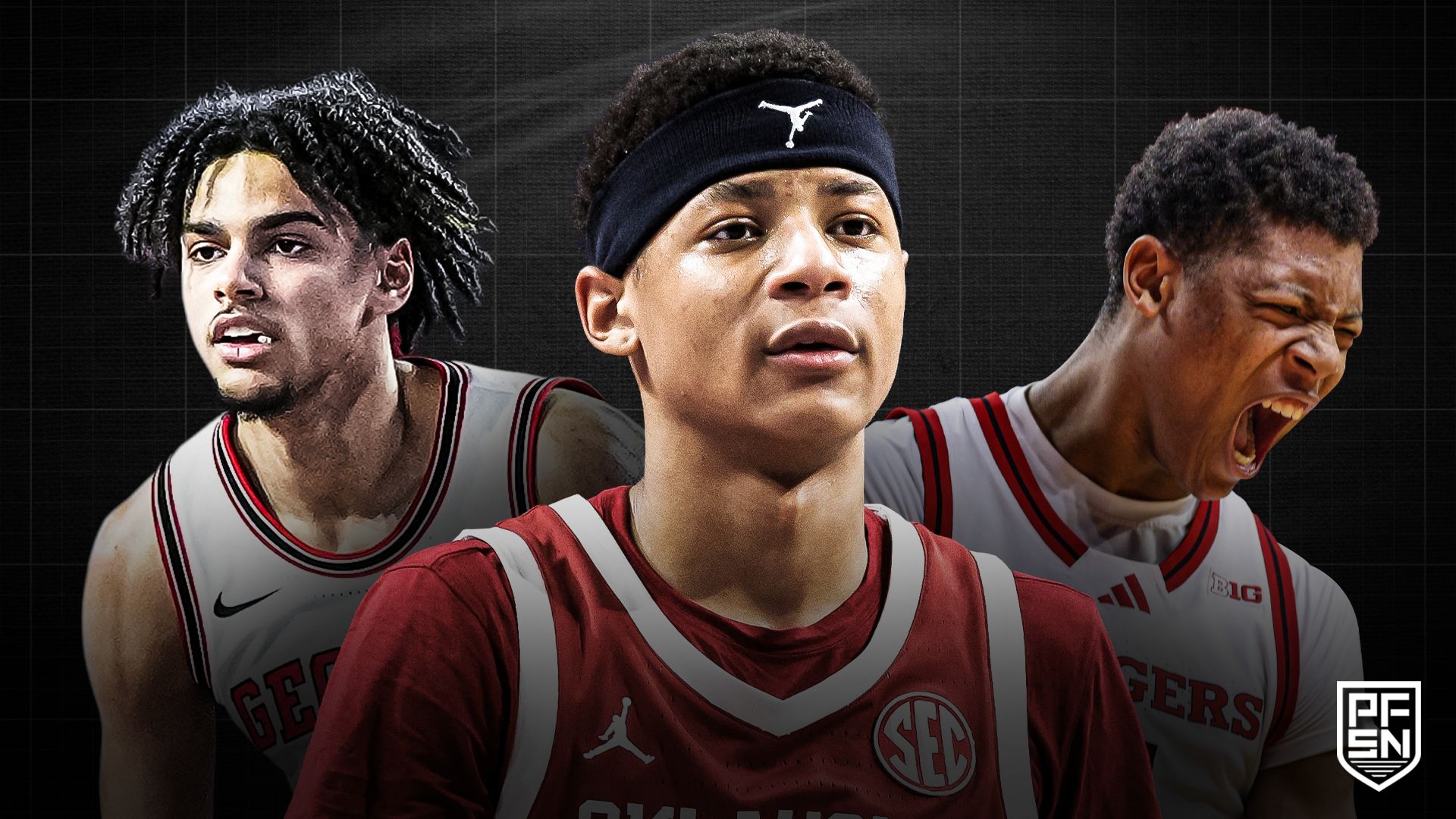
We’re less than a week out from the 2025 NBA Draft, and outside of maybe the first two picks, the only thing that feels certain is uncertainty. Front offices around the league appear split on certain prospects, and other teams are actively exploring trade scenarios. The stage is set for one of the more chaotic draft nights in recent memory.
While team needs are solidified, the player-team marriages are not, and it’s fair to expect some surprises throughout the event. As the draft fast approaches, here’s how we see the board falling in our latest two-round 2025 NBA Mock Draft.
1) Dallas Mavericks
Cooper Flagg, F, Duke
The Dallas Mavericks reshaped the direction of their franchise when they shipped Luka Dončić to the Los Angeles Lakers for Anthony Davis. The door is now open for Nico Harrison to select the franchise’s next cornerstone star.
All signs point to Dallas retaining the No. 1 overall pick and selecting Cooper Flagg, the Duke standout widely regarded as the best two-way prospect in the draft and the safest No. 1 pick in recent memory.
At 6’9”, Flagg offers elite defensive instincts, positional versatility, and a polished offensive game. His freshman season with the Blue Devils showcased rare maturity and production, averaging 19.2 points, 7.5 rebounds, 4.2 assists, 1.4 steals, and 1.4 blocks.
Flagg offers both immediate value on a competitive roster and long-term upside as a potentially franchise-altering talent. Dallas is a lock to make him a member of the Mavs.
2) San Antonio Spurs
Dylan Harper, G, Rutgers
Assuming the San Antonio Spurs hold firm at No. 2, Dylan Harper is the likely selection. While there are valid concerns about perimeter shooting and backcourt fit alongside De’Aaron Fox and Stephon Castle, Harper’s talent is simply too good to pass up.
In nearly any other year, the Rutgers freshman would be the consensus No. 1 pick. His size, basketball IQ, and scoring instincts make him one of the most complete lead guard prospects in recent memory.
Harper plays a more seasoned and physical game than his age suggests. The son of five-time NBA champion Ron Harper, Dylan plays with poise, control, and advanced decision-making, especially in the pick-and-roll. Defensively, his versatility and effort stand out.
From the onset, Harper adds offensive juice to a young core led by Victor Wembanyama, even if it’s not a perfect fit on paper.
3) Philadelphia 76ers
VJ Edgecombe, G/F, Baylor
VJ Edgecombe has potentially emerged as the frontrunner for the Philadelphia 76ers at No. 3, especially given Ace Bailey’s unorthodox pre-draft workout and interview strategy.
Edgecombe’s polish, maturity, and upside should be appealing for a 76ers team that was one of the NBA’s biggest disappointments in 2024. The 6’5” wing is one of the most explosive athletes in the draft, bringing dynamic leaping ability, defensive versatility, and a relentless motor.
A standout for both Baylor and the Bahamian national team, Edgecombe already plays with the anticipation, reaction speed, and physical gifts to become a game-changing defender at the next level.
Offensively, he’s still developing as a creator and as a shooter, but Edgecombe showed encouraging signs during conference play. He also won’t need to shoulder a heavy offensive load in Philadelphia with Tyrese Maxey, Joel Embiid, and Paul George in place.
4) Charlotte Hornets
Ace Bailey, F, Rutgers
The Charlotte Hornets are in prime position to add a high-upside difference-maker at No. 4, and few prospects in this class bring more offensive firepower and physical intrigue than Bailey.
At 6’10”, he’s a fluid athlete with the size and scoring touch to project as a dangerous three-level scorer at the NBA level. Even in a stagnant Rutgers offense, the No. 3 prospect on PFSN’s Big Board regularly created and knocked down tough buckets.
“Every year there is a dangerous prospect in the draft, at least one. He’s a dangerous prospect.”@WindhorstESPN on teams considering drafting Rutgers’ Ace Bailey pic.twitter.com/HmXrj31Vq3
— NBA on ESPN (@ESPNNBA) June 20, 2025
While his offensive polish stands out, Bailey’s defensive upside may be just as significant. He moves exceptionally well for his size, with the flexibility and length to defend multiple positions and provide some rim protection.
It’s not all roses and rainbows when it comes to drafting Bailey, though. He needs to improve as a playmaker and decision-maker, and there are also concerns about how he has handled the pre-draft process. Still, the thought of Bailey, LaMelo Ball, and Brandon Miller sharing the floor is enticing.
5) Utah Jazz
Tre Johnson, G, Texas
The Utah Jazz find themselves in a familiar position, as they continue to rebuild, in the hopes of climbing out of the lottery and returning to relevance. With their offense ranking 24th in offensive rating last season, per NBA Advanced Stats, there’s a clear need for scoring punch on the perimeter.
That makes Tre Johnson, who’s arguably the best scorer in this year’s class, an appealing option for Utah, thanks to his elite shot-making and long-term potential.
At 6’6” with a 6’10” wingspan, Johnson has the prototypical frame for a modern scoring guard. He has a smooth and effortless pull-up game, and he’s shown the ability to make tough shots at every level.
There are questions about Johnson’s playmaking ability and consistency on the defensive end. Still, the Jazz’s timeline gives him the space to grow in those areas without the burden of immediate stardom.
6) Washington Wizards
Jeremiah Fears, G, Oklahoma
Another disappointing lottery result leaves the Washington Wizards picking sixth overall, but there will still be some high-upside options on the board, including Jeremiah Fears.
One of the youngest players in the draft, Fears already plays with the swagger and poise of a seasoned guard. He’s a dynamic shot creator with a lightning-quick first step, elite ball-handling, and a fearless mentality that sets him apart in this class.
Fears excels at getting downhill and manipulating defenders with his pace and advanced handle. He had the highest usage of any freshman in college basketball last season at Oklahoma. While his jumper and decision-making remain inconsistent, he’s shown enough to project as a high-volume offensive engine. Fears may not be the perfect prospect, but with the Wizards not expected to turn things around any time soon, they can be patient and prioritize upside.
7) New Orleans Pelicans
Khaman Maluach, C, Duke
After a 21-61 season and sweeping front-office changes, the New Orleans Pelicans are in full reset mode. They’re looking for an identity and long-term building blocks, which makes Khaman Maluach an ideal target.
A 7’2” center with a 9’8” standing reach and tantalizing upside, Maluach brings elite physical tools, defensive versatility, and an evolving skill set. A South Sudanese native who didn’t start playing basketball until he was 13, Maluach’s game has developed faster than anyone could have predicted.
Maluach erases shots at the rim, switches onto guards in space, and plays pick-and-roll defense with confidence and agility. His offensive game is a work in progress, but he finishes lobs with touch and has flashed potential as a pick-and-pop shooter. Maluach checks all the boxes for a young Pelicans team.
8) Brooklyn Nets
Kon Knueppel, F, Duke
With four first-round picks in hand, the Brooklyn Nets have flexibility, but at No. 8, they need to secure a potential building block. While Kon Knueppel may not be a flashy selection, he’s a high-IQ, high-floor wing who can contribute early and fit into a variety of lineups. That’s the type of player this Nets team is missing.
Arguably the best shooter in the draft, Knueppel has deep range, and his unselfish play style projects well at the next level. He brings more than just spot-up shooting — Knueppel is a crafty, efficient scorer who thrives in the midrange, manipulates defenders, and can serve as a secondary ball-handler.
A lack of elite athleticism may cap Knueppel’s ceiling as a defender, but his strength and instincts give him a chance to become serviceable. From Day 1, he offers immediate stability and shooting.
9) Toronto Raptors
Derik Queen, F/C, Maryland
Derik Queen is a unique frontcourt talent who could mesh well with the Toronto Raptors’ emerging core of Scottie Barnes, Brandon Ingram, and RJ Barrett. Queen is arguably the most polished big man in the 2025 draft class, combining strength, finesse, and a remarkably high basketball IQ. He’s not the most explosive athlete, but he offers bona fide skill and playmaking to the Raptors’ frontcourt.
At 6’9” and nearly 250 pounds, Queen is a low-post technician with soft hands, nimble feet, and a deep scoring bag. His natural feel for the game also allows him to excel as a passer.
Defensively, Queen is not known as a rim protector, but he uses his hands well and can move laterally better than expected for a guy of his build. If he can develop a consistent perimeter shot, he could be a steal here.
10) Phoenix Suns
Kasparas Jakučionis, G, Illinois
On the morning of Game 7 of the NBA Finals, the Phoenix Suns orchestrated a blockbuster trade, sending Kevin Durant to the Houston Rockets. Phoenix acquired this pick as part of the deal, and it would be wise to use it to stabilize its backcourt, especially with Tyus Jones hitting free agency.
The Suns also landed Jalen Green, but it’s unclear if they’ll keep him. Either way, this team needs a true point guard to run the show. Kasparas Jakučionis is a versatile, high-IQ guard who fills an immediate need for Phoenix.
BREAKING: The Phoenix Suns are trading two-time NBA Finals MVP Kevin Durant to the Houston Rockets for Jalen Green, Dillon Brooks, the No. 10 pick in the 2025 draft and five second-round picks, sources tell ESPN. pic.twitter.com/EwrbA2ES9O
— Shams Charania (@ShamsCharania) June 22, 2025
At 6’6”, Jakučionis fits the modern combo guard mold. He’s big enough to guard either backcourt spot and can complement any lineup. He has a feel for the game that jumps off the screen, and he’s one of the most skilled passers in this class.
Jakučionis is also a good shooter, and while he’s not an explosive athlete or lockdown defender, he competes on both ends of the floor. Jakučionis has the tools to be a foundational piece of the Suns’ rebuild.
11) Portland Trail Blazers
Collin Murray-Boyles, F, South Carolina
The Portland Trail Blazers are trending upward after a 15-win improvement in 2024, and Collin Murray-Boyles could be a substantial addition to their young core. While he doesn’t have the prototypical size or floor-spacing skills of a modern power forward, he’s a highly impactful player with rare versatility who offers real upside as a long-term contributor.
At 6’8”, Murray-Boyles may be undersized on paper, but he consistently plays bigger than his frame suggests. Offensively, he’s a wrecking ball around the rim, and he also flashes vision as a passer.
Defensively, Murray-Boyles is one of the most disruptive prospects in the class, displaying quick hands, impeccable timing, and the agility to guard multiple positions. If he becomes a perimeter threat, he could develop into a lethal two-way weapon.
12) Chicago Bulls
Asa Newell, F/C, Georgia
With Nikola Vučević entering the final year of his contract and no clear long-term answer in the frontcourt, the Chicago Bulls could benefit from investing in a big with upside like Asa Newell.
A former Montverde Academy standout and All-SEC performer at Georgia, Newell has already proven he can thrive alongside and against other talented players. He impacts the game without needing touches called for him, thanks to his motor, athleticism, and defensive versatility.
At 6’11”, Newell is an explosive athlete who plays with relentless effort. He excels as a rim-runner, offensive rebounder, and lob threat, ranking among the SEC’s best on the offensive glass. His physical tools also fuel his defensive impact.
Newell has proven he can switch onto perimeter players and recover as a help-side rim protector. By all accounts, his offensive game is a work in progress, but he has the tools to become a two-way impact player.
13) Atlanta Hawks
Egor Demin, G, BYU
With two first-round picks, the Atlanta Hawks are well-positioned to take a swing on upside, and BYU’s Egor Demin is one of the most intriguing long-term bets in this class.
At 6’9”, Demin brings elite positional size and advanced playmaking instincts that could complement either Trae Young or Dyson Daniels. Demin’s widely considered the best passer in the draft, with a rare ability to manipulate defenses and find his teammates. He’s a floor general who processes the game like a veteran.
Demin’s physical tools enable him to play all over the perimeter, and that versatility aligns well with a Hawks team that boasts plenty of athletic wings and shooters.
Ultimately, Demin’s ability to develop as a scorer could determine his ceiling. He was inefficient in college, but his shooting touch and free-throw mechanics suggest he has the potential to improve; Demin’s size and instincts intrigue.
14) San Antonio Spurs
Carter Bryant, F, Arizona
After solidifying their backcourt with Harper, the Spurs are in a great position to pick for upside with their second first-round pick. Despite modest production in his freshman season at Arizona (6.5 points per game off the bench), Carter Bryant’s physical tools and flashes of two-way potential make him an intriguing developmental prospect.
At 6’8” with an extended frame, fluid mobility, and explosive leaping ability, he checks many boxes in today’s NBA. Defensively, Bryant is already an impact player thanks to his versatility and instincts. He’s disruptive as a shot blocker and capable of guarding multiple positions.
On the offensive end, Bryant thrives as a low-usage, high-efficiency role player. Given the talent in San Antonio, he won’t need to carry a heavy offensive burden. The Spurs organization may be best suited to maximize his 3-and-D NBA potential.
15) Oklahoma City Thunder
Thomas Sorber, C, Georgetown
With a loaded roster and the flexibility of having plenty of draft capital, the Oklahoma City Thunder can afford to take calculated swings on prospects who fit their system and long-term timeline. Thomas Sorber makes a ton of sense in this spot.
Before a season-ending foot injury, Sorber was having a standout freshman season at Georgetown. He has a broad, powerful frame and brings a toughness that could mesh well in Oklahoma City.
Thomas Sorber offers supreme adaptability on both ends with his tremendous instincts, 7-foot-6 wingspan, and magnetic hands. The strides he’s made with his frame, conditioning, and overall skill level over the past 18 months have impressed NBA teams. https://t.co/sqEj0G5hCG pic.twitter.com/ooQccLx4l0
— Jacob Myers (@League_Him) June 14, 2025
Sorber isn’t a flashy rim-runner or vertical lob threat, but he makes up for it with exceptional footwork, a soft scoring touch, and underrated passing. Defensively, he won’t wow you with elite length or explosiveness, but he’s disciplined and plays with instincts.
Sorber’s jumper is a work in progress, as is his perimeter defense, but the Thunder have a solid foundation on both ends of the floor.
16) Memphis Grizzlies
Cedric Coward, G/F, Washington State
For a Memphis Grizzlies team that has built its identity around toughness, defense, and player development, Cedric Coward could be the next high-upside piece to mold. He also fills an immediate need after the team traded Desmond Bane to the Orlando Magic to land this pick.
At 6’6” with a 7’2” wingspan, a 38.5” vertical, and one of the fastest sprint times at the Combine, Coward possesses elite physical tools for a modern NBA wing. His journey from Division III to a possible first-round pick is a testament to his rapid growth.
Coward shot nearly 39% from deep during his Division I career and has shown strong instincts as a passer, cutter, and rebounder. He’s not yet a polished shot creator, but Memphis doesn’t need him to be a star right away. Instead, they would ask him to defend, knock down open shots, and grow into his role over time.
17) Minnesota Timberwolves
Jase Richardson, G, Michigan State
Jase Richardson may not carry his father Jason’s high-flying athleticism, but he brings a polished game built on feel, efficiency, and two-way versatility — making him a strong match for the Minnesota Timberwolves.
Playing off a star like Anthony Edwards, Richardson’s ability to space the floor, move without the ball, and defend with discipline would give Minnesota a guard who can contribute right away in a complementary role. Despite his more diminutive stature, Richardson plays with poise beyond his years.
Richardson emerged as one of the most efficient pick-and-roll scorers in college basketball, showcasing a lethal midrange game. As his self-creator develops, he could eventually handle more playmaking duties and potentially replace Mike Conley down the line.
18) Washington Wizards
Liam McNeeley, F, UConn
The Wizards desperately need help on the wing, and Liam McNeeley is a high-IQ player who can complement the young pieces already in place. While his freshman season at UConn was marked by inefficiency, McNeeley showed encouraging signs of potential improvement, particularly with better spacing in the NBA, and is widely considered one of the most polished shooters in this class.
McNeeley isn’t a primary creator or an above-the-rim athlete, but his court awareness, off-ball movement, and passing instincts allow him to keep the offense flowing. On the defensive end, he’s unlikely to be a playmaker or stopper, but his size, anticipation, and effort allow him to hold his own.
McNeeley is an unselfish player with plenty of upside for a Wizards team that needs it.
19) Brooklyn Nets
Noa Essengue, F, Ratiopharm Ulm
Given their draft capital, the Nets are the kind of team that should be taking high-upside swings in the draft.
With a roster in need of foundational young talent and no immediate pressure to win, Brooklyn offers a solid environment for Noa Essengue to grow. Essengue is one of the youngest players in the draft, but he’s already shown intriguing flashes against professional competition in Germany.
Essengue boasts a unique physical profile, with the length of a center and the agility of a wing player. His offensive game is still very raw, as he needs to develop his handle and jumper further, but he’s displayed encouraging signs as a perimeter shooter and passer. Defensively, his length and instincts make him a potential disruptor at multiple positions.
20) Miami Heat
Nolan Traoré, PG, Saint Quentin
The Miami Heat are traditionally known for prioritizing win-now players and polished prospects, but Nolan Traoré might be too promising to pass up. At just 19 years old, the French point guard brings an exciting mix of size, speed, and playmaking ability that few prospects in this class can match.
Traoré is a fun player to watch with the ball in his hands. He glides around screens and picks apart defenses with his vision and a poise that’s beyond his years. Traoré has an elite first step and a strong feel for the game, offering glimpses of true lead guard potential for a Heat squad featuring All-Stars Tyler Herro and Bam Adebayo.
Good traits aside, there are questions about Traoré. His finishing at the rim and defensive inconsistency, specifically, need more. However, his tools suggest that he could be a standout two-way player in the NBA.
21) Utah Jazz
Nique Clifford, G/F, Colorado State
The Jazz took an elite scorer in Johnson earlier in the round, but now, they could benefit from adding an experienced wing who’s ready to contribute on both ends of the floor. A fifth-year senior, Nique Clifford may lack the upside of some younger prospects, but his polished two-way skill set and high basketball IQ give him one of the highest floors in this class.
Clifford is a versatile defender who thrives on anticipation, physicality, and the little plays that can shift momentum. Offensively, he’s more than just a floor spacer. He demonstrated significant growth as a pick-and-roll creator, showcasing solid efficiency and decision-making skills both as a scorer and a passer.
Clifford’s 3-point shot is still streaky, but he’s displayed flashes of improvement. His experience and toughness could make him a valuable rotational piece early on.
22) Atlanta Hawks
Rasheer Fleming, F, St. Joseph’s
For a Hawks team in need of defensive intensity and complementary role players around its stars, Rasheer Fleming offers an intriguing combination of floor spacing, shot blocking, and a relentless motor. At 6’9” with a long wingspan and impressive leaping ability, Fleming profiles as a versatile forward who can switch defensively, protect the rim from the weak side, and knock down open 3s.
After shooting just over 31% from deep over his first two college seasons, Fleming surged to 39% this year. And while he isn’t a polished creator or flashy playmaker, he thrives in his role.
Fleming can defend multiple positions, attack the glass, and make plays without needing the ball in his hands at a high rate. He didn’t face elite competition in the A-10 conference, but he has the tools to be an impactful role player right away.
23) Indiana Pacers
Danny Wolf, F/C, Michigan
Danny Wolf’s unique blend of size, skill, and creativity could be a perfect fit for the Indiana Pacers, especially with the potential departure of Myles Turner looming. Despite being a 7-footer, Wolf doesn’t fit the mold of a traditional big man. He played a point-center role for Michigan, flexing advanced ball handling, passing vision, and creation ability that few players his size can replicate.
Wolf’s offensive versatility aligns well with Indiana’s pace-and-space system. He can stretch the floor and exploit mismatches with crafty footwork and soft touch. His outside shot is inconsistent, but his shooting mechanics suggest that he has untapped potential.
Defensively, Wolf lacks elite rim protection, but he moves well for his size and competes on that end. His traits indicate he has room for improvement, though.
24) Oklahoma City Thunder
Hugo González, F, Real Madrid
With one of the deepest young rosters in the NBA, the Thunder are well-positioned to make long-term investments in the draft rather than seeking immediate contributors. That makes Hugo González an ideal pick.
González is a high-upside international prospect who doesn’t need to join the roster right away but has the physical tools to blossom into a two-way rotation piece down the line.
González is a 6’6” wing with energy, elite defensive versatility, and the athleticism to thrive in Oklahoma City’s up-tempo, switch-heavy system. His offensive game is still raw, but he’s shown flashes as both a slasher and a creator.
González’s lack of playing time and production make him a risky pick, but the Thunder are one of the few franchises with the flexibility to be patient.
25) Orlando Magic
Maxime Raynaud, C, Stanford
The Magic have a strong core, so they need to complement their stars with NBA-ready, plug-and-play talent, and Maxime Raynaud offers an intriguing mix of polish, productivity, and untapped upside.
The Stanford product turned heads at the NBA Draft Combine, and he’s coming off a breakout season where he showcased his ability to score efficiently inside, rebound consistently, and stretch the floor.
Raynaud is a skill, instinctive big man who doesn’t need high usage to impact the game. He boasts a soft touch around the rim and excellent footwork. What sets him apart is his shooting growth, signaling real pick-and-pop and floor-spacing potential. He’s not an explosive athlete, but his size, feel for the game, and passing ability make him an ideal fit for a Magic squad that values versatility.
26) Brooklyn Nets
Ben Saraf, G, Ratiopharm Ulm
The Nets should be looking to add players with long-term upside and playmaking ability, and Ben Saraf fits that bill.
Despite being one of the youngest players in the draft, Saraf has already logged significant minutes as a high-usage creator in Germany’s top league and stood out on the international stage. He displays an elite feel for the game that not many prospects offer.
Saraf is a crafty, poised ball handler who thrives in pick-and-roll situations. He’s not an elite athlete, and his inconsistent jumper raises questions, but he has a knack for capitalizing on mismatches.
Saraf’s size, experience, and unique playmaking ability would give the Nets a versatile, high-IQ prospect who, with the proper development, could emerge as a secondary creator at the next level.
27) Brooklyn Nets
Will Riley, G/F, Illinois
A 6’8” shot-creating wing with intriguing offensive versatility, Will Riley offers a combination of size, athleticism, and playmaking ability that’s hard to ignore. He’s a dynamic ball handler who can get downhill, pass effortlessly, and shoot from NBA range, even if his percentages were streaky during his freshman season at Illinois.
Physically, Riley is still a work in progress. His slender frame and defensive inconsistency are concerning. He’ll need to get stronger to last at the next level.
Brooklyn isn’t expected to be competitive, so Riley could be a worthwhile investment. He has the potential to become a high-value offensive weapon and long-term contributor on the wing.
28) Boston Celtics
Adou Thiero, F, Arkansas
With Jayson Tatum’s injury, questions surrounding Kristaps Porziņģis’ health, and limited frontcourt depth beyond this season, the Boston Celtics are in a position to add a versatile, high-motor forward who can contribute in multiple ways.
Adou Thiero is a late-blooming physical specimen whose transformation from a high school guard makes him an intriguing upside pick.
Thiero brings the kind of athleticism and physicality that Boston covets. He’s a relentless defender and elite rebounder for his position, especially on the offensive glass. His shooting remains a work in progress, but the Celtics have a track record of developing perimeter players. If his shooting improves, Thiero could become a true 3-and-D contributor.
29) Phoenix Suns
Ryan Kalkbrenner, C, Creighton
After a disappointing 2024 season and a looming roster overhaul, the Suns need to continue to add talent across the board. After adding a true floor general earlier in the round, it’s time for the front office to address the team’s need for a legitimate post presence.
Ryan Kalkbrenner offers a plug-and-play option as a defensive-minded big who knows his role. A three-time Big East Defensive Player of the Year, he brings legit 7-foot size, a massive wingspan, and proven rim protection skills.
Kalkbrenner is not the most agile or explosive athlete, but he’s effective. He’s a polished low-post scorer, a willing rim-runner, and he’s developed a consistent mid-range jumper with some flashes from behind the arc.
Though his ceiling may be capped by limited mobility, Kalkbrenner has a high floor and is a safe option who can be effective without needing touches.
30) Los Angeles Clippers
Walter Clayton Jr., G, Florida
The Los Angeles Clippers are in win-now mode, and while they have a competitive lineup, they need to add valuable depth across the board. Walter Clayton Jr. is an offensive spark plug who could provide juice to the second unit in LA. Coming off a breakout season and national championship run with Florida, he solidified himself as one of the best shot-makers in college basketball.
Walter Clayton Jr. shot creation summarized in 60 seconds.
38.6% 3P (13.5 3PA/100). pic.twitter.com/KeLxpGi1cM
— Mohamed (@mcfNBA) June 17, 2025
Clayton can get hot in a hurry, and his offensive versatility could be a strong fit alongside James Harden, Norman Powell, and Kris Dunn. He’s comfortable on or off the ball, creates space with a deep bag of moves, and thrives under pressure.
Questions remain about Clayton’s defense and his abilities as a floor general. Still, the Clippers have a strong foundation, and his polished shooting and scoring instincts could provide an immediate scoring punch.
2025 NBA Mock Draft | Round 2
31) Minnesota Timberwolves
Joan Beringer, PF/C, Cedevita Olimpija
32) Boston Celtics
Yanic Konan Niederhauser, C, Penn State
33) Charlotte Hornets
Bogoljub Marković, PF/C, Mega Basket
34) Charlotte Hornets
Kam Jones, G, Marquette
35) Philadelphia 76ers
Johni Broome, C, Auburn
36) Brooklyn Nets
Hansen Yang, C, Qingdao
37) Detroit Pistons
Drake Powell, F, North Carolina
38) San Antonio Spurs
Chaz Lanier, G, Tennessee
39) Toronto Raptors
Hunter Sallis, G/F, Wake Forest
40) Washington Wizards
John Tonje, G/F, Wisconsin
41) Golden State Warriors
Rocco Zikarsky, C, Brisbane
42) Sacramento Kings
Tyrese Proctor, G, Duke
43) Utah Jazz
Alex Toohey, F, Sydney
44) Oklahoma City Thunder
Jamir Watkins, G/F, Florida State
45) Chicago Bulls
Ryan Nembhard, PG, Gonzaga
46) Orlando Magic
Javon Small, G, West Virginia
47) Milwaukee Bucks
Mark Sears, G, Alabama
48) Memphis Grizzlies
Sion James, G/F, Duke
49) Cleveland Cavaliers
Alijah Martin, G/F, Florida
50) New York Knicks
Koby Brea, G/F, Kentucky
51) Los Angeles Clippers
Dink Pate, G, Capitanes
52) Phoenix Suns
Eric Dixon, F, Villanova
53) Utah Jazz
Grant Nelson, F/C, Alabama
54) Indiana Pacers
RJ Luis Jr., G/F, St. John’s
55) Los Angeles Lakers
Vladislav Goldin, C, Michigan
56) Memphis Grizzlies
Cameron Matthews, F, Mississippi State
57) Orlando Magic
Payton Sandfort, F, Iowa
58) Cleveland Cavaliers
Izan Almansa, F/C, Perth
59) Phoenix Suns
Jaxson Robinson, G/F, Kentucky