
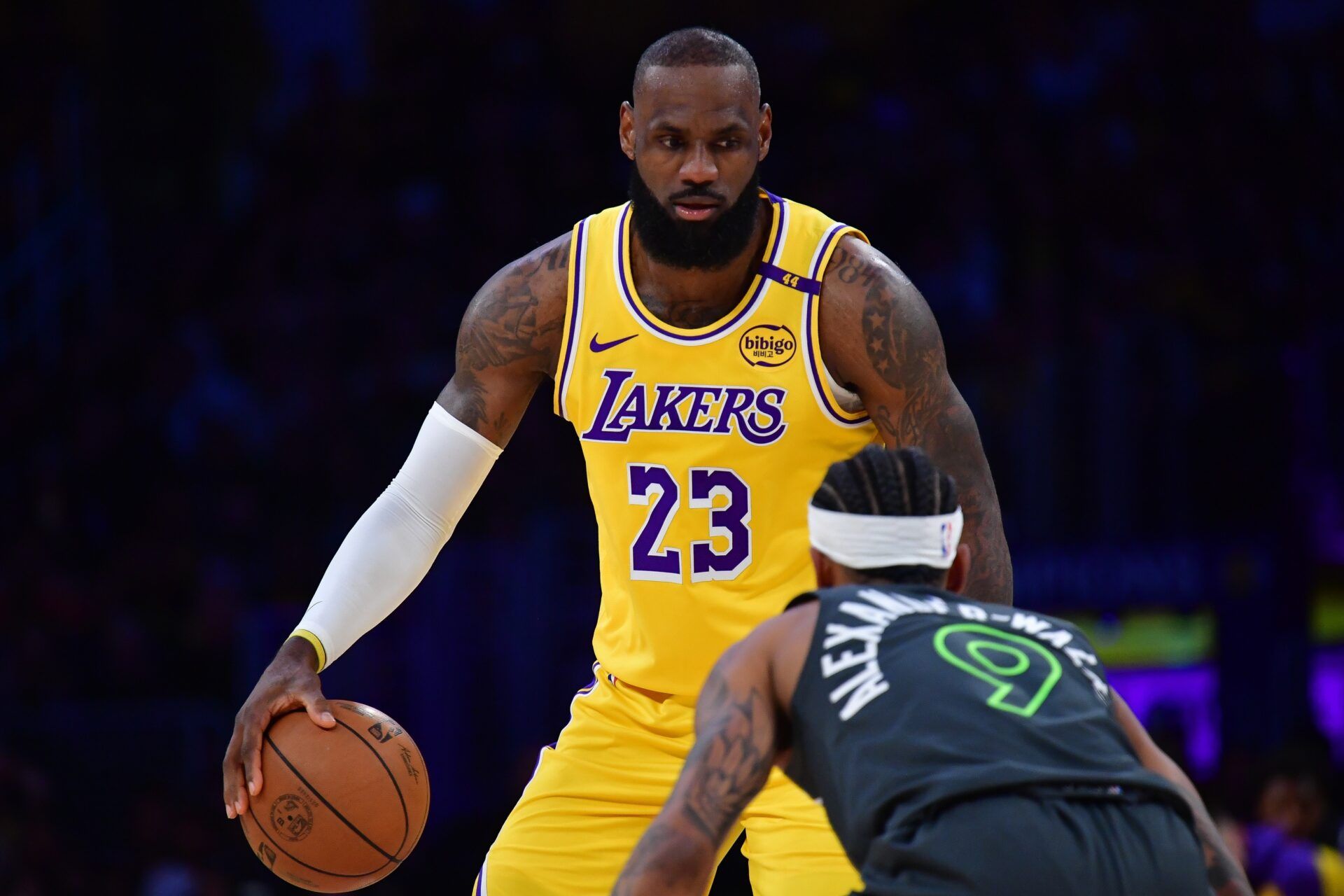
The Los Angeles Lakers entered the 2024-25 NBA season with high expectations after posting a strong 50-32 regular season record. Hopes were high for a deep playoff run, but the team’s postseason ended sooner than expected, as the Lakers were eliminated by the Minnesota Timberwolves in five games.
The early exit triggered speculation about the future of LeBron James, but the narrative quickly shifted when his agent confirmed the superstar’s plans for next season. Now, questions about James’s role with the franchise are taking center stage.
Windhorst: Lakers May View LeBron James as a Trade Asset
After the Lakers’ playoff loss, rumors swirled about whether James would retire. Those rumors were put to rest when his longtime agent, Rich Paul, confirmed that the 40-year-old would opt into his $52.6 million player option for the 2025-26 season. While this ended retirement speculation, it raised new questions about James’s future in Los Angeles.
On ESPN’s “First Take,” NBA insider Brian Windhorst made headlines by suggesting the Lakers are now viewing James as an “expiring contract.” This means the team could be considering their veteran star as a potential trade piece.
“LeBron has never been an expiring contract, quite literally. Never in his 23-year career over the nine contracts he’s signed over all the different teams he’s been on. He’s never been on the last year of his contract. He’s never been 40 years old. He’s never not been the franchise player on his team. The Lakers and LeBron, whoever wants to spin their side of the story, I’m not sure what happened, but the Lakers and LeBron did not have substantive discussions about extending his contract, which every team LeBron’s been on for 20-something years has wanted to have substantive conversations about extending his contract.”
“And what happens to expiring contracts in the NBA? They’re viewed as trade pieces. So, for all those reasons, you know, the money, the fact that LeBron and Luka are still a very formidable duo. The fact that the Lakers are not done with their off-season, and the fact that trading him is crazy. The fact that this is being built around Luka and they’ve got to maintain their cap sheet and all of those things. Everything about that makes sense. But I’m just unlocking the door because I’m not as convinced as before of its impossibility,” said Windhorst during the show.
James joined the Lakers in 2018 and helped deliver an NBA championship in 2020. In 2024, he signed a two-year, $101,355,998 contract with the team, fully guaranteed, with an average annual salary of $50,677,999. By opting in, he will earn $52,627,153 for the 2025-26 season.
According to Windhorst, this is the first time in James’s career that he is entering the final year of his contract without any extension talks. This is unusual for a player who has typically maintained long-term security with his teams.
Expiring contracts in the NBA often carry significant value, as they provide teams with financial flexibility and can be used as assets in trades. Windhorst’s comments suggest the Lakers may be shifting how they view James’s role moving forward.
Adding to the intrigue, Windhorst pointed out that James’s decision to opt in was handled differently by the Lakers than in years past. The team did not issue a public statement, which is customary for a player of James’s stature.
“They haven’t put out a statement. It’s not a rule that you put out a statement when a player picks up an option, but it is customary, and the Lakers did not do that… I had to actually check with the team and the league. I said, ‘Did LeBron actually opt in?’ And they said, ‘Yes, the paperwork went through. He opted into his contract.’
“Last year, when LeBron signed a contract extension, Rob Pelinka had about a 115-word quote talking about how wonderful LeBron James is and what he means to the Lakers and what he means to their franchise. Yesterday, there was no statement,” said Windhorst on the recent episode of “Get Up” on ESPN.
Even if the Lakers were to consider trade options, James holds a no-trade clause, giving him full control over any possible destination. Any potential move would require his approval, ensuring that he decides where he would play next.
