
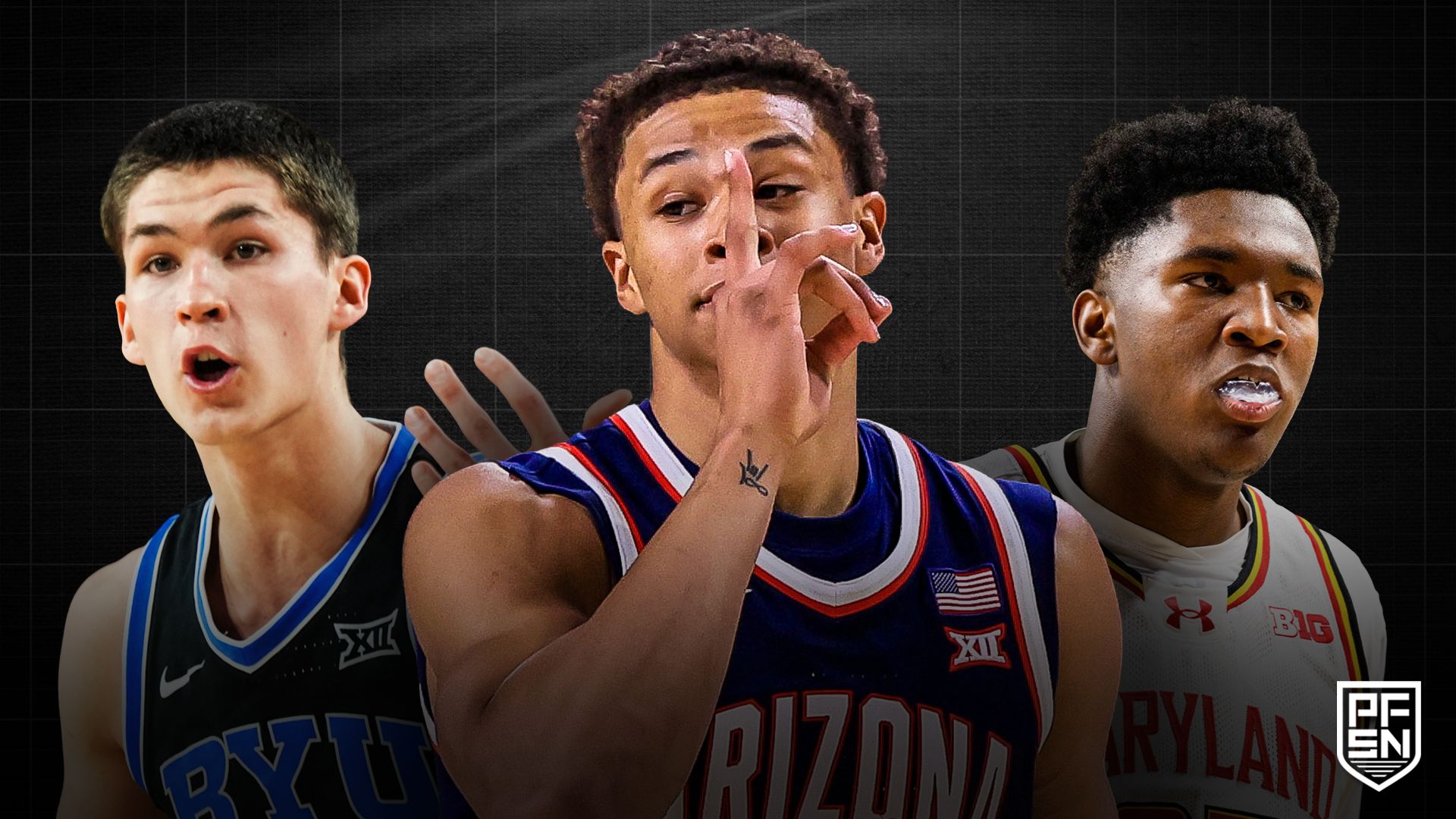
With the 2025 NBA Draft in the rearview, the real work begins for the NBA’s newest class of rookies. While some prospects enter the league with a clear path to success and consensus expectations, others spark debate due to their combination of skills, question marks, and team fit.
As we head deeper into the offseason, let’s do a deep dive into the most polarizing draft pick for each team (excluding the Denver Nuggets and Houston Rockets, who each had a 2025 draft class of zero). Here are 28 controversial prospects to keep an eye on heading into next season.
Atlanta Hawks: Asa Newell, F/C, Georgia
Asa Newell was the Atlanta Hawks’ only selection in the 2025 NBA Draft, and while he’s a promising prospect, there was no consensus on exactly where he’d actually fall in the draft.
On one hand, Newell is a high-energy, rim-running big who consistently contributes through sheer effort and athleticism. His 58 dunks this past season, elite offensive rebounding rate (13.9%), and proven ability to be a live-wire around the basket make him an immediate asset.
Defensively, Newell’s 6’11” frame, excellent mobility, lateral quickness, and instincts allow him to guard multiple positions and switch at the NBA level, providing significant frontcourt versatility. His experience playing with elite talents at Montverde Academy and earning SEC All-Freshman honors at Georgia further highlights his ability to contribute effectively without dominating the ball.
However, there are some limitations to Newell’s game, especially when it comes to perimeter shooting. He shot just 29.2% from 3-point range in college, per Sports-Reference, leading to initial pre-draft concerns about his upside.
For the Hawks, the acquisition of Kristaps Porziņģis, a stretch big, helps mitigate this concern. Newell’s rim-running and interior presence perfectly complement Porziņģis’ perimeter game, making him a more sensible fit for Atlanta’s starting unit than he might have been for other teams.
Boston Celtics: Hugo González, F, Spain
Hugo González is the quintessential high-upside international swing. He’s long-term potential wrapped in a package that requires significant development and patience. The 6’6” wing from Real Madrid offers an enticing foundation of elite athleticism, defensive versatility, and a relentless motor, traits that are largely considered NBA-ready.
González consistently demonstrates a growing feel for attacking and passing, showing flashes as a slasher, ball-mover, and transition threat, making him an intriguing two-way prospect who could thrive as a modern wing. His ability to navigate pick-and-rolls and his solid shooting mechanics, despite current struggles, hint at a more well-rounded offensive game to come.
González’s raw offensive game and limited production in a primary role overseas make him somewhat of a gamble, though. There are concerns around his shooting consistency, particularly from 3-point range, his creation ability, and his struggles finishing around the rim. However, the Boston Celtics’ championship core and ability to absorb a potential step back due to Jayson Tatum’s injury should mean González has time to grow.
Brooklyn Nets: Egor Demin, G, BYU
At an impressive height of 6’8”, Egor Demin possesses exceptional court vision and is arguably one of the most creative and advanced passers in this draft class. He’s capable of dissecting defenses and delivering high-level passes from anywhere on the floor. His poise, instincts, and willingness to set up teammates over scoring make him an ideal secondary creator or lead guard for a second unit.
EGOR DEMIN YOU WILL BE A STAR. pic.twitter.com/6zWTPG4OAf
— NetsMuse (@NetsMuse) June 26, 2025
Defensively, his length, anticipation, and consistent effort allow him to disrupt passing lanes and guard multiple positions, further enhancing his appeal as a versatile piece. Demin could be a valuable asset to a Brooklyn Nets team undergoing a rebuild.
However, Demin’s shooting inconsistency is a major concern, with shooting splits of 27.3% from 3 and 41.2% from the field during his lone season at BYU. While the Nets, with ample cap space and a long developmental runway, can afford to be patient, Demin’s path to becoming a truly impactful player hinges heavily on the development of his jump shot.
Demin’s unique combination of size and elite playmaking provides high upside, drawing comparisons to players like Josh Giddey, but his unproven scoring and shooting acumen mean he represents a high-risk, high-reward investment.
Charlotte Hornets: Liam McNeeley, G/F, UConn
Liam McNeeley is a skilled wing with an advanced feel for the game, particularly on offense. He boasts a polished all-around offensive repertoire, excelling as a player who can score off screens, facilitate in the pick-and-roll, and create his own shot. While his college shooting numbers weren’t outstanding, his mechanics and strong fundamentals suggest significant upside as a 3-point shooter.
Defensively, McNeeley is not a liability, demonstrating good reads, help instincts, and communication, making him a well-rounded player with an encouraging long-term projection as a prototypical small forward. However, his fit in Charlotte isn’t seamless.
With LaMelo Ball and Brandon Miller being high-usage, volume shooters who are franchise cornerstones, McNeeley’s primary strength as a 3-point specialist who can find spots to get his shot off might be repetitive rather than complementary. There’s no denying the talent, but the destination isn’t exactly ideal.
Chicago Bulls: Noa Essengue, F, France
Noa Essengue is a high-risk, high-reward long-term developmental swing. At just 18 years old, Essengue is a modern forward possessing elite measurables. He has the length of a center with the mobility of a wing player, enabling him to cover ground with ease and disrupt passing lanes defensively.
He’s showcased intriguing flashes of two-way potential in Germany’s top league, demonstrating excellent handles, dynamic finishing around the basket, solid passing, and impressive defensive instincts.
Essengue’s raw talent and unique physical makeup make him a highly moldable piece with an undeniable ceiling, fitting the Chicago Bulls’ strategy of swinging for long-term upside in their current rebuilding phase.
However, Essengue’s projection hinges almost entirely on the development of his perimeter shooting. While he’s shown progress, his shooting numbers need substantial improvement for him to thrive in an NBA that prioritizes spacing. Without a reliable jumper, his role might be limited, despite his other impressive tools.
Cleveland Cavaliers: Tyrese Proctor, G, Duke
Tyrese Proctor offers an appealing foundation as an athletic, 6’4″ guard capable of pressuring the rim and displaying solid on-ball defense, leveraging his length (6’7″ frame) effectively. His junior year at Duke saw a notable improvement in his shooting efficiency, particularly from 3-point range (40.5%), showcasing his ability to operate as a reliable catch-and-shoot threat.
These flashes, combined with his pedigree as a former five-star recruit and his experience against elite competition, hint at the possibility of Proctor developing into a valuable rotational 3-and-D contributor with offensive upside as a secondary playmaker.
Despite Proctor’s improved shooting numbers, questions remain about the consistency and mechanics of his outside shot. At 21 years old, his immediate impact at the NBA level is uncertain, with a likely NBA G League stint needed to iron out inconsistencies. The Cleveland Cavaliers are hoping that the version of Proctor many once envisioned can still be unearthed, making him a high-upside gamble.
Dallas Mavericks: Cooper Flagg, F, Duke
Cooper Flagg is an elite, franchise-altering prospect for the Dallas Mavericks. While he’s not exactly polarizing, as he was the consensus No. 1 overall pick for a while, he’s arriving in a city that’s still reeling from the blockbuster trade that sent superstar Luka Dončić to Los Angeles.
Flagg’s freshman season at Duke was historically dominant, showcasing an all-around game. Even at his young age, he has the poise of a veteran and consistently makes the right play without needing to dominate the ball, a trait that could significantly elevate the Mavericks’ offensive identity.
Flagg’s arrival could be transformative for Dallas. His elite defensive versatility, combining the height and strength for shot-blocking with the quickness to guard on the perimeter, makes him a formidable presence on that end. Offensively, his advanced playmaking and high basketball IQ should be a seamless fit alongside Anthony Davis and Kyrie Irving.
There’s a lot of pressure being a new face of the franchise, but Flagg brings immediate excitement and unmatched upside for years to come.
Denver Nuggets: N/A
Detroit Pistons: Chaz Lanier, G, Tennessee
Chaz Lanier burst onto the scene last season as one of college basketball’s most prolific shot-makers, draining 39.5% of his 3s and demonstrating a valuable ability to create his own offense, even against high-level collegiate competition.
Lanier is not merely a catch-and-shoot threat, though. His knack for hitting tough shots off the dribble means he can immediately provide essential offensive firepower and much-needed floor spacing for the Detroit Pistons, who struggled with offensive efficiency last season.
His offensive game is a clear pathway to securing a role in Detroit, drawing comparisons to smaller wing shooters like his new teammate, Malik Beasley.
Still, at 6’4″, Lanier is undersized for an NBA shooting guard and lacks the ideal play strength, which can make him a liability on the defensive end and limit his versatility as a switch defender. Also, while he can create his own shot, his inconsistent ball-handling hinders his ability to create for others, restricting his overall offensive impact beyond scoring.
The Pistons are banking on Lanier’s shot-making being impactful enough to outweigh the concerns about his game.
Golden State Warriors: Alex Toohey, F, Australia
At about 6’8” with a nearly 6’11” wingspan, Alex Toohey possesses legitimate positional size and showcased a smooth shooting stroke and defensive intensity with the NBL’s Sydney Kings.
He demonstrated an ability to space the floor and contribute unselfishly within a complementary role. He’s comfortable pushing the ball in transition, finds teammates effectively, and plays within himself, traits that align well with the Golden State Warriors’ system.
However, at 21 years old, Toohey is older than many prospects with a similar level of raw skill development, which raises questions about his long-term ceiling. Offensively, his upside is heavily tied to his shooting. While he can knock down open looks, creating off the dribble or finishing through contact are not yet part of his game, limiting his overall offensive versatility beyond a spot-up shooter.
Defensively, despite his promising energy and length, it remains to be seen if Toohey can guard at the NBA level due to his athletic limitations. The Warriors see value in his shooting, size, and selfless approach, but his jack-of-all-trades skill set, without one truly elite attribute, makes his ultimate NBA role and ceiling unknown.
Houston Rockets: N/A
Indiana Pacers: Kam Jones, G, Marquette
Kam Jones is a seasoned, crafty combo guard who offers advanced shot creation and playmaking, backed by a high basketball IQ and extensive big-game experience at Marquette. He boasts a diverse offensive bag, featuring floaters, pull-ups, and effective off-ball movement, allowing him to be a plug-and-play contributor who doesn’t demand high usage to shine.
Defensively, Jones is a willing and active presence, using his strong frame and quick feet to disrupt ball-handlers, making him a competitive two-way player ready to contribute immediately to an Indiana Pacers team that will be missing All-Star point guard Tyrese Haliburton for a significant portion of the 2025-26 season.
While shooting is a strength for Jones, his up-and-down free-throw shooting and need for improved ball-handling could be roadblocks to carving out a long-term role. Despite his maturity and readiness, there’s debate about how much further his game can evolve at the professional level.
Los Angeles Clippers: Yanic Konan Niederhauser, C, Penn State
The Los Angeles Clippers’ selection of Yanic Konan Niederhauser was a bit of a surprise, but it’s not hard to see why he’s appealing to them. Konan Niederhauser possesses elite physical tools that instantly translate to the NBA level. His size, exceptional length, and impressive bounce make him an immediate lob threat and a potent shot-blocker from Day 1, evident by his Big Ten-leading 2.31 blocks per game at Penn State.
Despite being a late-blooming big man from Switzerland, Konan Niederhauser’s standout performance at the NBA Combine showcased tantalizing flashes of potential, including signs of a developing post-game, improved shot-blocking instincts, and expanding offensive feel. For the Clippers, this is a bet on the upside of him becoming a high-level rim protector and vertical spacer off the bench.
Konan Niederhauser will require considerable patience to reach his ceiling, though, as he’s not a plug-and-play guy yet. While his physical gifts are clear, his overall game still needs significant development, raising questions about how long it will take for him to become a consistent contributor in the NBA.
Los Angeles Lakers: Adou Thiero, F, Arkansas
Adou Thiero boasts an NBA-ready physique, having grown from a high school guard into a physically imposing 6’6″ wing with a 7-foot wingspan and a 218-pound frame. He brings explosive athleticism, vertical pop, and relentless downhill attacking as a slasher, coupled with elite offensive rebounding for his position, allowing him to impact the game without needing plays run for him.
Defensively, Thiero is a modern, switchable forward with impressive mobility and physicality, capable of guarding multiple positions, disrupting passing lanes, and holding his own at the point of attack, making him a truly intriguing high-motor prospect for the Los Angeles Lakers.
Adou Thiero is a wildcard to monitor in the Sweet 16 for Arkansas, as John Calipari hinted he could return from injury. The explosive 6-8, 20-year-old forward is a potential first-round pick, capable of providing the Razorbacks with a disruptive two-way punch. pic.twitter.com/Sn6NcXAZv8
— Jacob Myers (@League_Him) March 27, 2025
The biggest knock on Thiero is his unreliable jump shot. His career 3-point shooting hovered around 28.4%, dipping to 25.6% last season, and he shot a mediocre 68.6% (71.1% on his career) from the free-throw line. His perimeter struggles could negatively impact floor spacing. While his physicality, defensive versatility, and effort give him a high floor, his ceiling will depend on whether he can develop a consistent jumper.
Memphis Grizzlies: Javon Small, G, West Virginia
Javon Small is a dynamic, high-IQ lead guard who showcased his mettle by thriving in a high-usage role for West Virginia, proving he can carry the load, create for others, and hit timely shots. He brings a legitimate offensive package, including deep range and excellent pick-and-roll instincts, coupled with a physical downhill game that draws fouls at a high rate.
Defensively, despite his 6’2” frame, Small’s relentless motor and discipline make him a disruptive presence who excels at navigating screens and pressuring ball-handlers. While his production, toughness, and ability to both run the show and space the floor are undeniable, Small’s size (no pun intended) can be a limiting factor, particularly on defense, where his ability to guard multiple positions might be capped at the NBA level.
The Memphis Grizzlies selecting Small is a bet on his competitive edge, feel for the game, and polished skills, translating effectively into a rotational role as a backup point guard behind Ja Morant. His ability to overcome the perceived size limitations will ultimately dictate whether or not he sticks in the league.
Miami Heat: Kasparas Jakučionis, G, Illinois
Considered by many to be a potential top-10 pick, it was surprising to see Kasparas Jakučionis fall to the Miami Heat at 20. He’s one of the most intriguing offensive creators in this year’s draft class, boasting elite court vision, exceptional accuracy in pick-and-roll scenarios, and an uncanny ability to hit cutting teammates.
At 6’6″ with an impressive feel for the game and shooting touch (converting over 41% of his 3s before injury), Jakučionis can operate as a primary playmaker, create his own shot with craft, and attack the rim effectively.
The Heat are looking to retool, not rebuild, so his ability to immediately make teammates better and potentially become a true offensive hub is highly appealing, especially alongside talent like Tyler Herro, Bam Adebayo, and Kel’el Ware.
However, Jakučionis’ defense is still a work in progress. Despite his competitive spirit, he isn’t considered an elite athlete, and his defensive contributions will require significant improvement to meet NBA standards. There are also some questions about his consistency on the offensive end. Still, his undeniable playmaking brilliance was too good to pass up.
Milwaukee Bucks: Bogoljub Marković, F/C, Serbia
Bogoljub Marković is nearly 7 feet tall, and he hails from Serbia’s renowned KK Mega Basket program. He impressed at the Nike Hoop Summit with a polished offensive game, showcasing legitimate floor-spacing potential with a smooth, quick-release jumper.
Beyond shooting, Marković displays craft on the block, can score with either hand, and offers intriguing flashes as a playmaker and attacker against closeouts, fitting the mold of a fluid, modern big who can thrive in pick-and-pop situations.
Still, there are concerns about Marković’s slender frame and his limitations on the defensive end of the floor. He competes, but his body isn’t yet equipped to consistently battle more physical NBA bigs, and his perimeter defense needs significant improvement. These deficiencies suggest he’s not an immediate contributor, which likely won’t help in the Milwaukee Bucks’ efforts to keep Giannis Antetokounmpo happy.
Minnesota Timberwolves: Joan Beringer, C, France
Joan Beringer is a near-7-footer who only started playing basketball at 14 years old, but he’s an intriguing upside gamble with exceptional physical gifts. Defensively, he already showcases advanced traits, as a mobile big with impressive lateral agility, quick feet, and the length to alter shots or switch onto the perimeter, making him a potential future rim protector in the mold of fellow Frenchman Rudy Gobert.
Offensively, Beringer excels as a vertical threat, a consistent lob finisher, and a capable short-roll passer, demonstrating rapid development for someone so new to the sport. Still, he’s undeniably raw on the offensive end, lacking a reliable jump shot and occasionally struggling with turnovers. He also needs to get stronger to compete at the NBA level.
Beringer’s long developmental runway clashes with the Minnesota Timberwolves’ established competitive window. This is a high-risk, high-reward, but it was surprising they didn’t draft a more immediate impact player.
New Orleans Pelicans: Derik Queen, F, Maryland
At 6’9″ and nearly 250 pounds, Maryland’s Derik Queen is a force in the interior, blending natural strength, exceptional footwork, and a soft scoring touch. He also boasts elite vision and playmaking ability from the post, making him one of the best passing bigs in the draft. That makes him a valuable asset for a rebuilding New Orleans Pelicans squad.
Queen’s promising mid-range touch and 76.6% free-throw shooting also suggest a future as a reliable floor spacer, potentially adding another dimension to his game. If he develops a consistent perimeter shot, he could be unguardable.
Still, Queen does have some shortcomings on the defensive end. He has a solid foundation with his size and instincts, but he’s not a defensive anchor, and his athletic limitations raise concerns about his ability to guard at the NBA level, especially against quicker opponents or in guarding multiple positions. There’s also uncertainty about his true position at the next level.
Regardless, Queen’s polished offensive skill makes him an intriguing fit in New Orleans.
New York Knicks: Mohamed Diawara, F, France
Mohamed Diawara is the only prospect the New York Knicks walked away with in the 2025 NBA Draft, so he makes the list by default, even though he’s a long shot to make the roster. A 6’8″ forward with a reported 7’4″ wingspan, Diawara possesses an NBA-ready body and the kind of defensive potential that modern teams covet.
Diawara’s big-game experience as a starter in France, coupled with his unselfishness and switchable wing capabilities, makes him an attractive prospect for a team that values physicality and defense. He plays hard and instinctively and can defend across multiple positions, hinting at a future as a disruptive, ball-stopping presence who doesn’t demand high usage.
However, Diawara’s offensive game is far from polished, particularly his shooting. His 3-point shot has shown little progression, and his free-throw percentage (career: 48.1%) is concerning, indicating a fundamental lack of shooting touch that significantly impacts floor spacing. While he flashes some handle and vision, he’s not a consistent threat with the ball and can sometimes bog down the offense trying to create.
Diawara is a high-risk, high-reward late second-round pick whose ultimate NBA success will be heavily reliant on whether his jumper ever clicks and if he can get bigger and stronger.
Oklahoma City Thunder: Brooks Barnhizer, G, Northwestern
Not many people could’ve predicted the Oklahoma City Thunder taking Brooks Barnhizer with the 44th pick in the draft. On one hand, Barnhizer embodies a culture pick, something the Thunder evidently covet. He plays with an undeniable defensive motor, relentlessly guarding on-ball, and his ability to switch, scrap, and cover ground fits the defending champs’ established defensive identity perfectly.
Before Barnhizer’s senior year was cut short by injury, he was a stat-stuffing force, showcasing a high basketball IQ and a tenacity that isn’t easily taught, making him an intriguing long-term developmental piece for a team known for cultivating talent.
However, there are significant questions surrounding Barnhizer’s offensive game, particularly his perimeter shooting. He shot a concerning 31.0% from deep over his college career, dipping to 26.6% last season while battling injury. For a deep and competitive Thunder roster, this lack of consistent outside shooting is a major concern, as it could severely limit his ability to earn minutes in an NBA rotation.
Orlando Magic: Noah Penda, F, France
Noah Penda is an NBA-ready forward at 6’7″, 225 pounds, with a near-7-foot wingspan and non-stop energy. At 20 years old, the France native plays with maturity, showcasing elite physical tools, versatile defensive instincts, and flashes of high-level playmaking.
He thrives in passing lanes, is an effective weak-side rim protector, and can switch across multiple positions, making him a compelling two-way presence that aligns with the Orlando Magic’s defensive identity.
Penda’s selfless approach and defensive upside suggest he could be a long-term asset, justifying Orlando’s decision to trade up to get him. Still, his offensive game remains a work in progress. He’s shown the ability to score from all three levels, but he needs to continue building strength and significantly improve his jumper to consistently space the floor and become more than an off-ball cutter or spot-up shooter.
Penda’s role as a secondary playmaker is still potential, not a given. While physically gifted and defensively promising, he still has a substantial offensive development curve.
Philadelphia 76ers: Johni Broome, C, Auburn
Johni Broome joins the Philadelphia 76ers with a remarkably polished and NBA-ready interior game that brings immediate toughness and depth. A super senior and one of the most polished post players in the draft, Broome is a legitimate force in the paint who dominates the glass, scores effectively with strength and positioning, and is an excellent shot-blocker.
Broome’s relentless rebounding and high basketball IQ make him an immediate impact player for a team like Philadelphia looking to add physical presence and frontcourt depth.
There are concerns about Broome’s fit in today’s NBA, though. His perimeter shooting is a major red flag, with a career 3-point percentage of just 30.2% and a dip to 27.8% in his final season. Defensively, while he excels as a rim protector, his average athleticism severely limits his ability to switch onto or guard quicker players on the perimeter. Considering Joel Embiid already struggles in space, that is a bit discouraging.
Phoenix Suns: Khaman Maluach, C, Duke
Standing nearly 7’1″ with a massive 9’6″ standing reach, Khaman Maluach immediately addresses the Phoenix Suns’ desperate need for rim protection and brings immense long-term upside. Despite being relatively new to basketball, his rapid development, coupled with elite mobility, defensive instincts, and a high motor, makes him a highly intriguing pick.
Maluach is capable of switching onto guards, disrupting pick-and-rolls, and protecting the rim at a high level, showcasing immediate value as a defensive anchor for a team aiming for a more balanced roster.
Maluach’s offensive game is severely underdeveloped, though. He didn’t show much on that end of the floor, outside of lobs and putbacks. He’s shown a willingness to shoot, but his 25% from deep leaves much to be desired. Also, the Suns’ decision to acquire Mark Williams and then draft Maluach, two pure centers, on the same night is puzzling.
While Maluach has some glaring offensive limitations, his potential on the defensive end is undeniable.
Portland Trail Blazers: Yang Hansen, C, China
The Portland Trail Blazers selecting Yang Hansen 16th overall was arguably the biggest surprise of the entire draft. At just 19 years old, Yang possesses elite size (7’1″ with a 9’3″ standing reach) combined with deceptively quick footwork and mobility, which impressed scouts at the NBA Combine.
Yang brings extensive professional experience from China. Offensively, he’s a versatile big capable of scoring and passing from all three levels, excelling in the post, finishing through traffic, and showing promise in pick-and-roll situations.
While Yang’s offensive skill set is advanced, he’s far better on that end of the floor than he is on defense. He also needs to add considerable muscle to his frame to compete effectively at the NBA level. His instincts compensate for some defensive limitations, but adapting to the speed of NBA games will be crucial.
Sacramento Kings: Maxime Raynaud, C, Kings
Maxime Raynaud saw his draft stock rise significantly after his NBA Combine performance. The Stanford product showcased legitimate size and impressive offensive versatility. He’s a crafty post player with excellent footwork, feel, and touch, capable of carving up defenses.
His ability to space the floor (34.7% from deep on decent volume) and contribute with rebounding and shot-blocking (1.4 blocks per game) makes him an ideal fit for today’s NBA.
As the engine of Stanford’s offense, Raynaud’s production and basketball IQ are unquestioned. However, he lacks elite athleticism, which could present challenges at the next level, especially on the defensive end. He was productive in college, but his ability to guard the perimeter at the NBA level needs to improve.
Raynaud’s offensive profile suggests he might play more at the forward position than center, so his lack of lateral quickness could make him a liability. Time will tell if he can improve in that department. If not, the Sacramento Kings will hope that his offensive skill and versatility can overcome his deficiencies.
San Antonio Spurs: Carter Bryant, F, Arizona
Carter Bryant is one of the most polarizing prospects in this year’s draft class. A nearly 6’7” wing, Bryant, brings immediate NBA-level size and athleticism, coupled with a valuable shooting touch (37.1% from 3) and strong defensive instincts.
He’s a notably strong shot-blocker for a wing and possesses high upside as an overall defensive playmaker. His ability to impact both ends of the court, particularly as a quality 3-and-D player with flashes of cutting and passing, aligns with the Spurs’ goal of building a well-rounded foundation.
Bryant’s minimal college production is somewhat concerning, averaging under 20 minutes per game. He was also not often asked to create his own shot at Arizona, showing his lack of proven experience as a primary offensive initiator. The athletic gifts and versatility are there, but is there more than just a 3-and-D contributor floor?
Toronto Raptors: Collin Murray-Boyles, F, South Carolina
Despite being undersized for a power forward, South Carolina’s Collin Murray-Boyles more than compensates with sheer force, an elite feel for the game, and disruptive defensive capabilities. He’s a tone setter with violent hands, polished footwork, and elite timing, capable of guarding multiple positions, racking up deflections and blocks, and making life miserable for opposing ball-handlers.
Collin Murray Boyles is a TORONTO RAPTOR.
An ELITE defender is projected to be an All-NBA Defender.
One of the best isolation scorers in the nation this season, scoring in various ways in the mid range, paint, and post.
A really high feel playmaker.
— A$G (@6ixrings_) June 26, 2025
Offensively, Murray-Boyles thrives around the rim, constantly creating second-chance opportunities and impacting the game without needing plays run for him, making him a high-impact role player.
Murray-Boyles’ jumper is underdeveloped, though, shooting just 26.5% from behind the arc last season. This lack of a reliable perimeter shot raises significant questions about his ability to consistently space the floor. While the Toronto Raptors clearly believe his physical and defensive package is too valuable to pass up, his ceiling will be influenced by whether or not his shot develops.
Utah Jazz: Ace Bailey, F, Rutgers
There’s no denying that Ace Bailey is a potentially franchise-altering talent for the Utah Jazz. The Rutgers freshman sensation is a natural scorer whose ability to get his shot off from anywhere on the court, coupled with his size and elite shooting, makes him an enticing offensive talent capable of immediately impacting the Jazz’s 24th-ranked offense.
Bailey excels as a spot-up shooter and can attack poor closeouts, bringing much-needed offensive firepower and the potential to become at least a strong secondary offensive option for a team building around Lauri Markkanen and a young core of playmakers like Keyonte George and Isaiah Collier.
Some knocks on Bailey include game maturity issues and loose ball handling. The Jazz are already prone to turnovers, and Bailey’s college habits of taking tough shots and settling for mid-range jumpers over rim attacks could exacerbate this problem. His size and length offer high defensive upside, but he needs to get stronger and improve his defensive rebounding to make a consistent impact on that end.
Bailey offers immense potential but comes with significant inherent risk, making him a high-reward pick that could also face substantial growing pains in a rebuild that is unlikely to climb the standings anytime soon.
Washington Wizards: Will Riley, G/F, Illinois
Will Riley is a high-upside swing for the Washington Wizards, combining intriguing guard skills in an almost 6’9″ wing frame. He brings a smooth handle, solid passing vision, and deep pull-up range, showcasing a shot-creator’s mentality and the confidence to attack. His ability to generate looks from NBA range and move effectively off the ball suggests a path to becoming a dynamic scoring threat.
Riley also has an above-average basketball IQ and plays efficient defense, as his size and feel allow him to make plays on both ends. He has a strong foundation for two-way potential, especially if he can add strength.
However, Riley’s 3-point percentages at Illinois were inconsistent, and while the form is there, the results weren’t always present. There are also concerns about his wiry frame given the physical demands of the NBA. Without added strength, his defensive impact might be limited against stronger opponents.
The Wizards aren’t expected to be competitive, so Riley should have time to develop these skills and potentially become a versatile, two-way contributor.