
The Oklahoma City Thunder have won the NBA Finals, and the 2025 NBA Draft is upon us. This year’s draft class is relatively deep and rich with promising college talent and international prospects.
The first two picks in the draft seem to be locked in, but after that, the real fun begins. Some teams have multiple first-round picks, so front offices will be looking to balance immediate team needs with developmental projections to position themselves for the 2025 season and beyond.
As we arrive at this year’s draft, we project each of the selections in Round 1 in this 2025 NBA Mock Draft.

1) Dallas Mavericks
Cooper Flagg, F, Duke
The Dallas Mavericks sent shockwaves across the NBA when they shipped superstar guard Luka Dončić to Los Angeles for Anthony Davis. The move ruffled the feathers of a lot of fans, but the lottery balls bounced in their favor, and now Dallas has an opportunity to land another franchise cornerstone in Cooper Flagg.
The No. 1 prospect on PFSN’s Big Board, Flagg enters the NBA Draft as a remarkably polished and versatile forward with an all-around game ready to make an instant impact. As the focal point of a strong Duke squad, Flagg demonstrated elite two-way versatility, averaging 19.2 points, 7.5 rebounds, 4.2 assists, 1.4 steals, and 1.4 blocks per game.
What truly sets Flagg apart is his exceptional maturity and poise for an 18-year-old, playing with the composure of a seasoned professional. An elite prospect whose advanced metrics reflect one of the most dominant freshman seasons in recent memory, Flagg offers a rare blend of immediate impact and significant long-term upside.
2) San Antonio Spurs
Dylan Harper, G, Rutgers
The San Antonio Spurs could look to trade out of the No. 2 overall pick, but assuming they keep it, Dylan Harper should be the selection. In nearly any other draft class, Harper would be the consensus first overall pick.
The Rutgers combo guard, son of five-time NBA champion Ron Harper, brings NBA bloodlines and a remarkably mature, high-IQ approach to the game. As a freshman, he put up 19.4 points per game, consistently leveraging his strength and exceptional body control to attack the rim and finish strong. While his 3-point shooting is still developing, there’s reason for optimism.
Standing at 6’6″ with a pro-ready frame, Dylan plays with impressive physicality, readily embracing and finishing through contact. Beyond his scoring, his most valuable asset might be his mastery of the offense. He’s already an advanced pick-and-roll playmaker with impressive vision, touch, and poise as a passer. Defensively, Dylan showcases the potential to guard multiple positions, offering upside on that end of the floor as well.
Adding Dylan would help solidify the Spurs’ young core, led by Victor Wembanyama, De’Aaron Fox, and Rookie of the Year Stephon Castle. His size, versatility, and dynamic creation ability would be a seamless fit for San Antonio, with the hopes that he’ll improve as a perimeter shooter.
3) Philadelphia 76ers
Ace Bailey, F, Rutgers
Some Philadelphia 76ers fans are torn on the idea of selecting Ace Bailey here, but he’s the best player available, and for a team that was one of the biggest disappointments in 2024, it’s hard to justify passing on him. Bailey is an elite young talent poised to inject instant offense into any NBA system. The 6’10” forward brings a dynamic blend of scoring prowess and impressive length.
Favorite part of our ESPN Combine broadcast interviews was easily Ace Bailey’s answer to Sean Farnham’s question.
“Ain’t got no weaknesses and I got more than two strengths big dog” 😂😂 pic.twitter.com/RTTUXzvOla
— Jonathan Givony (@DraftExpress) May 16, 2025
During his freshman season at Rutgers, Bailey showcased elite shot-making potential, flashing an ability to create scoring opportunities out of nothing. Bailey’s defensive ceiling is particularly intriguing, especially given Joel Embiid’s struggles on the perimeter. His length and athleticism make him a switchable wing who can guard in space and protect the rim, traits that would complement Embiid’s presence on the interior.
With Embiid, Tyrese Maxey, and Paul George on the roster, Bailey won’t need to carry as much of the offensive burden as he did during his lone season at Rutgers. That should allow him to grow into a more efficient scorer early in his career.
4) Charlotte Hornets
VJ Edgecombe, G/F, Baylor
The Charlotte Hornets are in a great position to land an immediate difference-maker with the No. 4 overall pick. Baylor’s VJ Edgecombe checks a lot of boxes that the franchise is looking for. The Big 12 Freshman of the Year has emerged as arguably the most explosive athlete in this year’s draft class.
A 6’5″ wing player who plays with a relentless motor, Edgecombe also brings defensive tools that can reshape Charlotte’s defensive identity under new head coach Charles Lee. He excels at pressuring opposing ball handlers, switching across multiple positions, and injecting energy into both ends of the floor.
Edgecombe is not projected to be a primary scorer from day one, but he won’t need to be in Charlotte. Instead, he’s poised to thrive as a high-impact complementary piece, to help balance the offensive firepower LaMelo Ball and Brandon Miller provide. He’s still developing his handle and overall shot creation, but he shows promising offensive instincts and upside as a passer.
In the short term, Edgecombe brings energy, toughness, and elite athleticism, but he can blossom into an impactful two-way threat.
5) Utah Jazz
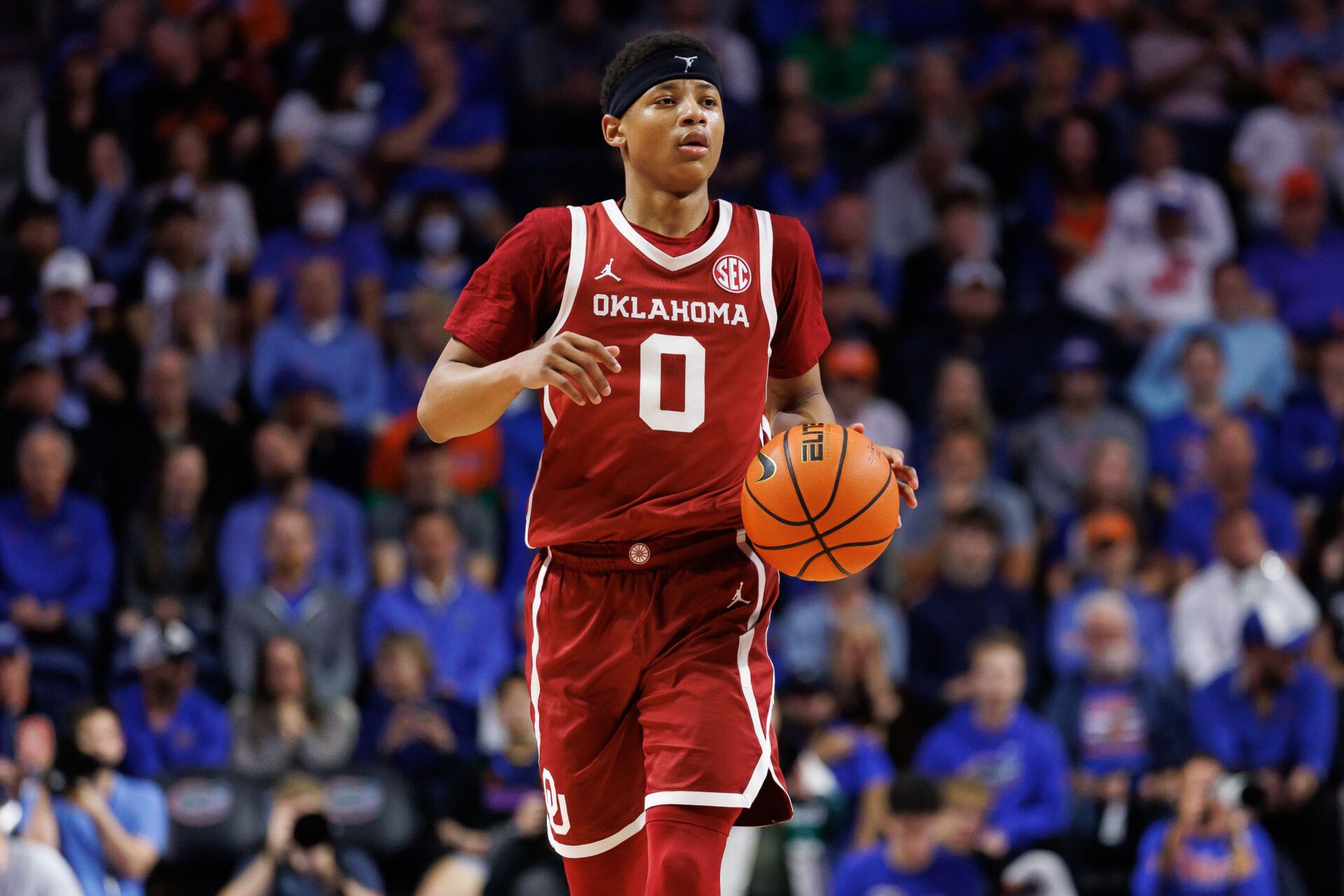
Jeremiah Fears, G, Oklahoma
The Utah Jazz are far from true contention, making this an ideal time to prioritize upside, and Jeremiah Fears offers plenty. One of the youngest prospects in the draft, Fears just turned 18, but he already plays with the poise, confidence, and edge of a lead guard built for the NBA stage.
Fears is a dynamic shot creator with a lightning-quick first step, tight handle, and fearless approach that allows him to attack downhill with ease. He excels at changing speeds, manipulating defenders, and absorbing contact in the paint, consistently generating offense for himself and others. While his slight frame and average explosiveness may limit him early on, his ability to get to the line and create in the halfcourt makes him one of the most dangerous guards in this class.
Utah remains in the early stages of its rebuild and has yet to identify a long-term answer at point guard. Fears has the tools to grow into that role. He’ll need time to physically mature and improve his finishing, but with patience, Fears has the upside to become a foundational offensive piece for the Jazz.
6) Washington Wizards
Khaman Maluach, C, Duke
The Washington Wizards desperately need to solidify their plan at center. Sure, they have Alex Sarr, who made strides during his rookie season. However, he’s likely better suited at the 4-spot, where he can use his floor-spacing abilities. Khaman Maluach can become a true anchor in the post for Washington.
Standing at 7’2″ with a staggering 9’8″ standing reach, Maluach comes with exceptional size and length. He immediately addresses critical needs for rim protection and interior defense. However, it’s his surprising agility, defensive instincts, and versatility that truly elevate him as an intriguing upside pick. He’s already an impactful defender capable of guarding in space, switching onto smaller players, and recovering effectively with his length.
Offensively, Maluach is still a work in progress, but the foundational tools are undeniably present. He finishes effectively around the basket, displays nice touch on lob passes, and possesses encouraging shooting mechanics for a player his size. Maluach may require time to fully develop his game. Still, with his elite physical profile, immense defensive upside, and tantalizing offensive flashes, he’s a high-ceiling prospect the Wizards should bet on.
7) New Orleans Pelicans
Tre Johnson, G, Texas
The New Orleans Pelicans were a bottom-10 offense in terms of efficiency last season (109.7 offensive rating), according to NBA Advanced Stats. They have talented pieces in Dejounte Murray and Trey Murphy III, but both will be coming off season-ending injuries. The front office just moved veteran C.J. McCollum, fully embracing the rebuild. So, injecting the roster with some much-needed offensive firepower makes sense.
Tre Johnson possesses the ideal physical dimensions for an NBA two-guard, standing at 6’6″ with an impressive 6’10” wingspan. He distinguishes himself as one of the most gifted pure scorers in this draft class, capable of hitting tough shots from anywhere on the floor. Johnson led the SEC in scoring as a freshman, averaging nearly 20 points per game and flexing his elite shot-making ability at all three levels.
On the defensive end, Johnson has the physical tools but will need to improve his effort and awareness to reach his full potential. Ultimately, he offers a high-upside scoring weapon who can immediately stretch the floor and, over time, develop into a more complete offensive threat. While he may not yet be a polished two-way star, his offensive skill set is undeniably NBA-ready.
8) Brooklyn Nets
Kon Knueppel, F, Duke
The Brooklyn Nets have a wealth of draft capital, with five first-round picks in the 2025 NBA Draft. Ideally, they walk away from the No. 8 spot with a potential long-term cornerstone. While Kon Knueppel might not be the flashiest name, he offers the kind of immediate impact and reliability that could help stabilize a team in transition.
Knueppel is one of the most polished, high-floor wings in the class and widely recognized as the top shooter in the draft. His combination of deep range, quick release, and soft touch makes him a lethal floor spacer from day one. But his offensive game extends beyond spot-ups, as he leverages fakes, footwork, and physicality to create clean looks in the halfcourt, even without elite burst.
While his lack of high-end athleticism may limit his ceiling as a defender or self-creator, Knueppel makes up for it with savvy decision-making, unselfish passing in the pick-and-roll, and a strong feel for when and how to attack. For a Nets team still shaping its identity, Knueppel could be a steady, productive presence who fits into a variety of lineups and roles.
9) Toronto Raptors
Kasparas Jakučionis, G, Illinois
The Toronto Raptors have multiple needs to address with their first-round pick, including a potential long-term solution in the frontcourt. But instead of targeting a big, they take a swing on Illinois guard Kasparas Jakučionis, a dynamic playmaker who could inject much-needed creativity into one of the NBA’s lowest-ranked offenses (26th in offensive rating at 109.6).
Jakučionis brings high-level passing instincts and versatility to the backcourt. He stands out as one of the most inventive facilitators in the draft, threading passes with vision and touch. Though his turnover rate at Illinois was high, it often stemmed from his aggressive playmaking while shouldering a significant offensive load as a freshman.
Jakučionis is a more polished offensive player than the stats suggest. Before a mid-season forearm injury, Jakučionis was connecting on over 41% of his 3-pointers and showed fluid shooting mechanics, along with an ability to attack the rim and draw fouls. While his defense is still developing, his basketball IQ and competitive mindset hint at room for improvement.
In a class light on sure things, Jakučionis gives Toronto a smart, high-upside guard capable of elevating the play of Brandon Ingram, Scottie Barnes, and RJ Barrett.
10) Phoenix Suns
Derik Queen, F/C, Maryland
Derik Queen makes a lot of sense for the Phoenix Suns as they look to build back better after letting go of one-year head coach Mike Budenholzer. The Suns acquired the No. 10 pick, Jalen Green, and Dillon Brooks in the Kevin Durant trade, but they still need a dynamic post presence who can anchor the unit. Queen gives them a promising player to mold in that lens.
Queen is one of the most polished big men in the 2025 class. He isn’t a high-flying athlete, but he more than makes up for it with exceptional footwork, touch, and feel. At 6’9″, 250 pounds, he plays with a mix of strength and finesse. His advanced passing ability also stands out, as he reads the floor like a guard and consistently sets up teammates from the block or elbows.
While Queen’s 3-point shot still needs improvement, his shooting touch in the midrange and from the line (76.6% free-throw percentage) suggests he could grow into a capable floor spacer. Defensively, he may not be a rim protector in the traditional sense, but his physicality and IQ help him hold his own.
11) Portland Trail Blazers
Collin Murray-Boyles, F, South Carolina
Collin Murray-Boyles makes a lot of sense for the Portland Trail Blazers as they continue building around their young core. After improving by 15 wins in 2024, Portland is trending upward, with promising pieces like Deni Avdija, Toumani Camara, and Donovan Clingan already in place. Adding Murray-Boyles would further solidify the frontcourt with a highly skilled and intelligent big who brings a different element.
Murray-Boyles doesn’t possess the ideal height for a power forward, but he plays much bigger than his 6’7″ frame suggests. He utilizes his strength, relentless energy, and elite instincts to negate any concerns regarding his stature in the paint effectively. He brings a high motor and an advanced feel for the game to both ends of the court.
Offensively, Murray-Boyles is a force around the rim, showcasing a strong ability to finish through contact and create impactful plays from the frontcourt. Defensively, he stands out as potentially one of the most disruptive prospects in this draft class.
The primary area for growth in Murray-Boyles’ game is his perimeter shot, as evidenced by his 26.5% shooting from 3-point range last season. However, even without consistent outside shooting, he projects as a high-impact role player thanks to his sheer physicality and impressive basketball IQ.
12) Chicago Bulls
Asa Newell, F/C, Georgia
Asa Newell, a product of Montverde Academy, where he played alongside elite talents like Flagg and Queen, learned early how to contribute effectively without dominating the ball. At Georgia, Newell embraced his role as a high-energy big, earning All-SEC Freshman honors after averaging 15.4 points and 6.9 rebounds per game.
Newell excels as a rim-running forward who doesn’t need plays called for him to make a significant impact. His impact comes from effort and athleticism, as he’s a live-wire presence around the basket. He was one of the SEC’s top offensive rebounders, boasting a 13.9% offensive rebounding rate, and consistently posed a shot-blocking threat.
Newell’s physical tools are truly impressive. At 6’10” with excellent mobility, lateral quickness, and defensive instincts, he possesses the versatility to guard multiple positions and provide a major boost to the Chicago Bulls’ frontcourt. While his offensive skillset is still rounding out, Newell flashes intriguing upside. He ultimately brings a valuable combination of immediate energy and intriguing long-term potential.
13) Atlanta Hawks
Egor Demin, G, BYU
Egor Demin is an intriguing option for the Atlanta Hawks as a long-term, high-upside playmaker with rare size and vision. At 6’9”, Demin brings elite passing instincts and a creativity that would perfectly complement Atlanta’s current backcourt duo of Trae Young and Dyson Daniels. His ability to manipulate defenses and find open teammates could take advantage of the Hawks’ athletic wings and floor-spacing shooters, adding another layer to the offense.
Demin’s scoring remains a work in progress. He shot just 27% on 3-pointers and 41% from the field during his freshman season at BYU. However, he wouldn’t be asked to carry the offensive load in Atlanta. Instead, he could operate as a secondary facilitator alongside Young or lead the second unit with poise and high basketball IQ.
Demin’s comfort with the ball in his hands and willingness to make the right play make him an ideal piece for a developing roster. Defensively, Demin isn’t a stopper, but his size and awareness allow him to disrupt plays and contribute.
The Hawks have a big decision to make on Young, and he could be a potential trade candidate this summer. Whether Demin is a high-IQ backup or Young’s eventual successor, his elite playmaking upside and positional versatility could make him a worthwhile upside bet.
14) San Antonio Spurs
Liam McNeeley, F, UConn
After solidifying their backcourt by selecting Dylan Harper at No. 2, the Spurs turn their attention to their need for perimeter shooting. San Antonio shot just 35.7% from behind the arc in 2024 (20th in the NBA). Scouts widely regard Liam McNeeley as one of the premier shooters in the 2025 NBA Draft. He is a smart, tough, and unselfish wing whose elite shooting and high basketball IQ make him a strong long-term fit for virtually any NBA team.
Though McNeeley’s overall 3-point percentage was 32%, his true strength lies in catch-and-shoot situations, where he was significantly more consistent and efficient. With the improved spacing afforded by an NBA offensive system and the young talent on the Spurs’ roster, his shooting could evolve into a devastating weapon.
Beyond his shooting, McNeeley also brings significant value as an off-ball playmaker, showcasing solid passing instincts and an understanding of how to move effectively within an offense. On the defensive end, he may not be a stopper, but his size, anticipation, and sound positioning allow him to contribute effectively.
15) Oklahoma City Thunder
Cedric Coward, G/F, Washington State
Cedric Coward’s rise has been something to see, as he began his career at the D-III level before transferring to Eastern Washington for two seasons and finally Washington State for his senior year. A shoulder injury limited him to just six games for the Cougars in 2024, but the 6’6”, 213-pounder impressed while averaging 17.7 points, 7.0 rebounds, and 3.7 assists per game. He also connected on nearly 40.0% of his 3-point attempts.
With an eye-popping 7’2” wingspan, Coward certainly has an NBA-ready frame. He impressed at the Combine and significantly improved his draft stock. He’s smooth in space, embraces contact, and consistently impacts the game with his energy and toughness. His defensive versatility stands out, with the quickness and length to switch across multiple positions, along with the discipline to excel as an off-ball defender.
The Oklahoma City Thunder are already a complete team, but Coward’s ready-made 3-and-D skill set could help solidify a strength, and he’ll give them another good athlete with the tools to contribute on both ends of the floor.
16) Memphis Grizzlies
Jase Richardson, G, Michigan State
Jase Richardson is an intriguing choice for the Memphis Grizzlies in the 2025 NBA Draft as they look to lock down their backcourt. With two first-round playoff exits over the past three years, the Grizzlies need to improve their offensive efficiency to move beyond the first round. Richardson is an efficient, high-IQ scorer who could help fill that need.
Though he doesn’t possess the elite athleticism his father, Jason Richardson, was known for, Jase brings polish, poise, and production. He thrived in a low-usage role, hitting open 3-pointers, finishing with finesse at the rim, and making sound decisions. As his responsibilities grew, so did his impact. He emerged as one of the most efficient pick-and-roll scorers in the country, showing an ability to generate offense without dominating the ball.
Jase Richardson put together one of the most efficient off-ball scoring + perimeter shotmaking seasons in recent memory.
41.2% 3P (7.3 3PA/100 poss) — 93rd %-ile on spot-up scoring + 95th %-ile on C&S PPP (1.34).
Truly an outlier basketball talent. https://t.co/GALOtpcpMK pic.twitter.com/EwCBJMKnoE
— Mohamed (@mcfNBA) May 31, 2025
Defensively, Jase compensates for his lack of elite size with relentless effort and sharp instincts. He competes on that end of the floor and possesses the awareness to contribute effectively off the ball.
17) Minnesota Timberwolves
Carter Bryant, F, Arizona
Carter Bryant’s production at Arizona left much to be desired. He averaged just 6.5 points per game in a limited role, but his physical tools and flashes of high-level play hint at significantly more upside than the box score shows.
Standing 6’8” with a strong, athletic build, Bryant offers the kind of size, mobility, and defensive versatility that NBA teams value. He’s already demonstrated the ability to defend multiple positions and make impact plays on that end.
Offensively, Bryant projects more as a role player than a primary scorer. He isn’t a creator yet, but he understands how to move within an offense and has shown encouraging signs as a spot-up shooter. He doesn’t need a high usage rate to make his presence felt, which could make him a good fit for a team that features Anthony Edwards and Julius Randle.
Bryant is a long-term developmental swing who has the skill set and makeup of a potential 3-and-D wing contributor.
18) Washington Wizards
Nolan Traoré, G, France
The Wizards’ backcourt currently features only Bub Carrington in terms of young talent in the wake of the Jordan Poole trade, but adding a high-upside prospect like Nolan Traoré could help elevate the group. At just 18 years old, Traoré is one of the youngest prospects in this year’s draft class. Still, his combination of blazing speed, impressive size, and effortless creativity makes him an intriguing long-term bet at point guard.
Traoré possesses the ability to effectively create off the dribble, manipulate defenses with his high-level ball-handling, and find teammates with his exceptional court vision. He also operates with a confidence and fearlessness that’s difficult to teach. He’s undeniably still a work in progress, with questions about his jump shot and decision-making.
Despite the Wizards being one of the worst teams in the NBA, they may not need Traoré to contribute a ton right away. The exciting young international point guard prospect offers plenty of potential down the line, though.
19) Brooklyn Nets
Noa Essengue, F, France
With a roster short on high-upside prospects, the Nets are clearly in the early stages of a rebuild and need to prioritize talent that can grow with the franchise. Noa Essengue, a raw but gifted forward with two-way upside, fits that mold perfectly.
At just 18 years old, Essengue brings intriguing physical traits and early professional experience from Germany, which adds maturity to his profile. He’s still developing offensively, but his mobility, length, and instincts on the defensive end make him a natural disruptor. He possesses a rare combination of physical traits, including the elite length typically associated with a center and the mobility of a wing player.
If Essengue can develop a consistent outside shot, his value will rise significantly in today’s pace-and-space game. With no immediate pressure to compete, Brooklyn offers the ideal environment for Essengue to develop at a sustainable pace. If the Nets are patient and committed to his growth, they could uncover a high-ceiling forward who becomes a foundational piece in the years to come.
20) Miami Heat
Nique Clifford, G/F, Colorado State
Nique Clifford has many of the intangible traits NBA teams value, including toughness, versatility, and an unselfish attitude. His college tape and numbers display effort and production across the board. Coming off an impressive final season at Colorado State, Clifford has established himself as one of the most polished and dependable wings in this draft class.
Clifford defends multiple positions, actively rebounds, and contributes as a scorer from all three levels. He’s a disciplined, physical defender who consistently makes timely plays and reads the floor exceptionally well. Offensively, Clifford offers more than just catch-and-shoot ability. He’s shown growth as a secondary ball-handler and as a playmaker in the pick-and-roll.
Clifford has proven he’s capable of contributing without dominating the ball. That bodes well for his fit with the Miami Heat, who have All-Stars Tyler Herro and Bam Adebayo, and could be looking to add another star to the mix this summer.
21) Utah Jazz
Rasheer Fleming, F/C, Saint Joseph’s
The Utah Jazz finished with the worst record in the NBA last season and need to add talent across the board. The front office also should be looking to add talent to the frontcourt, as All-Star forward Lauri Markkanen could be a prime trade candidate this offseason.
Rasheer Fleming is the type of player who could help redefine the culture in Utah. The St. Joseph’s product brings a well-rounded skill set that could make him an immediate-impact role player. He has a high motor, defensive versatility, and an efficient offensive game, all traits that make him a potential sleeper in this class. At 6’9″, Fleming offers the kind of size and mobility that fits perfectly with a team needing frontcourt depth and flexibility.
Fleming is capable of switching onto both bigger forwards and perimeter players, making him a versatile defender who thrives without needing the ball in his hands. Offensively, he’s made strides as a shooter, knocking down 39% of his 3-point attempts. Fleming didn’t face elite competition in the A-10. Still, his ability to finish plays, stretch the floor, and defend at a high level could allow him to contribute immediately at the NBA level.
22) Brooklyn Nets
Thomas Sorber, C, Georgetown
After grabbing two contrasting forwards with their first two first-round selections, the Nets now dip into the center group, aiming to bolster their big rotation beyond Nic Claxton. Georgetown’s Thomas Sorber not only offers depth, but ideally, stability at the center position.
Beyond his physically imposing, wide frame and elite screen-setting ability, Sorber plays with a certain poise and basketball IQ that sets him apart from most 19-year-old big men. Whether it’s keeping possessions alive with relentless offensive rebounding or finding open shooters with quick outlet passes, Sorber consistently makes winning plays that extend far beyond putting the ball in the basket.
Defensively, Sorber consistently plays bigger than his listed size. He’s fundamentally sound, physical, and rarely finds himself out of position. If his jumper continues to progress and he further improves as a perimeter defender, he could develop into a solid anchor at the five-spot for years to come.
23) New Orleans Pelicans
Danny Wolf, F/C, Michigan
Danny Wolf is one of the more polarizing prospects in the 2025 NBA Draft class. He’s 7’0″ tall, but he’s not your traditional big man. He operated as a point-center at Michigan, showcasing impressive vision, ball-handling, and creation abilities rarely seen at his size.
A primary playmaker for the Wolverines, Wolf nearly averaged a double-double with 13.2 points, 9.7 rebounds, and 3.9 assists per game. His ability to stretch the floor and facilitate offense makes him a potentially valuable asset for the Pelicans, who could use additional frontcourt help.
Wolf is a high-IQ decision maker with a soft touch around the rim and the tools to exploit mismatches against defenders. He does lack elite athleticism, and he’s not known as a rim protector, but his mobility and lateral quickness help compensate for some of his deficiencies on the defensive end.
24) Oklahoma City Thunder
Ben Saraf, G, Ratiopharm Ulm
With the Thunder already boasting a deep and talented roster, it’s doubtful they use both of their first-round selections on players they expect to contribute right away. Instead, with this pick, Oklahoma City dips its toes into international waters.
With time and development, Ben Saraf is a prospect who projects as a valuable Swiss Army knife at the NBA level. He handled a high-usage role in Germany’s top professional league and starred on the international stage, so he comes with professional experience. Saraf is an elite passer who thrives with the ball in his hands, and few prospects in this draft can match his creativity or consistency in the pick-and-roll game.
Though Saraf isn’t a natural scorer, he wouldn’t need to be on a loaded Thunder team that features Shai Gilgeous-Alexander, Jalen Williams, and Chet Holmgren. With his skill set and experience, Saraf could develop into a solid secondary ball handler and playmaker for this team in the future.
25) Orlando Magic
Will Riley, G/F, Illinois
The Orlando Magic struggled on the offensive end of the floor in 2024. They took a noticeable step back as a perimeter shooting team, and Orlando will need to add some firepower on that end to keep up with its elite defense.
Will Riley moves well without the ball, and he’s displayed an ability to create his own outside shots. He can create offense off the dribble and shoot from NBA range. His 3-point shooting percentages were inconsistent at Illinois, but his confidence and mechanics as a shooter project well.
Riley’s wiry frame may concern some teams, especially with the physicality of the NBA game. However, if he gets stronger and adds to his frame, he could develop into a viable two-way player. He has the tools to become a lethal perimeter scorer and impactful wing at the next level.
26) Brooklyn Nets
Walter Clayton Jr., G, Florida
The Brooklyn Nets are still searching for their identity and could use some talent and depth in their backcourt. It’s hard to ignore how special a guard duo of Cam Thomas and Walter Clayton Jr. could be on the offensive end of the floor (if the former is re-signed).
After a breakout NCAA tournament run, Clayton has cemented himself as a legitimate scoring threat with the tools to be a microwave guard at the next level. He’s someone who can come in, shift momentum, and pour in points quickly. Clayton is a tough shot-maker with an advanced feel for the game.
While Clayton offers significant offensive upside, there are legitimate defensive and physical concerns. At just 6’2″, Clayton lacks elite burst and strength, which could potentially make him a target for opposing offenses on the defensive end. Still, he adds an immediate scoring punch and offensive insurance on the perimeter.
27) Brooklyn Nets
Hugo Gonzalez, F, Real Madrid
With their fifth first-round pick, the Nets explore the international talent pool by selecting Hugo Gonzalez, a high-upside prospect who combines intriguing size, impressive athleticism, and defensive versatility with promising flashes of offensive skill.
Though his playing time with Real Madrid was limited for much of the season, a late surge reminded people of his potential. Gonzalez’s high motor, athleticism, and defensive instincts are NBA-ready. There are concerns about his limited exposure in a primary role, shooting consistency, and raw offensive creation. His 3-point shooting, in particular, needs improvement. He’ll need to demonstrate more reliable perimeter shooting to space the floor effectively at the NBA level.
Still, Gonzalez’s upside as a modern wing prospect makes him a potential first-round pick. If he can round out his offensive game, he could develop into a versatile two-way starter. He’s a long-term bet for a team that won’t be overly competitive anytime soon.
28) Boston Celtics
Ryan Kalkbrenner, C, Creighton
Kristaps Porzingis has officially been traded to the Hawks, while Luke Kornet and an aging Al Horford are free agents this offseason. Even after adding the versatile Georges Niang, the Boston Celtics should be looking to add depth and talent to their frontcourt, and Creighton’s Ryan Kalkbrenner could be a perfect fit.
Creighton’s Ryan Kalkbrenner reminded NBA teams of his tremendous tools and rim-running, floor stretching potential at the Priority Sports pro day in Chicago.
4x Big East defensive player of the year has a 7’6 wingspan and 9’4 standing reach. pic.twitter.com/640Z0TzqC0
— Jonathan Givony (@DraftExpress) May 19, 2025
Kalkbrenner is a dominant defender and rim protector who was a cornerstone for the Bluejays throughout his collegiate career. As a three-time Big East Defensive Player of the Year, he’s proven his ability to alter shots and secure the paint. He possesses legitimate size and an enormous wingspan, which makes him a formidable defensive anchor.
Offensively, Kalkbrenner thrives as a low-post scorer and rim-runner, displaying soft hands and strong finishing ability through contact. He’s also developed a reliable mid-range game and shown an increased willingness to step out to the 3-point line.
Kalkbrenner’s athletic limitations pose a clear challenge. Still, his improving shooting touch and high basketball IQ offer a pathway to succeed as a complementary big man, especially on the defensive end early on.
29) Phoenix Suns
Kam Jones, G, Marquette
The Phoenix Suns fired coach Budenholzer and traded Durant to the Rockets after a 36-46 season in 2024-25. With Phoenix potentially hitting the reset button, the front office should target a player who could be a stabilizing presence on both ends of the floor.
Kam Jones could be an ideal fit for the Suns, especially with starting point guard Tyus Jones becoming a free agent this summer. Jones is one of the premier upperclassmen guards in the 2025 NBA Draft class and offers a crafty combo guard skill set highlighted by polished scoring and playmaking ability.
A capable defender, Jones demonstrates active feet, a strong frame, and a hunger for applying pressure on opposing ball-handlers. He competes defensively with the same intensity he brings to his scoring. His athleticism and recent shooting dip raise some questions about his upside, but his skill set, experience, and overall basketball IQ make him a viable plug-and-play guard.
30) Los Angeles Clippers
Noah Penda, F, Le Mans Sarthe
The Los Angeles Clippers have a strong veteran core, led by Kawhi Leonard, James Harden, Norman Powell, and Ivica Zubac. With that solid foundation in place, the Clippers can afford to bet on long-term potential, and that’s exactly what Noah Penda offers.
Penda is an NBA-ready forward with exceptional physical tools, defensive versatility, and a high motor. At 6’8″ and 225 pounds with a 7’0″ wingspan, the 20-year-old Frenchman is a dynamic presence on both ends of the court. His defensive impact, energy, and high-level playmaking potential make him one of the most intriguing international prospects in this year’s class.
Penda excels as a switchable defender and weak-side shot blocker. While his offensive game is still developing and he needs to improve his strength, his size, length, and versatility provide a solid foundation for a role as a 3-and-D forward with secondary playmaking upside.