
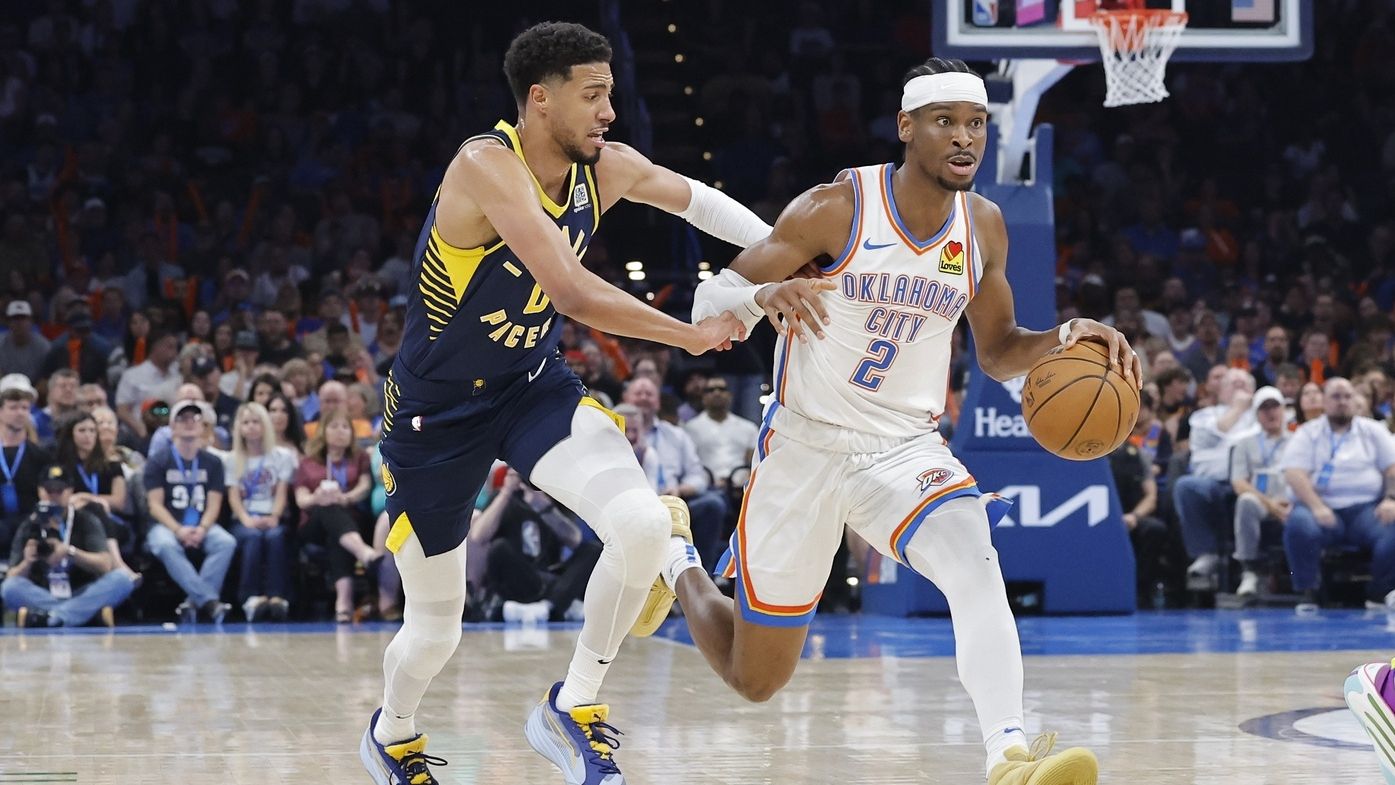
The 2025 NBA Finals will start in OKC as the Oklahoma City Thunder will host the Indiana Pacers at Paycom Center on June 5 for Game 1.
How exactly does the NBA determine where the Finals begin? Here’s a glimpse at how home court advantage works for the NBA Finals, as well as its importance in determining a champion:

A Look at Home-Court Advantage and the NBA Finals Format
Playoff series, including the NBA Finals, are best-of-seven, and the higher-seeded team is guaranteed four home games. The first two games are played on the higher seed’s home court, giving that team a valuable opportunity to take a 2-0 lead, an advantage that can significantly shape the outcome of the series.
Throughout NBA history, only five teams have completed a stunning turnaround to win the NBA Finals after trailing 2-0.
Games 3 and 4 are then played on the lower-seeded team’s court, with Game 6 (if necessary) also held there. Meanwhile, Games 5 and 7 (if necessary) are hosted by the higher seed.
In summary, home-court advantage gives the higher seed the chance to build early momentum in the series and, if it goes to seven games, to close it out in front of their home crowd.
Not long ago, and for nearly three decades, the NBA Finals were played in a 2-3-2 format. In that setup, the first two and last two games were hosted by the team with the better regular-season record (or a tiebreaker advantage), while the middle three games were played at the opponent’s arena.
That format began in 1985 under Commissioner David Stern, during an era when the Finals often featured Boston Celtics–Los Angeles Lakers matchups. Before that, the league used the 2-2-1-1-1 format, which is now standard across all playoff rounds, including the Finals.
However, in the ’80s, the league sought to reduce the number of cross-country flights, especially between cities like Boston and Los Angeles, which dominated most Finals matchups and could require up to five long-haul trips in a seven-game series.
Once Adam Silver took over as commissioner in 2014, the league reverted to the 2-2-1-1-1 format. The 2-3-2 setup had often been viewed as favoring the lower-seeded team, since stealing one of the first two games on the road gave them the chance to close out the series with three straight home games.
The Miami Heat used this exact formula in 2012, during LeBron James’ first championship run.
With the NBA Finals tipping off on June 5, fans can expect an exciting matchup as one of the league’s top-ranked offenses in the Pacers takes on the league’s No. 1 defense in the Thunder.
