
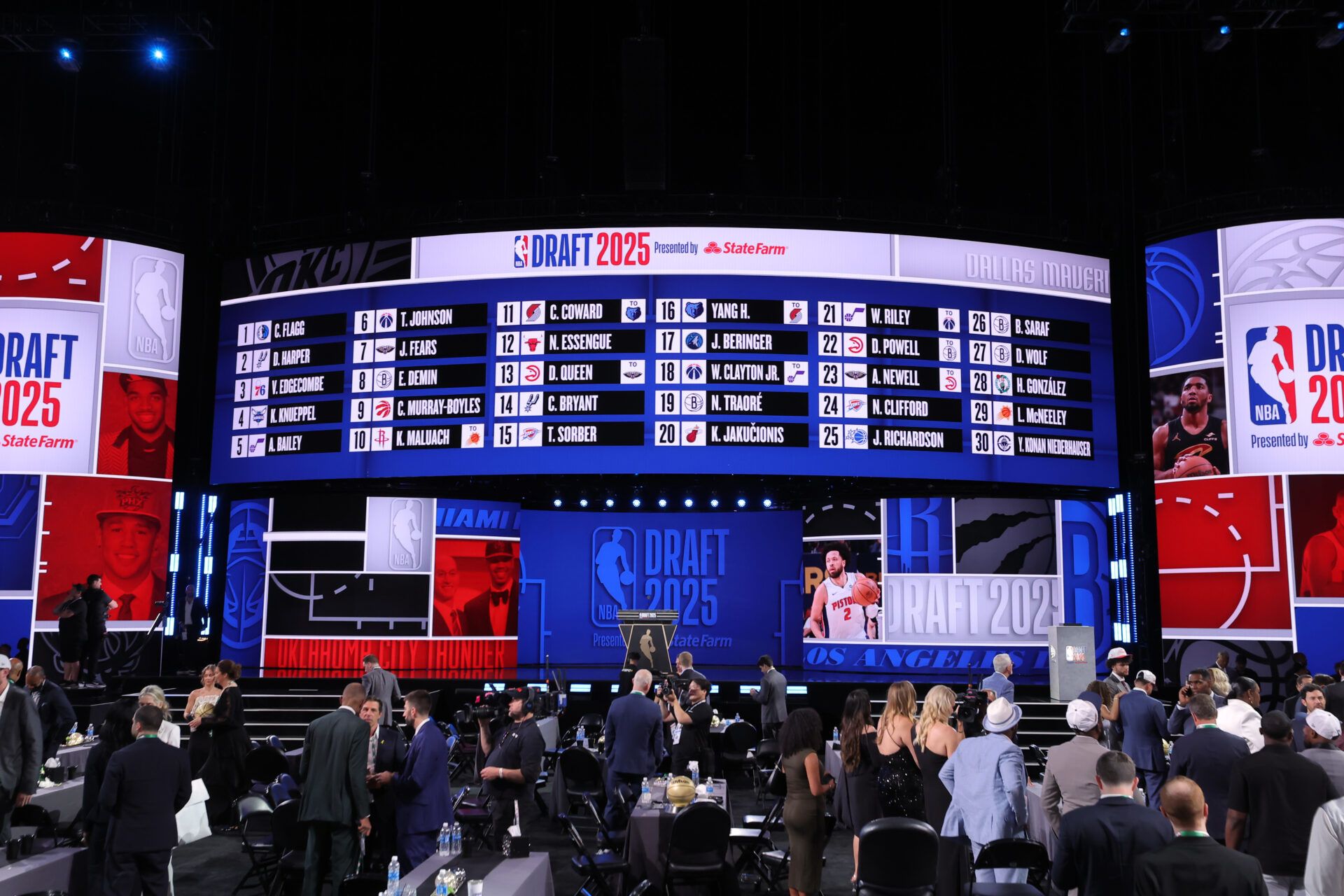
The 2026 NBA Draft is shaping up to be one of the most anticipated in recent memory. This is supposed to be one of the most loaded draft classes in years, with a ton of freshmen who project to be potential stars.
With names like AJ Dybantsa, Darryn Peterson, and Cameron Boozer leading the charge, there’s plenty of excitement surrounding this year’s event. Here is everything you need to know about the 2026 NBA Draft.

When Is the 2026 NBA Draft?
The NBA Draft is split into two days, with each round getting exclusive attention. This year, it is scheduled on Tuesday, June 23, and Wednesday, June 24, respectively, at the Barclays Center in Brooklyn, New York.
The first round, on June 23, will be broadcast on ABC and ESPN from 8 p.m. ET. However, the second round, on June 24, will only be available on ESPN at the same start time of 8 p.m. ET.
With potential franchise-altering stars available and blockbuster trades potentially going down, all eyes will be on the 2026 NBA Draft. Here is the draft order for this year’s first round:
1) Washington Wizards
2) Utah Jazz
3) Memphis Grizzlies
4) Chicago Bulls
5) LA Clippers
6) Brooklyn Nets
7) Sacramento Kings
8) Atlanta Hawks
9) Dallas Mavericks
10) Milwaukee Bucks
11) Golden State Warriors
12) Oklahoma City Thunder
13) Miami Heat
14) Charlotte Hornets
15) Chicago Bulls
16) Memphis Grizzlies
17) Oklahoma City Thunder
18) Charlotte Hornets
19) Toronto Raptors
20) San Antonio Spurs
21) Detroit Pistons
22) Philadelphia 76ers
23) Atlanta Hawks
24) New York Knicks
25) Los Angeles Lakers
26) Denver Nuggets
27) Boston Celtics
28) Minnesota Timberwolves
29) Cleveland Cavaliers
30) Dallas Mavericks
Who Are the Top Prospects in the 2026 NBA Draft?
AJ Dybantsa
AJ Dybantsa entered BYU with as much hype as any freshman in recent memory, and he lived up to the buzz. At 6’9″ with a long frame, explosive burst, and the ability to score at all three levels, he embodies the modern two-way NBA wing.
His handle and footwork allow him to create separation, and he can punish defenses both in transition and isolation. With his size, control, and polished skill, Dybantsa looks every bit like a future franchise centerpiece.
SIMULATE THE NBA DRAFT: Try PFN’s NBA Mock Draft Simulator
Dybantsa utilizes both strength and finesse, attacking the rim with power while displaying a smooth pull-up jumper from the midrange. He thrives in space and can facilitate when defenses collapse. Defensively, his quickness and motor make him capable of switching assignments and disrupting plays on both ends.
To reach his full potential, he’ll need to find consistency from deep, but his physical tools, competitive fire, and upside make him a very safe prospect who also happens to have an extraordinary ceiling.
Darryn Peterson
Standing at 6’6″ with long arms and a strong build, Darryn Peterson has the look of an NBA-ready wing and potential franchise cornerstone. Peterson is a true three-level scoring threat, using his smooth dribbling to create space, scoring well off the dribble, and hitting jump shots with confidence.
Also, his balanced style and smart decisions make him effective as a playmaker as well. Defensively, Peterson uses his length, quick instincts, and discipline to defend several positions and break up passes. He plays with maturity, stays under control, and understands team defense and rotations well.
What really sets him apart is how he can take over a game without trying to do too much. Teams will want to look into his medicals after he dealt with cramping issues throughout his freshman year (including a scary full-body cramping incident).
Cameron Boozer
Cameron Boozer absolutely dominated throughout his freshman year at Duke, joining Cooper Flagg, Zion Williamson, Anthony Davis, and Kevin Durant as the fifth freshman to sweep the major Player of the Year awards.
At 6’9″ with broad shoulders, excellent feel, and an advanced skill set, he combines old-school power with a modern forward’s versatility. The son of former NBA All-Star Carlos Boozer, Cameron scores efficiently from anywhere, whether facing up, backing down, or stretching the floor with his improving 3-point range.
His poise and consistency stand out, giving him the look of a player ready to contribute immediately at the next level. Boozer thrives on fundamentals rather than flash, relying on touch, body control, and basketball IQ to dominate within the flow of a game.
He’s comfortable facilitating from the post or attacking closeouts, reads defenses like a veteran, and controls the glass with positioning and strength. While not super bouncy, his mobility and anticipation make him a sturdy defender across multiple spots.
The big question is how his game will translate to the pros. Some NBA executives believe he can be a team’s offensive engine, while others view him more as a star-caliber complementary piece.
Caleb Wilson
Caleb Wilson’s freshman year at North Carolina didn’t go according to plan due to injuries, but he has the size, mobility, and two-way potential that NBA scouts look for in modern forwards. Standing 6’10” with long strides and good bounce, he moves well for his height and makes an impact on both offense and defense.
On defense, his quick feet and timing help him guard different positions, contest shots, and offer extra rim protection. On offense, Wilson can drive to the basket, finish plays, and score from midrange, and he has shown flashes of improved 3-point shooting.
Wilson is still developing, but he already shows the basics of a strong two-way NBA player. His jump shot is getting better, and he already fits well into team play as a passer and cutter. With his athletic ability and growing skills, Wilson could become a dynamic forward as he gets stronger and more confident.