
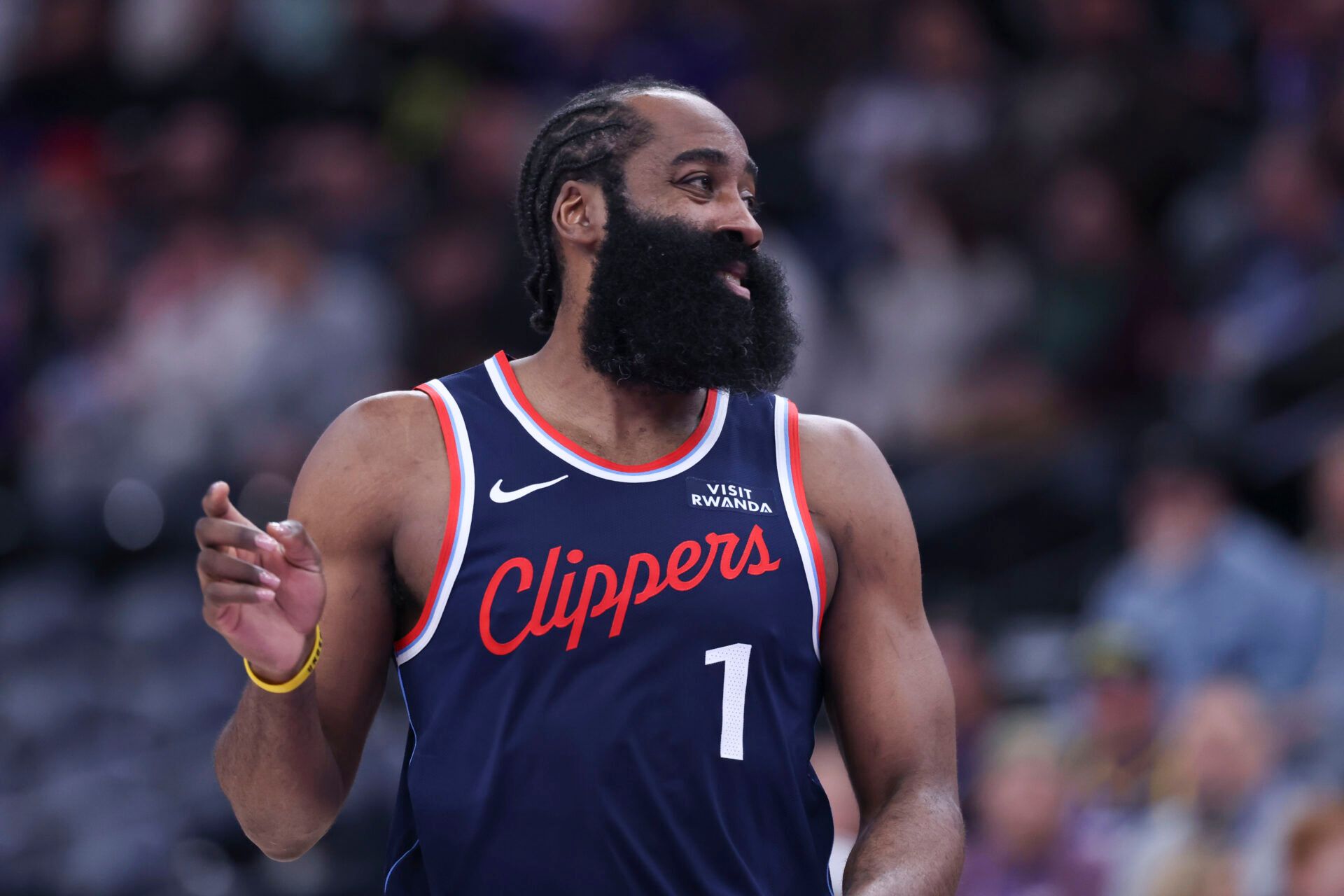
Another blockbuster trade has shaken up the NBA landscape; this time involving the Cleveland Cavaliers and the Los Angeles Clippers, in which James Harden is essentially swapped for Darius Garland and a second-round pick.
Harden is on the move yet again after the Clippers failed to meet expectations, currently sitting ninth in the Western Conference at 23–26. Meanwhile, the Cavaliers, who were the No. 1 seed in the East just a season ago, have underwhelmed in their own right, finding themselves fifth at 30–21. Both teams appear to be seeking a reset, albeit at very different paces.
Let’s break down the deal and grade it from both sides.
James Harden Heads to a New Team as Clippers Focus on Youth
From the Clippers’ perspective, this trade feels like a clear win. Landing a Darius Garland–type player at age 26, squarely in his prime, in exchange for an aging James Harden on a massive contract is exactly the kind of pivot Los Angeles needed to make.
Garland never fully found his rhythm alongside Donovan Mitchell in Cleveland. Since Mitchell’s arrival, Garland’s numbers have dipped across the board: points per game, field-goal percentage, and three-point percentage. Entering his seventh season with the Cavs, it felt like his development had leveled off, and a change of scenery seemed beneficial for both sides.
For the Clippers, Garland brings youth, speed, and long-term upside without significantly lowering their immediate ceiling. With Kawhi Leonard, Ivica Zubac, and other key pieces still in place, the Clippers remain firmly in the playoff hunt. The only change is how they get there.
Garland will likely have more freedom to take the reins offensively in a new environment, and watching him reestablish himself as a primary ball-handler should be one of the more intriguing storylines moving forward. The Clippers may have traded a star name, but they didn’t get worse, and arguably positioned themselves better for both now and the future.
Grade: B+
Cavaliers Push Their Chips All-In
This move feels far more desperate from Cleveland’s side.
The Cavaliers are clearly trying to maximize a narrow championship window, opting to go all-in for the next year or two by acquiring Harden, who is roughly 10 years older than Garland and, at this stage, not dramatically better on the court. While moving on from Garland may have been necessary, the return feels light given Harden’s age, contract, and postseason track record.
Harden’s playoff résumé is well-documented, and not in a flattering way. If Cleveland is banking on this move to get them over their postseason hump finally, they may be setting themselves up for disappointment.
That said, there is a pathway for this trade to work. The Cavs are very much a win-now team, and Harden won’t need to be the primary scorer. Surrounded by Donovan Mitchell, Evan Mobley, and Jarrett Allen, Harden can slide into a facilitator role, something he’s proven capable of, averaging over eight assists per game across the past decade.
If Harden buys into that role, limits the ball-stopping tendencies, and provides timely scoring when needed, this trade could pay off in a big way. Still, it’s hard to ignore the red flags. This is now Harden’s fifth team in six years, which raises the obvious question: Why can’t he stick anywhere?
The early read is that Cleveland slightly overreached. The upside is there, but so is the risk.
Grade: B-
