
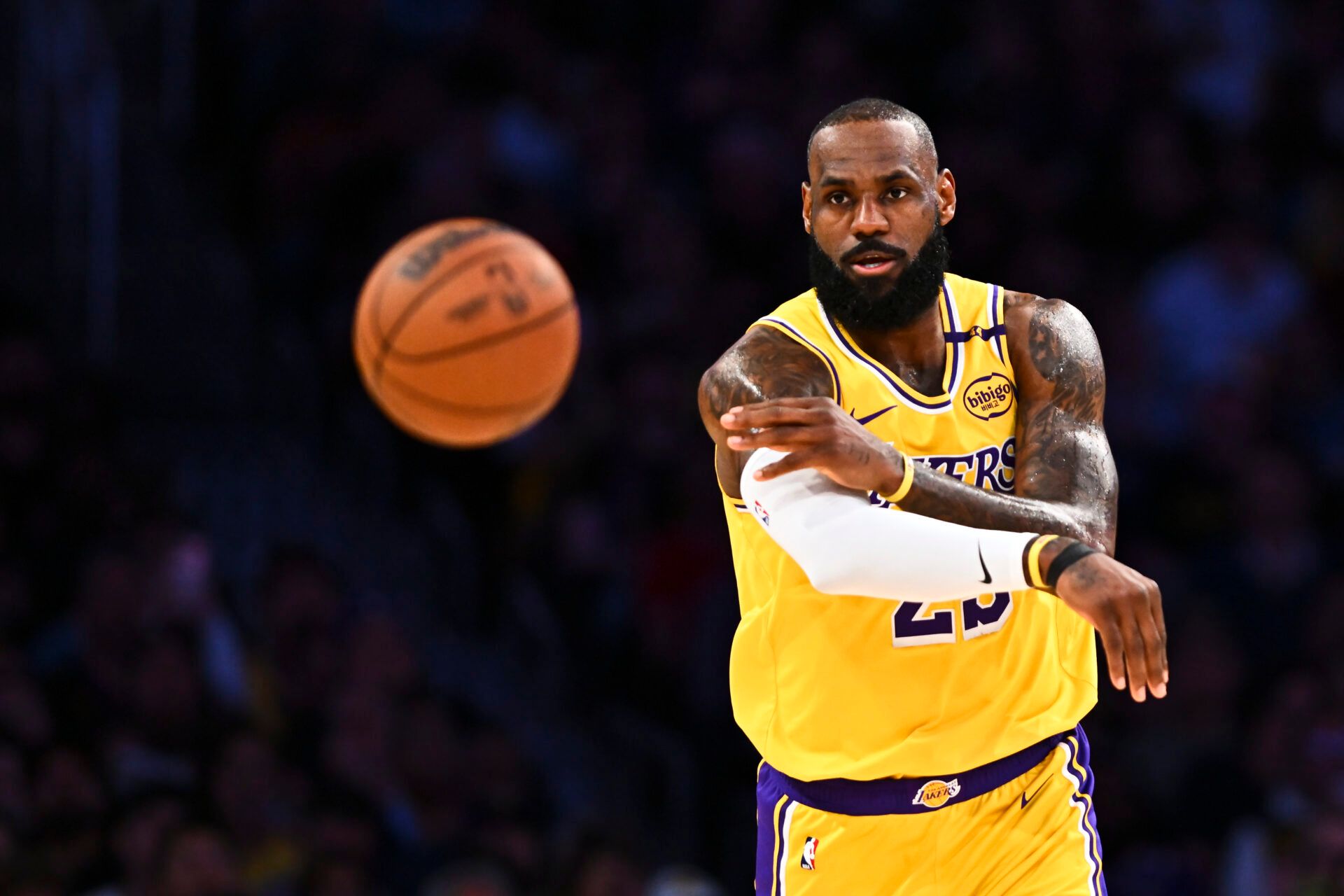
LeBron James of the Los Angeles Lakers, the NBA’s legacy builder, recently released yet another episode of his “Mind the Game” podcast with former NBA star and current Amazon Prime NBA analyst Steve Nash.
In the season finale, which was taped at Fanatics Fest in New York City and released on Tuesday, July 15, he offered revealing insight into the evolving philosophy of team building in today’s league.
With over two decades of experience and four championships, James believes the NBA is headed towards a model that values depth and energy instead of star power.

Why Does LeBron James Think the Superstar Era Is Over?
James believes that the days of assembling superstars are long gone now. Instead, the new age league believes in genuine contenders based on a blend of a great supporting cast and top-tier leadership.
The culture is now shifting to players who bring along that spark, toughness, and culture-shifting energy, be it a starter or someone coming off the bench.
Echoing recent trends seen during the 2025 NBA playoffs, James mentioned names like Indiana Pacers players Aaron Nesmith and Obi Toppin, along with Isaiah Hartenstein and Alex Caruso of the NBA champion Oklahoma City Thunder.
James states they are prime examples of overlooked talent flourishing when given the right environment and opportunity.
“You’ve got to think [who] some of the biggest guys in these Finals that’s making an impact are,” James said. “Those were guys who were even given up from a previous team. If you look at [Aaron] Nesmith, Obi Toppin… didn’t get an opportunity to flourish as much.
“Nesmith was drafted by Boston, but didn’t get an opportunity to flourish,” James continued. “You look at [Isaiah] Hartenstein, now with OKC. You know what he was able to do for your franchise last year, but bring that toughness to the OKC Thunder. Alex Caruso, obviously, we’ve seen what he’s been able to do.”
James pointed to the stories behind all these players as proof that untapped potential can redefine franchise trajectories. These “complementary guys” are sparkplugs and defenders, who provide the right energy to uplift a team and become the backbone of a winning team.
“But all these complementary guys are what build teams,” James said. “This is what builds winning programs and winning franchises.”
James feels this is a direct and strategic pivot from the Big 3 model. It stands in complete opposition to the blueprint of yesterday, i.e., the superstar-heavy Big 3 era. James was part of one such era, alongside Dwyane Wade and Chris Bosh of the Miami Heat, who dominated the NBA during the early 2010s.
How Does This Compare to the Big 3 Era James Helped Create?
“I played in the Big 3 era, but it’s looking like now the game is starting to shift again to how can we create the most depth, but also how can we create the most energy?” James said. “How can we have the most shelf life out on the floor? To be able to sustain an injury or sustain a run throughout the course of a game.”
This formula, with three stars doing the heavy lifting, was unbeatable. Today, it is the opposite. It’s the overall adaptability and longevity that supersedes everything. There’s an increase in speed, injuries, and heavy rotations, making teams seek layers and layers of capable players who can stand up when needed.
This was very evident in the recent NBA Finals matchup between the Thunder and Pacers. Nesmith, Hartenstein, Toppin, and Caruso consistently supported their team’s momentum. They stood up, defended, hustled, and had shooting bursts to keep their teams afloat whenever the main options were injured or resting.
Analytics backs this up as well. Teams with deeper benches and balanced rotations fare better in efficiency during the latter half of the game. This leads to an increase in overall durability throughout the season, especially during the pressurizing postseason.
According to James, this modern NBA formula is a true winning formula. It’s based on the ideological shift from “the best three” to “who can step up when it matters.”
